 David Noyce
The Mormon Land newsletter is The Salt Lake Tribune’s weekly highlight reel of news in and about The Church of Jesus Christ of Latter-day Saints. Join us on Patreon to receive ad-free podcast episodes, the full newsletter and access to all of our religion content.
Let’s do some myth busting
It’s hardly a revelation that those outside The Church of Jesus Christ of Latter-day Saints get things wrong about the faith and its followers.
What is surprising is that members — based on culture, traditions and outdated teachings — sometimes do as well.
Here are three common misconceptions:
1. Only pianos and organs can be used in sacrament meetings?
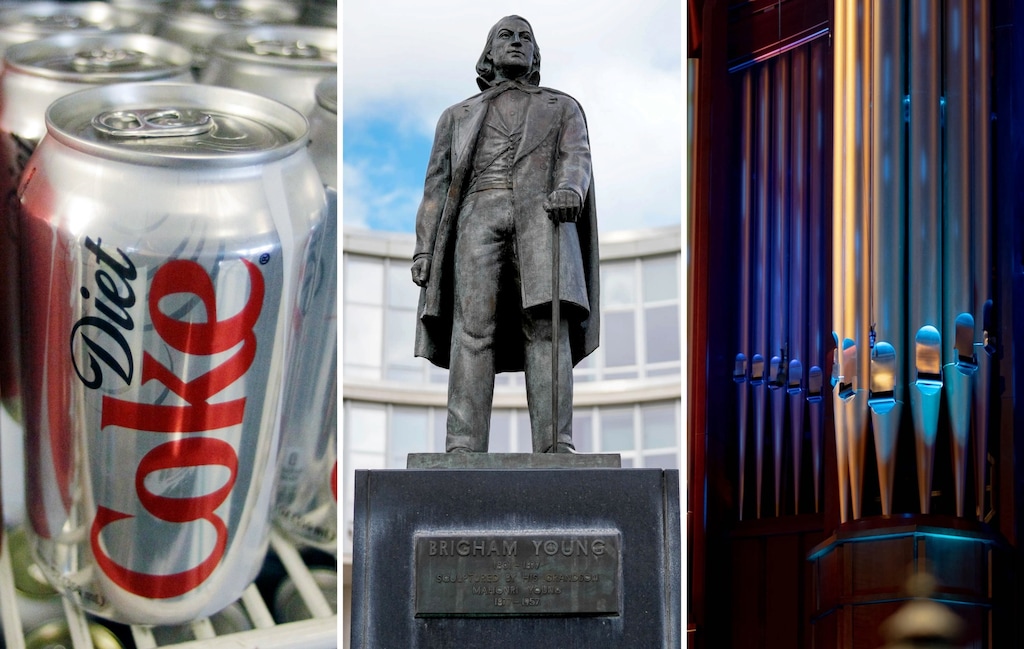
Nope. They may be the most commonly played (along with, say, violins and flutes) but guitars, trumpets, trombones, tubas, clarinets and even drums could be used — provided the local lay leader signs off.
“Bishoprics may approve the use of other instruments to accompany congregational singing, for prelude and postlude music, and in other musical selections,” the General Handbook says. “Musical instruments should convey a feeling of worship and be played in keeping with the spirit of the meeting.”
So bongos wouldn’t necessarily be barred if they supplied that “spirit.”
2. Consuming caffeine is a no-no and against the Word of Wisdom.
No and no. Despite what many nonmembers — and an astonishing number of members — think, there is no church edict against caffeine.
Yes, the Word of Wisdom forbids “hot drinks.” Yes, church leaders have affirmed and reaffirmed that means swearing off coffee or tea — whether hot or iced. (Herbal tea gets a pass.) And, yes, coffee and tea have caffeine. But that prohibition doesn’t extend to all caffeinated products.
So cola drinks and chocolate (hot or cold) are kosher. Now, is downing a dirty soda, quaffing a Coke or pounding a Pepsi healthy? That’s a different question.
3. BYU’s Honor Code applies to all faithful Latter-day Saints.
Nah. While everyday members — like current Cougars — are taught to be honest, attend church regularly, and abstain from sex outside of man-woman marriage, they don’t need to meet all the rules spelled out for the church’s schools.
For starters, take the grooming standards. Beards, banned at BYU, may be fuzzy, but they’re fine for other members, and rainbow-colored curls may stand out at sacrament meetings, but they’re not verboten.
In coming weeks, we will feature other myths about church policies and practices. Any suggestions?
More props for ‘hell’
(Penguin Books UK, Melanie Awbrey) Latter-day Saint biologist and author Steven L. Peck first published the psychological horror "A Short Stay in Hell" in 2009. Nearly 20 years later, it went viral. Big publishers noticed.
“A Short Stay in Hell” is enjoying a long shelf life.
BYU biologist Steven Peck’s 2009 psychological thriller is basking in a remarkable resurrection. A recent Salt Lake Tribune story noted the novella has been elevated to a Vintage Classic in the United Kingdom. Religion News Service columnist Jana Riess highlighted the revival. Peck’s tale of a terrifying afterlife even got a shoutout in The New York Times’ weekly “By the Book” feature.
When bestselling graphic novelist Alice Oseman was asked what book people might be surprised to find on her shelf, she responded, “‘A Short Stay in Hell,’” by Steven L. Peck, an incredibly disturbing piece of liminal horror. Not a lot of sweet teenage angst in that one!”
Hell, it seems, has turned heavenly for Peck.
Latest ‘Mormon Land’ podcast: Brazilian Saints
(The Church of Jesus Christ of Latter-day Saints) Audience members applaud The Tabernacle Choir and Orchestra at Temple Square during a concert in São Paulo, Brazil, in February.
Brazil recently surpassed Mexico, boasting more Latter-day Saints than any other nation outside the U.S. Why have Brazilians embraced this American-born faith? And how do they view U.S. culture, traditions and politics?
Listen to the podcast.
Around the world
(The Church of Jesus Christ of Latter-day Saints) Denis Mukasa, the church's Africa Central Area humanitarian manager, unloads food for distribution in Korr, Kenya, May 29, 2026.
• Latter-day Saints recently teamed up with Muslim relief workers to distribute 250 tons of food to more than 3,000 households across 24 villages in drought-plagued northern Kenya.
“It was wonderful to see these women and the great joy that they had when they … saw this pile of food,” humanitarian missionary Denise Chadwick said in a news release. “It wasn’t anything fancy … just lifesaving essentials that would help their family for months.”
• The second volume of legendary Latter-day Saint writer Carol Lynn Pearson’s diaries comes out July 20, Signature Books announced in an email. This one covers 1990 to 2002.
Listen to our recent “Mormon Land” podcast with Pearson, and read excerpts from that interview, along with entries from her first volume.
• A Reform Jewish synagogue in a Chicago suburb prides itself on being “profoundly diverse and open-minded,” the Chicago Tribune reports, and it has the local leadership to prove it.
“Our current president is a Catholic man. Our current treasurer is Mormon,” the Wilmette, Illinois, synagogue’s new rabbi tells the newspaper. “They are both people who have married into Jewish families for many decades.”
From The Tribune
(Francisco Kjolseth | The Salt Lake Tribune) Deborah Rumi gets ready to perform the mikvah, a specially designed Jewish ritual bath used for spiritual purification and transformation at Congregation Kol Ami in Salt Lake City. Rabbi Sam Spector who has overseen Rumi’s conversion to Judaism over the past year, describes the process involving three prayers and three complete nude immersions into the water to be witnessed by staff member Galit Livne to authenticate the process.
• In a new special series, The Tribune is exploring how and why people, including Latter-day Saints, convert to other faith traditions. The first installment is about becoming Jewish.
• The message from church leaders to Utah members: Live your religion. Conserve water. Save the Great Salt Lake.
(The Church of Jesus Christ of Latter-day Saints) The younger minimum age for female proselytizers has helped boost the missionary force to an all-time high.
• The number of full-time missionaries serving across the globe reaches a new record, thanks to more women joining the ranks.
• In an exclusive Tribune interview, Pastor Doug Wilson, who is a spiritual adviser to Defense Secretary Pete Hegseth, rattles off what Latter-day Saints would have to change about their beliefs to be considered true Christians. (The problem, as he sees it, begins with Mormonism’s beginnings: Joseph Smith’s “First Vision.”)
(Lindsey Wasson | AP) Pastor Doug Wilson outside his church in Moscow, Idaho.
• A former Tribune editor discusses how he once enlisted Wilson as a conservative columnist.
• Wade Christofferson admits as part of a plea deal to sexually abusing two girls. He is the brother of First Presidency member D. Todd Christofferson.
• A rendering has been released of Utah’s Spanish Fork Temple.
(The Church of Jesus Christ of Latter-day Saints) A rendering of the Spanish Fork Temple.