 Dylan Eubank
Leaders of Utah’s predominant faith are turning their followers’ focus toward the shrinking Great Salt Lake and urging them to find “personal ways” to conserve water.
The Utah Area Presidency of The Church of Jesus Christ of Latter-day Saints recently sent a letter to lay leaders in the state, reaffirming the religion’s belief that Latter-day Saints have a spiritual duty to care for the planet and its finite resources.
“We ask all members in Utah, particularly those in communities surrounding the Great Salt Lake, to carefully consider personal ways to conserve valuable water resources,” the presidency wrote. “We would invite you to communicate this to the members of your [congregations] in the way you feel inspired to do so.”
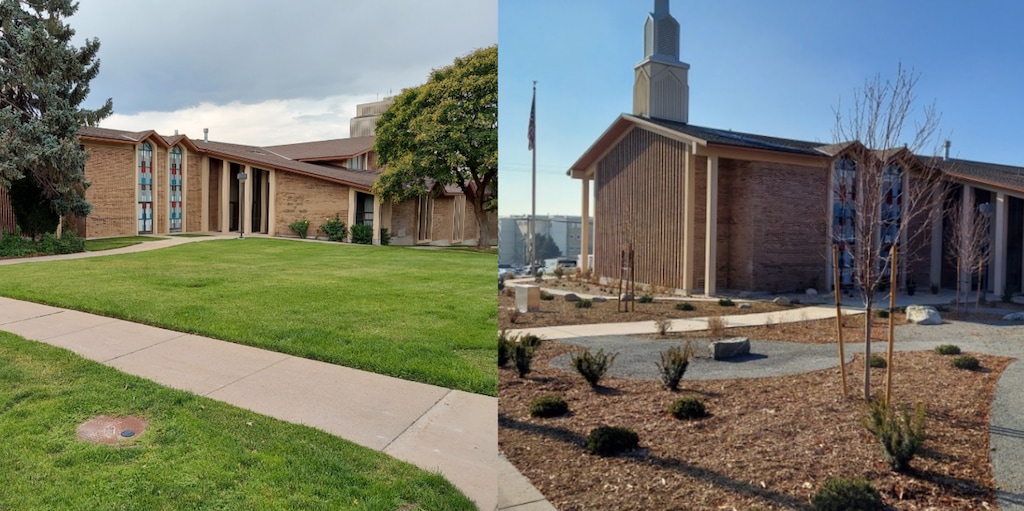
Declaring that “this is not a political issue, but a stewardship issue,” President Brian Taylor and his two counselors pointed out that the church has been taking the initiative to better conserve water by, among other measures, installing “smart” watering devices for the landscaping on church properties.
Besides “changing weather patterns” and the drought currently gripping the West, the letter noted, the “primary cause” for the lake’s decline rests with excessive water use from tributaries feeding the Salt Lake Valley’s namesake geographic feature.
The church donated 20,000 acre-feet worth of water shares to the lake in 2023. That translates to enough water to supply nearly 60,000 households.
According to a 2025 news release, the Utah-based faith began to shift to water-wise landscaping back in the early 2000s but is now hastening its approach. It also is installing smart sprinkler systems and planting drought-tolerant grass.
These steps are aimed at saving 500 million gallons of water a year at its meetinghouses in the Intermountain West, the release said. That equates to more than 1,500 acre-feet of water.
That’s enough to supply about 4,600 U.S. households a year, a drop in the conservation bucket.
The release explained that while some grass and greenery will be retained for recreational use, the church plans to continue to phase out decorative and nonfunctional grass for new meetinghouses across the West.
(Trent Nelson | The Salt Lake Tribune) The north shore of the Great Salt Lake in May. More and more of the lakebed is being exposed.
As for the Great Salt Lake, it is more than 7 feet below its “minimum healthy water level,” with over 1,180 square miles (55%) of the lakebed exposed to the sun, according to the Grow the Flow website. Experts say the lake level could plunge to a record low this summer.
The Utah Area Presidency’s recent letter highlighted the words of apostle Gérald Caussé from a 2022 General Conference address.
“As God’s children, we have received the charge to be stewards, caretakers and guardians of his divine creations,” Caussé said. “The Lord said that he made ‘every man accountable, as a steward over earthly blessings, which I have made and prepared for my creatures.’”
Note to readers • Dylan Eubank is a Report for America corps member covering faith in Utah County for The Salt Lake Tribune. Your donation to match our RFA grant helps keep him writing stories. In addition, this article is published through the Great Salt Lake Collaborative with funding from Love the Lake, an initiative of the nonprofit Great Salt Lake Alliance. Editorial decisions are made independently by the collaborative and partner newsrooms.