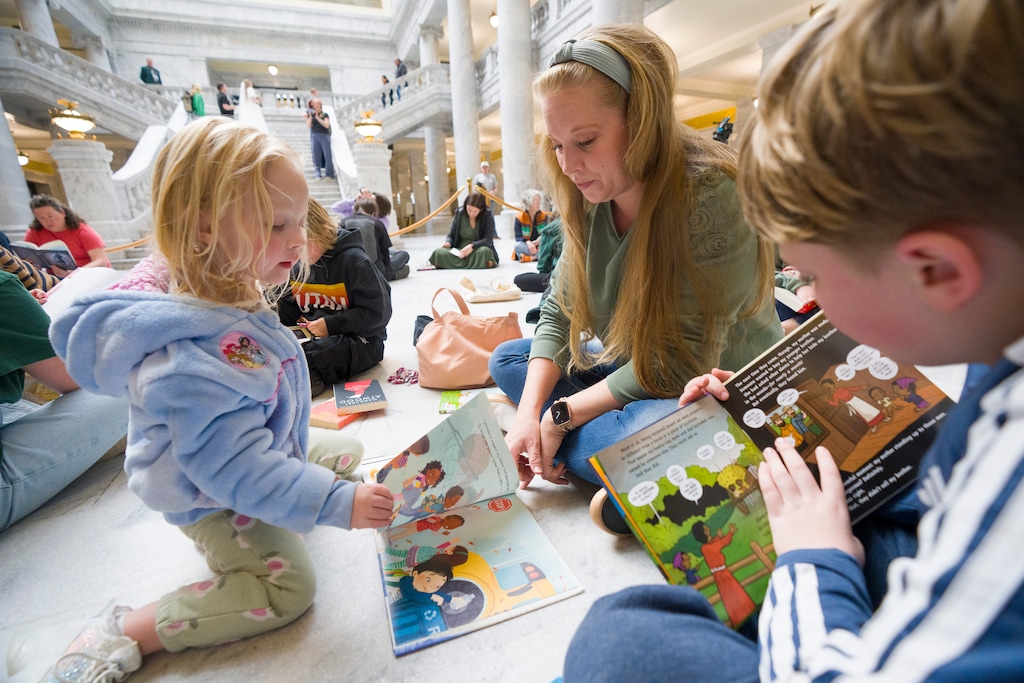
Utah elevated early literacy to one of its highest education priorities over the past several years. In 2022, SB127 (2022) created an initial statewide approach grounded in the science of reading, investing in teacher training, literacy coaching, evidence-based curriculum, diagnostic assessments and family engagement. In 2023, HB477 expanded access to full-day kindergarten. In 2026, SB241 defined grade-level reading, required individualized reading plans for struggling readers and set a statewide goal of 80% third-grade proficiency by 2030.
That is worth celebrating. But the next challenge is harder. Now we must execute.
As parents and literacy advocates who are working to support students and families in Utah, we believe it’s time to treat early literacy as we treat roads, water systems, broadband, and housing: essential infrastructure.
Successful implementation does not happen automatically. It requires sustained leadership, coordination across agencies, clear expectations for students and teachers, transparent data, ongoing support for educators and someone clearly responsible for ensuring the system moves in the same direction. Without that kind of governance, even the best policies risk becoming disconnected initiatives rather than a coherent statewide strategy.
This is not about creating another program. It is about creating clear ownership.
Who provides guidance, direction and vision? Who is responsible for monitoring implementation? Who ensures schools have the support they need? Who identifies schools succeeding against the odds and helps others learn from them? Who regularly reports to policymakers and the public on whether Utah is on track to meet its own goals? And does this person or organization have the support, authority and trust to do the job well?
In 2026, 71% of Utah third graders met the state’s newly defined benchmark for reading proficiency. That result reinforced a broader Kem C. Gardner Policy Institute finding that, despite increased focus and resources, overall reading performance has remained largely unchanged for at least a decade. RISE English Language Arts scores have not fully recovered from the pandemic, and NAEP Reading results continue to show long-term declines in reading achievement both in Utah and nationally.
The statewide average also hides hard truths. Only about 57% of economically disadvantaged students met the benchmark, along with just over half of Hispanic students, 45% of students with disabilities and only about one-third of English learners. These results should not serve as an excuse for lower expectations but instead guide our attention, resources and support to where they are needed most.
The stakes extend far beyond a report-card score.
Children who read proficiently by the end of third grade are much more likely to succeed academically, graduate from high school and enjoy stronger long-term economic and civic outcomes. Reading opens doors to algebra, science labs, job training, military service, college courses, small-business ownership and responsible citizenship. It also opens the door to culture: family stories, tribal histories, religious texts, literature, newspapers, ballots and the shared language of community life. When children read, they inherit Utah’s past and help shape our future.
Fortunately, the Gardner Institute’s report also offers reason for optimism.
It highlights research showing that, with evidence-based instruction and coordinated support, nearly every child can learn to read at high levels. It also identifies high-poverty schools across Utah that outperform the statewide average in reading achievement, reminding us that demographics may influence outcomes, but they do not determine them.
Parents remain essential partners in this effort. Reading daily with children helps build a love of reading, strengthens emotional resiliency, and promotes success in the classroom and beyond. Public education works best when parents, teachers, administrators, businesses and communities share the responsibility of educating our children. But statewide success also requires state-level leadership.
Utah chose literacy as a statewide focus. We enacted strong policies. We invested significant resources. We know far more today about how children learn to read than we did a generation ago.
The next step demands leadership, discipline and collaboration. It also requires continued resources, support and accountability to ensure these investments produce lasting results. If literacy is truly essential infrastructure for Utah’s future, then we must build the leadership and governance necessary to make every child, not just those in the right school or the right ZIP code, a successful reader.
Let’s measure honestly, hold ourselves accountable, fund what works, fix what doesn’t and refuse to let any child become invisible inside an average. If Utah sustains its commitment to early literacy and leads with evidence, urgency and high expectations, we will not merely raise test scores. We will raise readers, graduates, workers, neighbors and citizens who can build a more prosperous future for all Utahns.
The work is not finished. In many ways, it has only just begun.
(Christine Ivory) Christine Ivory serves as PTA President of her children’s elementary and middle schools and is involved with various initiatives supporting early childhood literacy and parent engagement.
Christine Ivory is an educator and an involved parent who has always been passionate about creating engaging learning environments. She served as PTA President of her children’s elementary and middle schools. Presently, she is involved with various initiatives supporting early childhood literacy and parent engagement.
(C. Hope Eccles) C. Hope Eccles served on the University of Utah Board of Trustees, the Utah Board of Higher Education and as Deputy Director for Higher Education under Governor Jon M. Huntsman Jr.
C. Hope Eccles is a longtime civic leader dedicated to advancing education and education reform, having served on the University of Utah Board of Trustees, the Utah Board of Higher Education, and as Deputy Director for Higher Education under Governor Jon M. Huntsman Jr.
(Janet Randall) Janet Randall is the First Lady of the University of Utah.
Janet Randall is the first lady of the University of Utah and has seen firsthand how reading can change the course of a life. She advocates for children and parents building better futures, and believes reading fluency is where that work often begins.
The Salt Lake Tribune is committed to creating a space where Utahns can share ideas, perspectives and solutions that move our state forward. We rely on your insight to do this. Find out how to share your opinion here, and email us at voices@sltrib.com.