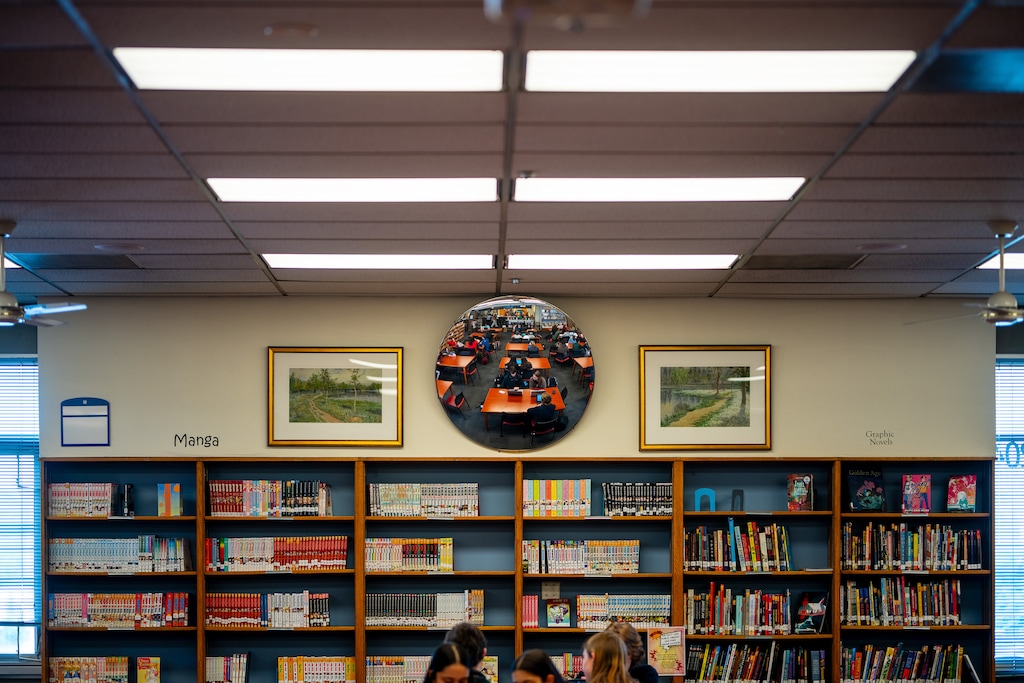
This August, I returned from summer break to my job as a high school language arts teacher to discover that 44 books are now banned from Utah schools.
These hasty removals were made possible by HB29, a bill passed in 2024 by our Legislature that gives carte blanche access to individuals in the community to complain about what the bill calls “objective sensitive materials” in schools.
In order to get a book banned at the district level, one community member — one parent who heard in their online activist group that a book was “bad” and Googled enough information — can file a complaint about the book and have it removed from schools without ever actually reading it.
Mind you, the bill isn’t even about the books actually being taught — books that are part of instruction already go through a rigorous process before they can be added as curriculum. “Objective Sensitive Material” criteria applies to any book that a student can access anywhere at school, like in the library or in a classroom.
Proponents of “parents’ rights” will say that parents should have a voice in what reading material their child has access to in schools. They absolutely should. At any point, any parent can submit a list of materials that they do not want their child to access at school, and teachers and librarians will adhere to parents’ wishes. We do it all the time.
These book-banning parents, however, don’t seem satisfied with the ability to make choices for their children — they insist on deciding for all the kids in public schools, regardless of their own parents’ wishes.
As a parent myself, I protest this bill that enables other parents to make decisions for me about what my children can read in school.
Two of my sons have graduated from a high school in my district within the past three years, and, in my opinion, one of the greatest assets of their education was their ability to access and learn from many different texts on a variety of topics and to open their minds to the world and perspectives outside their norm. My children learned to think carefully and critically while reading a number of books that other students may no longer have access to, including my still school-aged daughter.
I suppose that part of the assumption being made by the book-banning parents is that not every parent is capable of making good decisions for their children. Unfortunately, this is true. Some parents are not educating their kids about some of the topics viewed by HB29 as “objectively” harmful to read about — like sex, pornography, sexual assault and rape (Yes, the law includes assault and rape in its anti-porn bill, thus communicating a message to victims about the nature of the violence against them and fostering feelings of shame and self-loathing that may prevent them from seeking help). This is despite the fact that studies show teens are sexually active and, according to one report, 1 in 7 experience sexual abuse.
What are we doing, then, by removing books from schools like the young adult book “Everything, Everything” from our shelves when the only sexual content is between loving partners who demonstrate appropriate consent and use contraception? Or “I Am Not Your Perfect Mexican Daughter,” in which there is a non-explicit sex scene but also strong messages about personal strength and overcoming circumstances? Perhaps the scene was actually an excuse to ban a book that depicts an immigrant experience in a sympathetic light?
Is the bill really about getting smut out of schools, or is it about silencing certain perspectives and messages? What do we lose when valued classics by authors like Toni Morrison, Margaret Atwood, Khaled Hosseini and Kurt Vonnegut are now suddenly deemed pornographic?
Personally, I believe this kind of silencing of certain messages in public spaces puts us in danger of living in harmful echo chambers that divide us as a community. As a parent, this is not what I want for my children, and shouldn’t I have a choice?
(Kelli Nielsen) Kelli Nielsen is beginning her eighth year as a high school teacher in Utah and is a single mother of three children.
Kelli Nielsen is beginning her eighth year as a high school teacher in Utah and is a single mother of three children.
The Salt Lake Tribune is committed to creating a space where Utahns can share ideas, perspectives and solutions that move our state forward. We rely on your insight to do this. Find out how to share your opinion here, and email us at voices@sltrib.com.