For 99% of human history, we were wild. We spoke buffalo and wolf, wind and water. We knew the movement of animals, the coming of snow, which plants healed and which harmed. We were wrapped in an intimacy with the living world that fed body and mind — and gave spiritual meaning to our lives.
Over only a handful of generations, that intimacy began to unravel. We embraced a story of human advancement that required the living world to become something other than kin. A relative became a resource. She became an it.
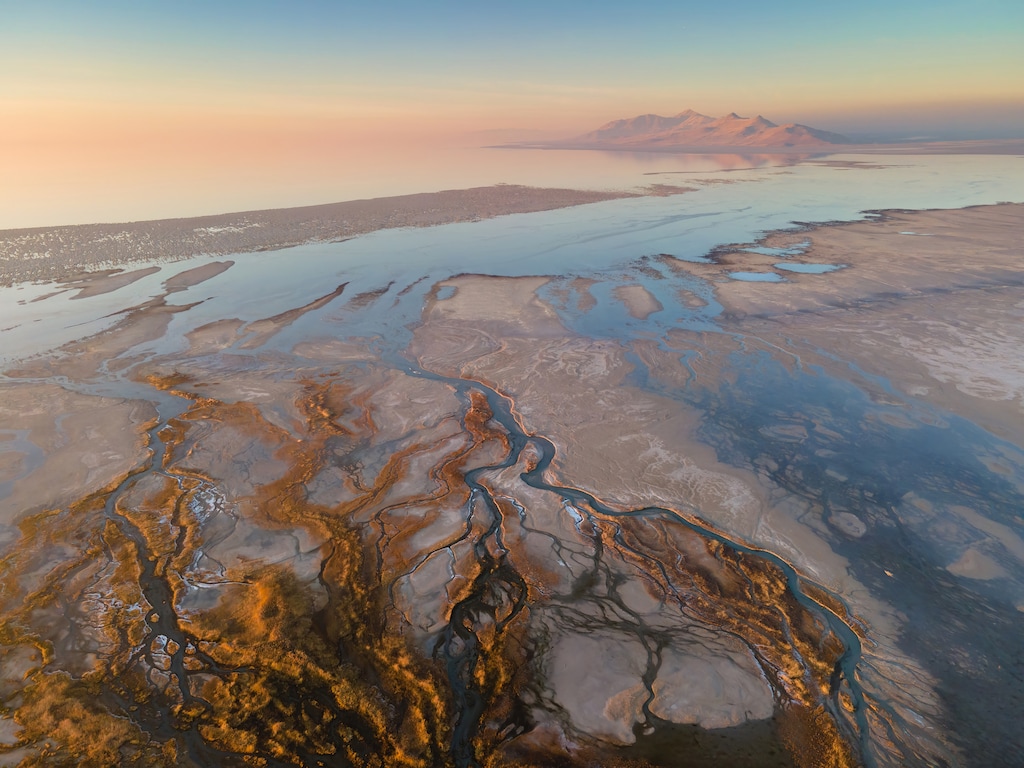
As Indigenous Peoples’ Day approaches, I am sitting with what that transformation has cost humanity. In Utah, the answer is written across a vast body of saltwater shimmering to our west.
The Great Salt Lake has been a place of worship for thousands of years. Shoshone, Ute, Goshute and Paiute peoples gathered salt and medicine here, prayed along her shores and followed the waters, animals and seasons that bound their lives to hers. They received from the lake and carried responsibilities in return. She was listened to and treated as a living relative.
When pioneers of The Church of Jesus Christ of Latter-day Saints entered the Salt Lake Valley in 1847, they, too, encountered this landscape through the language of the sacred. Church histories describe the valley, its salty lake “gleaming in the western sun,” as the promised refuge they had sought.
There is something powerful in that continuity: peoples separated by profoundly different histories recognizing something sacred in the same place. But sacred places are not immune to the stories societies build around them. Over generations, the lake has become increasingly understood through what could be extracted, diverted, allocated and monetized. We are living with the consequences. What once looked like abundance now threatens the source of prosperity itself, along with our physical and spiritual well-being.
There is a Zapotec teaching, recounted by author John Vaillant in “The Jaguar’s Children,” that explains that without corn, humans would not exist, and without us corn too would cease to be.
“And if we become separated? We will turn into different things. We will lose our strength, our understanding of what and who we are.”
I come from buffalo people, Red River Métis; I know this story. For generations, buffalo and people shaped one another. When that relationship was severed, neither remained entirely what they had been. What if the Great Salt Lake is sending us the same warning?
The crisis facing the lake is larger than water. It is a crisis of relationship. If relationship is the wound, restoring relationship must change who holds authority over what happens next.
Six sovereign Tribal Nations hold ancestral ties to the Great Salt Lake. Yet the steering committee helping shape Utah’s long-term Great Salt Lake Basin Integrated Plan includes water suppliers, agriculture, mineral interests, conservation organizations, universities and government — but not a single sovereign Tribal Nation. As a department of the state, the Utah Division of Indian Affairs has a seat. The Nations themselves do not.
On Indigenous Peoples’ Day, we should ask what becomes possible if Utah invites Tribal Nations to design and set the table. What if Indigenous knowledge, responsibility and spiritual relationship were placed at the heart of what comes next?
Tribal Nations could help create a guardianship model for the lake, bringing Indigenous law, science, ceremony and stewardship into the decisions that will determine her survival. Governance might begin with a different question: Who is the lake to us?
Perhaps some of our teachers are already there. Buffalo have lived on Antelope Island for more than a century, surrounded by the waters of the Great Salt Lake. I find myself wondering whether they might help us remember how to speak to her again — not as scenery or resource, but as one relative encountering another. If the lake is a resource, our first question is what we can take. If she is a relative, we must also ask what we owe.
INDIGENOUS LED’s Waters Remember Campaign is dedicated to creating space for Tribal Nations to imagine what Indigenous guardianship of the Great Salt Lake could become. The ambition is larger than representation. It is to restore Indigenous knowledge and authority to the care of a sacred homeland — and perhaps, in doing so, help all of us recover a relationship we have forgotten.
The Great Salt Lake has been sacred far longer than Utah has existed. The birds remember their way to her. The rivers remember how to dance to her shores. The buffalo are still there. The question is whether we will remember our way back into relationship with her — and what we might become if we do.
(Cristina Mormorunni) Cristina Mormorunni is Red River Métis and co-founder and executive director of INDIGENOUS LED, which is in formal partnership with A’nuche, a Ute Mountain Ute community non-profit.
Cristina Mormorunni is Red River Métis and co-founder and executive director of INDIGENOUS LED, which is in formal partnership with A’nuche, a Ute Mountain Ute community non-profit. Cristina lives in Park City, the ancestral homelands of the Ute and Shoshone people. She used AI to refine language and structure in this commentary. The ideas, argument and final editorial decisions are her own.
The Salt Lake Tribune is committed to creating a space where Utahns can share ideas, perspectives and solutions that move our state forward. We rely on your insight to do this. Find out how to share your opinion here, and email us at voices@sltrib.com.