We teach our children how to respond in the event of a fire, while at the same time hoping they are never in one. Why would we not want to prepare them to stay safe for a part of life that nearly everyone experiences?
Utah’s lack of regard towards comprehensive sex education (CSE) is hurting everyone. We are leaving generations of adolescents without the knowledge to make safe, informed decisions in their lives. Instead, we set them up for more harm down the road. We need to update Utah’s laws to ensure CSE be taught in our schools.
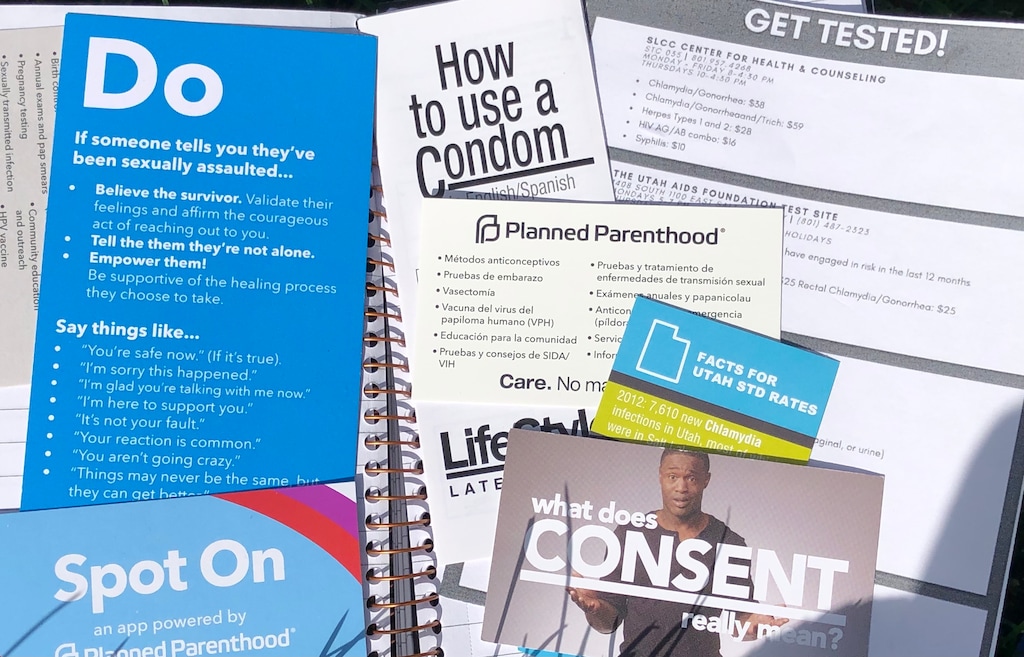
For almost three years, I worked at a county health department as a public health nurse. There, I saw first hand how the maturation education provided by Utah schools is failing people in their adolescence, following them as they enter young adulthood and beyond. I’ve talked with people whose entire sex education came from porn, with all of the problematic expectations that instills. I’ve talked with people who have been sexually active with multiple partners for years, and they had no idea they should be getting tested for STIs regularly. This blindspot in education is hurting our teens and young adult population. In 2022, approximately 60% of all Chlamydia cases in Utah were people between 15-24 years old.
Utah’s current laws require schools to provide some type of sex education, however only with strict restrictions requiring abstinence to be emphasized, followed by marriage and fidelity in marriage. Teachers are prohibited from discussions of abortion, and there is no requirement for teachers to teach about different methods of contraception.
We have strong evidence that abstinence-centered sex education does not result in lower rates of teen pregnancy or lower STIs in adolescents. Comprehensive sex education teaches not only teens, but youth of all ages developmentally appropriate information regarding relationships, values and rights, gender, violence and safety, life skills, human development, sexual behavior, and sexual and reproductive health. With CSE, education is given to students of all ages, with the content maturing alongside them. Early childhood CSE focuses on bodies, emotions, relationships, respect and basic safety; helping children grow up with an understanding of bodily autonomy and consent. Once it is age appropriate, such as entering adolescence, the conversations evolve to include STI prevention, contraception and sexual decision making.
When kids aren’t taught about their bodies and consent, they are unable to clearly identify when someone has violated their boundaries. They are left ill-equipped to advocate for their safety. Even if your teen isn’t interested in sex, they may be the victim of sexual harassment or assault. In 2021, 14.8% of high school students in Utah reported experiencing sexual violence within the past 12 months.
CSE provides students the tools to understand what is acceptable versus what is unacceptable in terms of boundaries and bodily autonomy, and how to advocate for themselves. This can reduce the number of people with tenuous understandings of consent, instead enabling them to recognize when their actions may be coercive to others. Decades of research has shown time and time again that CSE increases the understanding of bodily autonomy and supports healthier relationships when taught at a developmentally appropriate level.
A common concern with CSE is that it will encourage teenagers to have more sex. However, there has been no link between CSE being taught in schools and increased teen participation in sexual activity. Rather, the opposite has been found to be true. Youth who are part of CSE programs have been shown to engage in sexual behaviors later in their lives, and engage in sexual activity in safer ways. CSE does not mean omitting abstinence altogether. It just allows for other paths to be talked about and prepared for as well.
Teaching comprehensive sex education in schools will prepare our next generation for their lives as adults. As they get ready to go into the world, they will have tools in their toolbox they can reach for as they have new experiences, meet new people, date, get married and have their own kids. We need to stop ignoring a significant and valuable opportunity to set them up well for the rest of their lives.
There are so many things we teach kids to keep them safe in the event something happens, not because we are encouraging them to get themselves in the situation, but to minimize the potential harm that they may face. We should hold this same mentality for sex education.
Let’s teach our next generation what to do in the event of a fire. Utah needs to revise its laws around sex education, bring in an age-appropriate comprehensive curriculum, and require it be taught in all public schools.
(Katherine Allemeier) Katherine Allemeier is a nurse with experience in pediatric, psychiatric and public health care.
Katherine Allemeier is a nurse with experience in pediatric, psychiatric and public health care. She is studying to become a sex therapist and sex educator at the University of Utah through their Masters of Social Work program.
The Salt Lake Tribune is committed to creating a space where Utahns can share ideas, perspectives and solutions that move our state forward. We rely on your insight to do this. Find out how to share your opinion here, and email us at voices@sltrib.com.