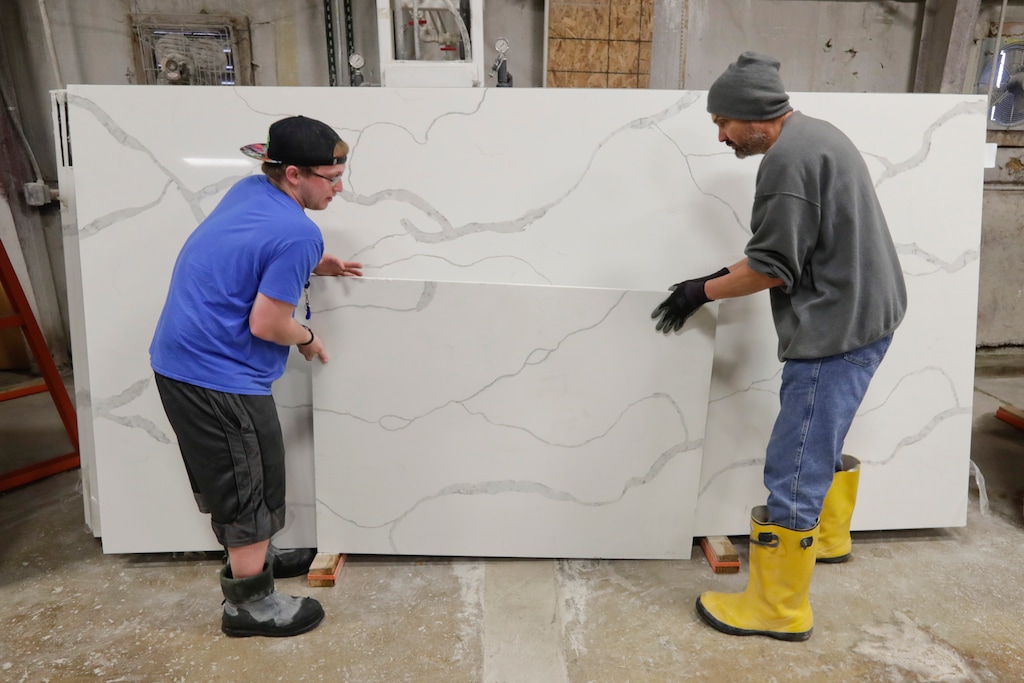
For more than 50 years, my family’s small business has helped Utah homeowners improve their family homes at every stage of life. My sons and I work with first-time homeowners to remodel kitchens, growing families to create space for their children and retirees to make aging-in-place improvements so they can remain safe, comfortable and independent in their homes.
No matter the project, the first question we get is almost always the same: How much will this cost? Unfortunately, a trade case now pending in Washington makes that question harder, threatening to make any home improvement involving quartz countertops and vanities more expensive.
Quartz has grown in popularity among families for good reason. It is low-maintenance, highly resistant to stains, available in a wide range of colors and styles, and its non-porous surface prevents bacteria from lingering.
Until now, it has also remained one of the more affordable countertop options available.
That affordability is now under threat. A handful of U.S. slab producers seeking steep tariffs and quotas on imported quartz products pushed forward a trade case that now sits on the desk of President Donald Trump. If approved, new restrictions would target imports that supply nearly 90% of the U.S. quartz market, leaving homeowners, contractors and small businesses with fewer options and higher costs.
The companies behind the petition sell premium countertop products at premium prices. They have every right to compete based on quality, innovation and service. But asking the federal government to raise the price of competing products means eliminating options for the customers we serve.
For many of those customers, imported quartz is the only option that makes a remodeling project financially possible. When affordable options disappear, families won’t spend thousands of dollars more. They will simply postpone their projects, scale them back or cancel them outright.
That hurts everyone.
It hurts cabinet makers waiting for the kitchen remodel to begin. It hurts skilled plumbers, electricians, painters, installers and countertop fabricators. It hurts local suppliers, delivery companies and small businesses that rely on a healthy remodeling market.
The proposed tariffs and quotas sitting on the president’s desk would not shift market share from imported quartz to American-made products. Instead, it would shrink the market for everyone except those pushing this case.
Fabrication shops across the country employ far more workers than the handful of companies producing quartz slabs domestically. When material costs rise sharply, fabrication shops receive fewer orders, reduce overtime, delay investments and in some cases are forced to eliminate jobs. These are exactly the kinds of small businesses policymakers often say they want to support.
Small shops like mine are the backbone of this industry. We compete on service, craftsmanship and trust. When costs rise because of policy decisions in Washington, we’re the ones left sitting across from families explaining why a project they planned — and budgeted for — may no longer be possible.
And when that happens, fabricators like us aren’t the only ones that lose work. I’ve spent my entire life in the cabinetry and construction industry. I know firsthand how our entire local construction ecosystem depends on a steady flow of home renovation projects.
The final decision on whether to impose tariffs and quotas now rests with the president. I hope he stands strong with homeowners and small businesses by rejecting tariffs and quotas on quartz.
This issue is about more than countertops. It is about keeping the American dream of homeownership and home improvement within reach for working families while preserving the American small businesses that help make those dreams possible.
(Steven B. Lloyd) Steven B. Lloyd co-owns Lloyd’s Remodeling & Cabinetry in Sandy with his two sons.
Steven B. Lloyd co-owns Lloyd’s Remodeling & Cabinetry in Sandy with his two sons.
The Salt Lake Tribune is committed to creating a space where Utahns can share ideas, perspectives and solutions that move our state forward. We rely on your insight to do this. Find out how to share your opinion here, and email us at voices@sltrib.com.