A cancer diagnosis is a life altering event. It is a disruption — of daily life, of finances, of families and of futures.
For people living with cancer, and for those who care for them, treatment is arduous and can be overwhelming. And for those living in rural communities, additional burdens like long, frequent travel to access care compounds the stress.
Nearly 25% of Americans live in rural areas, including nearly 400,000 Utahns, yet access to comprehensive cancer care is often concentrated in large cities. Rural and frontier communities have some of the nation’s most resolute and capable local care providers, but some aspects of treatment for rare or complex diseases require travel over great distances to access live-saving care. A study published in JAMA Open Network found 7% of Medicare patients crossed state borders to access cancer care, and the rate was double among patients in rural areas. As a result, many people living with cancer in rural communities often travel several hours each way just to receive the care they need to survive. People are left with an impossible choice: Endure exhausting travel while sick, delay or forego care altogether, or attempt to manage severe symptoms and side effects at home without adequate support.
The consequences of that distance are significant. Cancer mortality rates in rural regions are higher than in urban areas and patients often have lower quality of life. The disparity is not the result of biology.
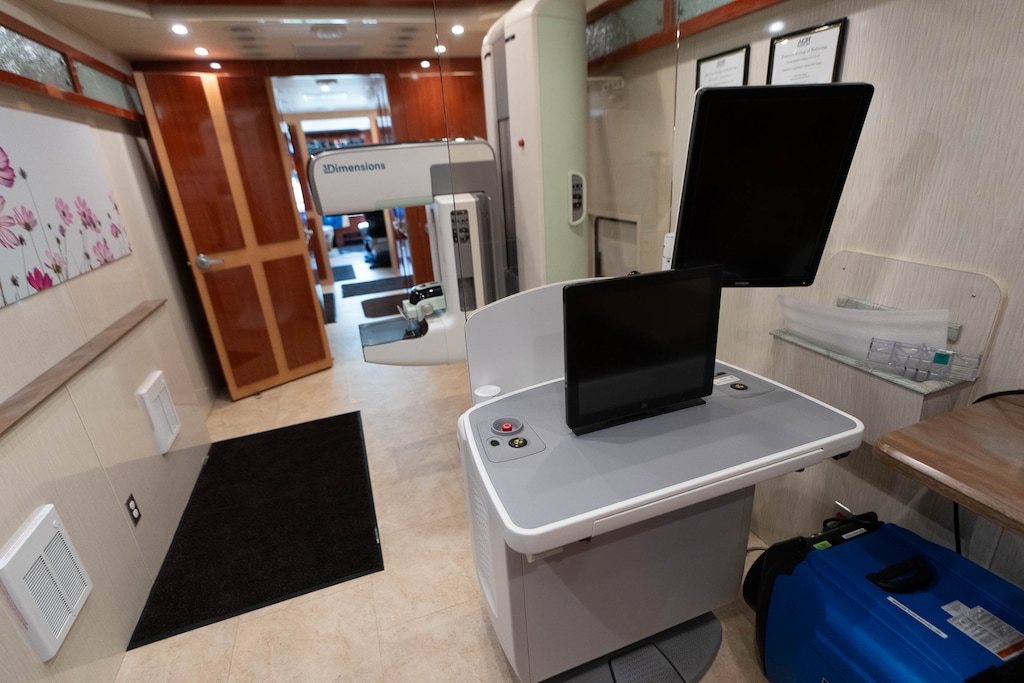
What if, instead of asking patients to travel great distances to access care, we do more to deliver care where patients live? That’s exactly what Huntsman Cancer Institute’s Rural Huntsman at Home Program does. Adapted from the hospital-at-home model, it delivers hospital-quality care directly to patients’ homes, specifically for those living in rural and frontier communities. It’s a demonstration project studying how to innovate the way care is delivered, enhancing access to more communities in the future.
Rather than requiring patients to travel long distances while managing fatigue, pain or side effects, the program is working to understand how we can bring care to more communities. Through in-home clinical services, remote symptom monitoring, telehealth and collaborations with local providers, Rural Huntsman at Home seeks to understand how to help patients manage some cancer-related symptoms safely at home, with the engagement of their care team. New services in the future will explore offering some aspects of treatment in their community.
The program is an example of a model called supportive cancer care — an approach that treats the whole person, not just the disease. It connects people living with cancer and their loved ones to real-life support alongside life-saving clinical treatments like chemotherapy, radiation and surgery. It includes symptom monitoring and management, pain control, emotional and psychological support, caregiver assistance, and help navigating the practical realities of serious illness—like the burden of having to travel far distances to access care. Research consistently shows that when patients receive this kind of care, they experience better quality of life, fewer emergency room visits and improved outcomes.
Nationally, access to Supportive Cancer Care remains the exception, not the rule. Too many people and their loved ones shoulder the burden of the cancer journey alone.
That’s why The Sheri and Les Biller Family Foundation recently launched Support Is Care, a national campaign with a simple mission: Help people living with cancer and those who love them understand this kind of support is possible, that it’s part of high-quality care, and that they have every right to ask for it.
We need more efforts like Rural Huntsman at Home that test and refine how we can improve cancer care for patients who live far from a major medical center— in Utah, the Mountain West and across our country. We can bring these services to the people who need them, and help address the rural cancer care gap. We can define what compassionate, community-based cancer care looks like in rural America and ensure that no matter a patient’s zip code, they have access to specialized care that treats the whole person — not just the disease.
(Kathi Mooney) Kathi Mooney is an investigator at the Huntsman Cancer Institute at the University of Utah.
Kathi Mooney, PhD, RN, FAAN, is an investigator at the Huntsman Cancer Institute at the University of Utah, Primary Investigator of the Rural Huntsman at Home program and a Distinguished Professor in the College of Nursing at the U. The Rural Huntsman at Home program has received support from Huntsman Family Foundation, the ARPA-H PARADIGM program, and the Rita and Alex Hillman Foundation.
(Sheri Biller) Sheri Biller is co-founder and president of The Sheri and Les Biller Family Foundation.
Sheri Biller is an advocate, philanthropist and the co-founder and president of The Sheri and Les Biller Family Foundation.
The Salt Lake Tribune is committed to creating a space where Utahns can share ideas, perspectives and solutions that move our state forward. We rely on your insight to do this. Find out how to share your opinion here, and email us at voices@sltrib.com.