Nearly every day, we learn more about what our political leaders, in Washington and Utah, think is wrong with America’s public lands.
It’s that they are just too, well, public.
How gauche.
How much better it would be, the Republicans in charge seem to be saying, if public lands were more private. Or at least made to benefit private interests.
Consider:
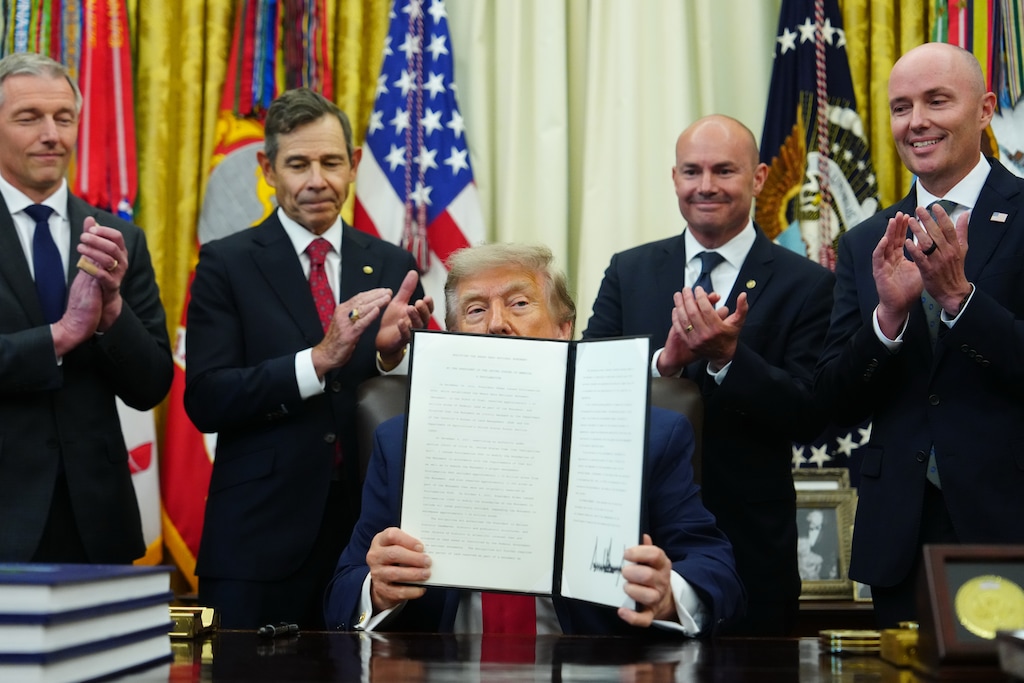
• The Sharpie was hardly dry on President Trump’s July 13 order removing 90% of the Bears Ears and Grand Staircase-Escalante national monuments from that protected status before a mining company filed seven claims to open mines on land that had been protected by Bears Ears. Two more claims were made the next month.
It’s easy to suppose that the mining interests had advance knowledge of Trump’s plan, and are in a hurry to establish their claims before the next administration restores the monuments. Again.
• Even before Trump signed his monument-disembowlment order, two top executives of uranium producer Energy Fuels between them bought nearly 80,000 shares in their own company’s stock, apparently expecting to benefit from the act as their firm’s processing mill sits about a mile from what had been the Bears Ears boundary.
• The U.S. Forest Service Tuesday announced plans to blow up the so-called “roadless rule,” a Clinton-era regulation that prohibited building roads through 45 million acres of designated wilderness lands across the nation. Of that, some 4 million acres of previously protected land is in Utah, with nearly all of the rest of it across the American West.
The argument could be made that the existing rule is too one-size-fits-all for such a large and diverse area. But there is no reason to trust this administration to replace it with anything wiser.
• One excuse for the end of the roadless rule is that it makes it too difficult to get firefighters and equipment into remote areas to prevent or fight fires. But it is hard to see that the administration cares much about fires, not when it recently cut some 15% of elite firefighting crews from the federal budget.
That makes the work of fighting fires in this extraordinarily flammable season even more dangerous for those still on the job. Including the two helicopter pilots who died Aug. 7 in a crash while fighting Utah’s Widemouth 2 Fire.
• Of course, fighting wildfires remains a priority, if the fire threatens the property of someone who is good with the administration. Such as when an undersecretary in the Agriculture Department reportedly demanded firefighting aircraft be diverted from much larger fires in Idaho and, maybe, Utah, to quench a tiny seven-acre blaze near his Idaho ranch.
Utah’s ruling class, of course, is totally on board with Trump’s monument reduction, and presumably with the destructive activities that will follow. If they have any issues with any other administration moves to degrade public lands for private benefit, we haven’t heard about it.
So Utah voters will have to pick up the cause themselves.
Editorials represent the opinions of The Salt Lake Tribune editorial board, which operates independently from the newsroom.