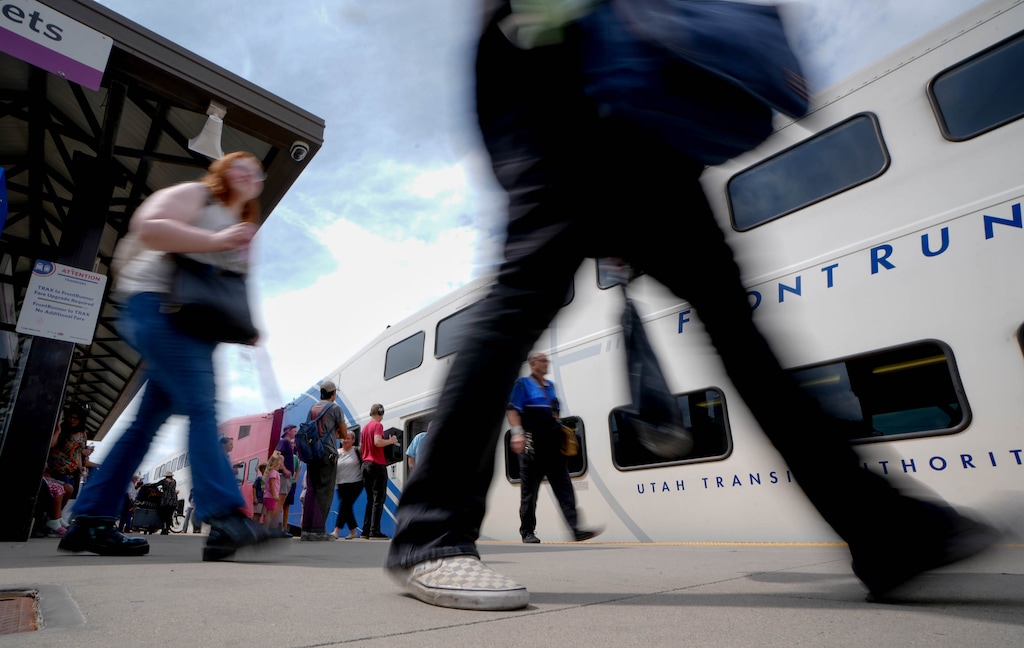
The Utah Transit Authority is looking up the wrong street.
Managers at the Wasatch Front’s public transit agency are considering a plan to raise the basic fare for a bus or light rail ride from the $2.50 it has been for the past 13 years to $3.
If that plan takes effect, perhaps in the spring, it would make UTA’s basic fare among the highest in the nation, tied with systems in San Francisco and Seattle for the most expensive in the country.
That’s too much.
If anything, UTA should be looking for ways to reduce its fares. Like, free. Free would be good. It would get more people on the buses and trains, reduce the taxpayer-supported cost per ride and make the system more of the public good it is supposed to be.
Of course, calling it “free,” doesn’t mean that nobody pays for it. Taxpayers pay for it, whether they ride the system or not. But the lion’s share of the system’s cost already comes from the regional sales tax and from federal grants. Fares bring in a minuscule 4% of UTA’s revenue.
Anyone who needs public transportation to get to work, to school or to important things such as health care visits will find this hike difficult to swallow. Even those who can handle the higher price, or never ride UTA to begin with, should see that anything that discourages ridership is a bad idea.
Raising transit fares, discouraging ridership, in a metropolis that already suffers from abominable air quality is exactly the wrong thing to do. Robust public transit also slows the pressure to spend ever-larger amounts of taxpayer money on ever-wider highways, fills fewer parking spaces and helps an economy that needs lower-wage workers to have a way to get to their jobs. We should all say so.
The agency is taking public comments (rideuta.com) on the proposed fare hike through Sept. 9, and has scheduled a virtual public hearing for Aug. 26 at 5:30 p.m. (It’s online, so you don’t even need to buy a bus ticket to participate.)
Earlier this year, the Utah Legislature passed a bill that could reduce the ability of local governments to jointly manage UTA’s budget and operations and assigned that authority to a new state-controlled board and management. That limited the agency’s flexibility and emboldened the state’s habit of making transit services secondary to highway construction.
Collecting fares, meanwhile, comes with its own costs. Ticket machines (often broken), card readers, maintenance and upkeep, UTA police officers checking tickets when they should be focused on passenger safety. All that costs money. How much of its budget would the agency save by doing away with all that? 4%?
UTA has had, and made frequent changes to, ways to lower the cost of travel for low-income families, the elderly and students. Good. But all that also adds to administrative overhead and makes riding the system more complex, other problems that would go away in a free-fare system.
Another idea UTA is considering is a mechanism that would allow passengers to pay for their rides simply by tapping a regular credit or debit card, without the need to fumble with cash, buy tickets or get a monthly pass. That’s something that is common to modern transit systems around the world and, if it is going to charge fares at all, UTA should adopt such a plan.
But even such an easy-to-use fare system would come with a big initial price tag, something that could be avoided by going fare-free.
If you agree, or if you disagree, let UTA know. The decision is coming soon, and you don’t want the train to leave the station without you.
Clarification, Aug. 26 at 12:45 p.m. • This editorial was updated to reflect that the ability of local governments to jointly manage UTA’s budget and operations has changed, rather than been removed.
Editorials represent the opinions of The Salt Lake Tribune editorial board, which operates independently from the newsroom.