“There go my people. I must find out where they are going so I can lead them.”— Alexandre Auguste Ledru-Rollin, French politician and labor leader, 1807-1874
The fear that a ginormous, water-guzzling, air-befouling, weather-modifying data center planned for Utah’s northwest corner was a done deal seems to be easing just a bit. It’s not hard to see why.
A handful of key state officials are now promising that, before the project actually gets built — if it ever does — the appropriate environmental reviews, with opportunities for public comment, will happen.
That doesn’t mean that the people who have stood up to what appeared to be a pre-greased mega-project can rest easy. Vigilance and activism are what have worked so far, and will be necessary going forward. As long and exhausting as that process might be.
It will take a lot of continual public outcry to counterbalance the monied interests pouring campaign contributions into the coffers of Utah Senate President Stuart Adams and other powerful worthies who have been pushing the plan.
Few Utahns had any inkling that a little-known state agency called the Military Installation Development Authority (MIDA), which Adams chairs, had put its weight behind the Stratos Project, a proposed data center that would, at full build-out, generate and consume twice as much electricity as the whole state of Utah.
The Box Elder County Commission had to sign off on the project before the MIDA board could take over all land-use, water, energy, environmental and tax-abatement authority over the 40,000-acre project — immune from any democratic oversight.
Despite loud public objections, online and in person, commissioners did exactly that. Given that the land is privately owned, not part of any city and not zoned for any particular use, commissioners argued they really didn’t have the power to stop it.
But others do.
After displaying a fit of pique unworthy of his office, Gov. Spencer Cox walked back some of his comments about how public opposition to data centers was “the dumbest thing ever.” He now promises “transparency, accountability and high standards” going forward.
Tim Davis, commissioner of the Utah Department of Environmental Quality, promised that the project will be subject to state air and water regulations, with ample opportunity for public comment and at least a year’s worth of air quality monitoring to establish baseline measurements.
Saturday, the Utah Republican Party’s Central Committee approved a resolution calling for “transparency, legislative oversight and enforceable public protections” regarding such projects.
Wednesday, the Utah Legislature’s Natural Resources Interim Committee voted unanimously to commission an independent study into the impact data centers might have on the state’s water, air and wildlife.
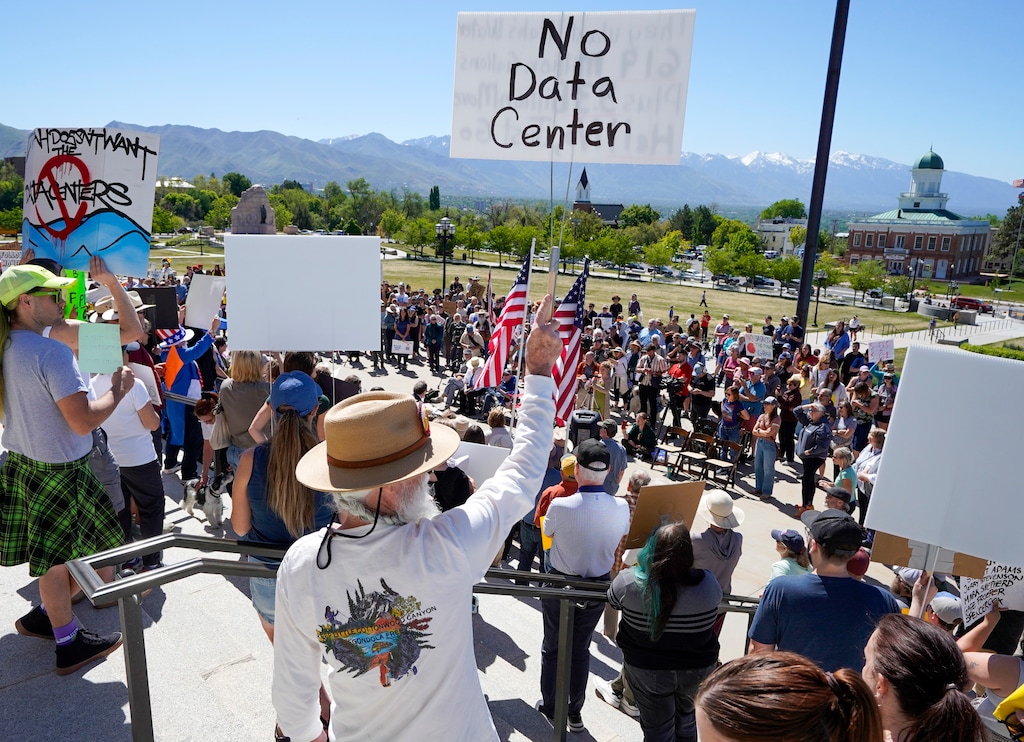
It is unlikely that any of that would have happened if it were not for the loud and sustained public outcry, from full-time activists and a lot of just regular people, demanding to be heard.
This is an issue that has united people across the political spectrum. Populist influencers such as Tucker Carlson and local MAGA politicians, including congressional candidate Karianne Lisonbee, are speaking out about the hushed and rushed process and big money rolling over the people.
Kevin O’Leary, the celebrity investor who has become the public face of the project, didn’t help his cause by spouting false accusations that opposition to the project was coming from paid agitators who had been “bused in.” Or that the real source of objections was the government of China.
When someone is telling that many lies about you, you have to wonder how many lies he is telling to you.
New pledges of proper environmental reviews should help turn the heat down just a bit. Threats of violence aimed at the county commissioners were inappropriate in any case. Nasty stuff like that is wrong and doesn’t help the cause.
We now have reason to hope that the voice of the people in Utah will have more power than monied interests from who-knows-where. As long as that voice remains strong.
Editorials represent the opinions of The Salt Lake Tribune editorial board, which operates independently from the newsroom.