This is not an episode of “Shark Tank.” The show where some starry-eyed entrepreneurs appear before a panel of super-rich investors with an idea they are confident will be the next big thing in fast food, baby care or fashion and instantly walk away with some serious seed money.
This is real life. The place where Utahns live and work and raise their families and have some hope of living a decent life, with water and affordable electricity and things like that.
Decisions on plans that could seriously damage an area’s livability and ecosystem are not to be made on the basis of an elevator pitch and on-the-spot decisions. No matter what promises are made or how much pressure state officials might bring to bear for instant approval of a humongous data center that almost nobody knew about until the last minute.
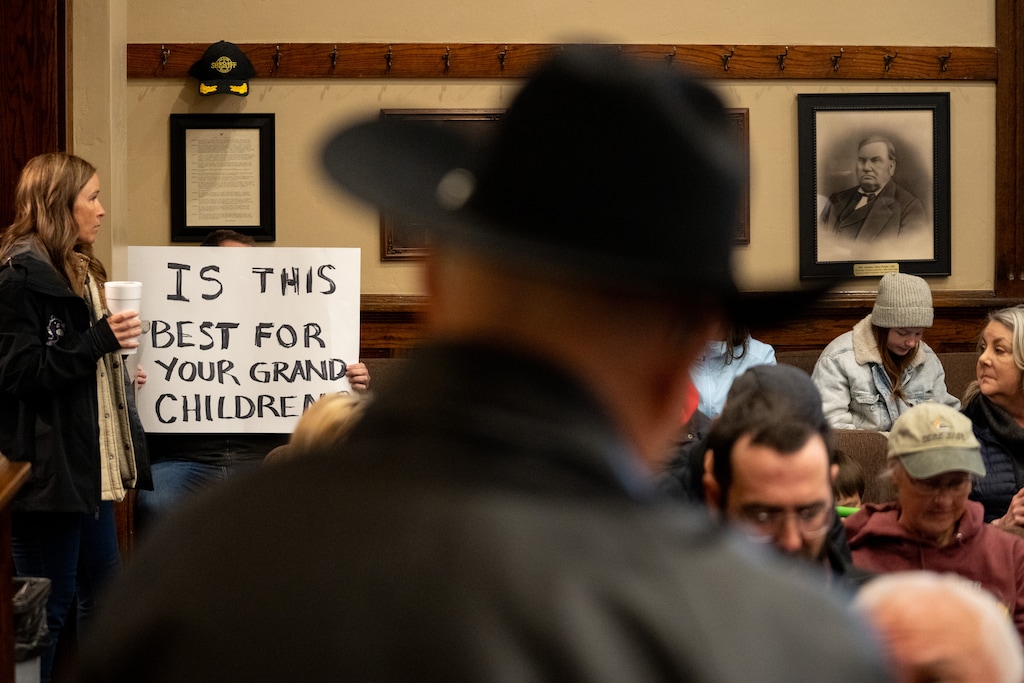
So all credit to the Box Elder County Commission for, so far, refusing to be steamrollered by “Shark Tank” celebrity investor Kevin O’Leary. Also to the people of Box Elder and nearby counties who — informed by The Salt Lake Tribune, not developers or the state agency pushing the plan — showed up in large enough numbers to get the county’s attention.
The pitch is for a “hyperscale” data center campus covering more than 41,200 acres west of Tremonton, between the Great Salt Lake and the Idaho border. Most of that is private land already made available to developers by current owners, with 1,200 acres coming from state trust lands or bits of the Pentagon-owned Utah Test and Training Range.
At full buildout, developers tell us, the project will need 9 gigawatts of power. Right now, the entire state of Utah runs on less than half of that.
Not to worry, project boosters assure us. The data center — aka the Stratos Project, aka Wonder Valley — will tap into a nearby natural gas pipeline and generate its own juice. Further fouling the already dirty air of northern Utah (though not as much as it would if it burned coal) and likely increasing temperatures.
And water? Utahns need not worry your parched little heads about that. We’ve got this nifty new cooling process that will reclaim the water it uses and feed it to the thirsty Great Salt Lake. Win-win, right?
There is not a single reason why Utah, or Box Elder County, should believe a word of that.
It might be true. But what if it isn’t? What if the project gets underway and needs some other source of power, inflating the cost of electricity for everyone else? What if the water reclamation system doesn’t work as promised?
By then, will the project be too big to fail? Demanding more public subsidies or more drain on our water and power systems? Seeking even more in the massive tax breaks the state and its Military Installation Development Authority have already offered?
The Box Elder County Commission will consider the issue again at a 4 p.m. Monday meeting, this one at the county fairgrounds in Tremonton to accommodate the expected large turnout. The county has launched a web site with information on the proposal and providing an opportunity for public comment — something that has been woefully lacking so far.
Even then, it would be foolish for the commission to approve the plans without a lot more hard information about how it will all work and some independent expert analysis of how realistic the plans for power generation and water use are. And what might happen if none of it works.
O’Leary, aka Mr. Wonderful, has said that it was wonderful to find in Utah a state where public officials, including Gov. Spencer Cox, are willing to move quickly — i.e., without subjecting the process to public comment or rational thought — to get the project approved.
Wonderful for him, maybe, but not for Utah.
Editorials represent the opinions of The Salt Lake Tribune editorial board, which operates independently from the newsroom.