 Sean P. Means
 Jordan Miller
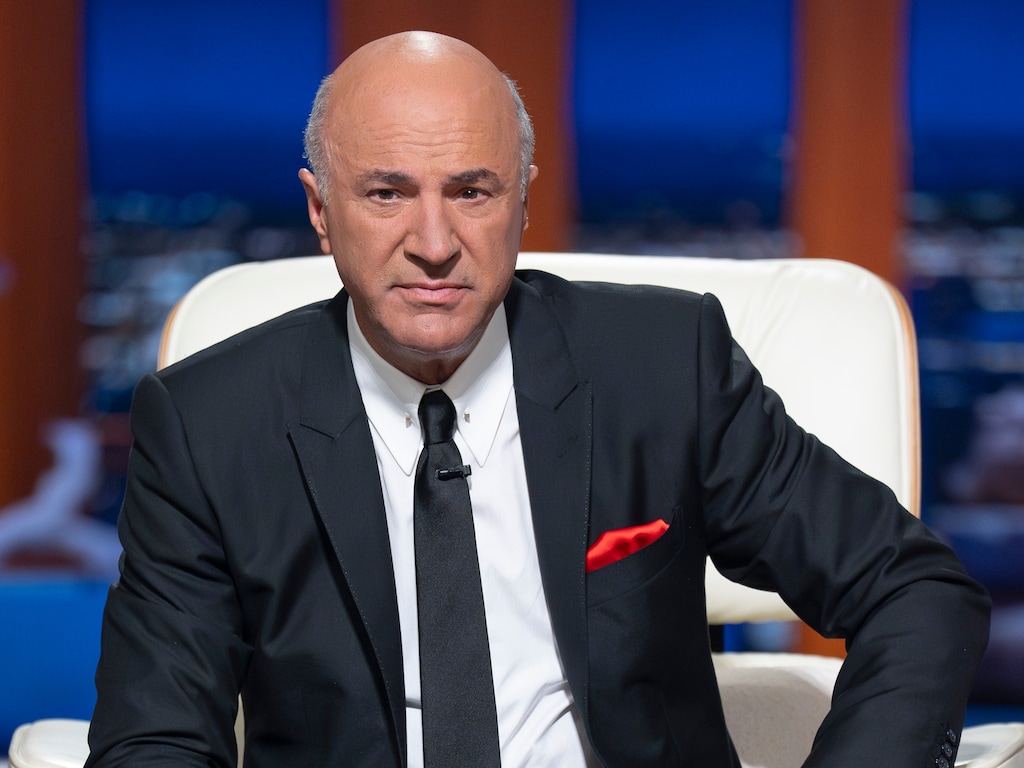
After pitching a “hyperscale” data center complex to Utah leaders last week and touting it Monday on Fox News, celebrity investor and “Shark Tank” star Kevin O’Leary is fast becoming the public face of the massive project being proposed for Box Elder County.
The Canadian-born O’Leary — who talked to the board of Utah’s Military Installation Development Authority about the project Friday — is described on the website for his company, O’Leary Ventures, as “a renowned global investor, venture capitalist and capital markets expert.”
His history as an investor has its ups and downs, as his celebrity has risen through “Shark Tank” and his acting debut in last year’s “Marty Supreme.”
Meanwhile, a similar data center campus O’Leary Ventures is backing in Canada has been stalled, with construction still pending nearly a year and a half after it was first announced.
O’Leary’s career took off after he co-founded Softkey Software Products in 1986, an educational software business that later rebranded as The Learning Co. In May 1999, the toy maker Mattel acquired The Learning Co. for more than $3 billion.
That same year, O’Leary was named as a defendant in a suit brought by stockholders of a business that had merged with The Learning Co.
In the complaint, stockholders alleged that The Learning Company overstated its revenues in 1998, shortly before Mattel purchased the company. The acquisition cost the toy maker millions in losses, leading stockholders to file suit against O’Leary, Mattel and other executives from The Learning Co.
Mattel later settled with shareholders in 2002 at a cost of $122 million, leading many to call the acquisition one of the worst in corporate history, according to The Los Angeles Times.
‘Shark Tank’ and ‘Marty Supreme’
According to the website Shark Tank Insights, which covers the reality-competition show and the businesses that have pitched on it, O’Leary in 2025 had a net worth of $460 million.
Since O’Leary first appeared on “Shark Tank” in 2009, the site said he has invested nearly $37 million in 132 deals — 65 of them on his own and 67 in collaboration with other investors on the show. In the series, O’Leary is sometimes referred to as “Mr. Wonderful.”
One of his most successful deals was for the meal-kit company Plated, into which O’Leary invested an undisclosed amount in 2014 for a 2.5% share in the company, after a deal with fellow investor Mark Cuban fell through, according to CNBC. In 2017, co-founders Nick Taranto and Josh Hix sold Plated to Albertson’s, the Boise-based supermarket chain, for $300 million.
Not all of O’Leary’s investments have done so well. In 2022, on an appearance on CNBC’s “Make It,” O’Leary said he once lost $500,000 on a telecom startup. He declined to divulge the company’s name, citing litigation.
O’Leary told CNBC he put $250,000 into the deal, and “the guy calls you up four months later saying, ‘Look, I burned through all the cash. But I know what I did wrong. I need another [$250,000].”
O’Leary conceded that he went against his instincts and put in another $250,000. “[The guy] went to zero 60 days later. So I lost half a million dollars,” O’Leary told CNBC. “The lesson is: Listen to your gut, because that’s your own experience [talking]. You gain that over time. You can’t forecast it. You have to learn it.”
O’Leary made his acting debut last year in the Oscar-nominated “Marty Supreme.” The role of Milton Rockwell, a pen-making tycoon who bankrolls the table tennis career of the overconfident Marty Mauser (Timothée Chalamet), took advantage of O’Leary’s persona as a hard-nosed businessman.
The first Wonder Valley
One of O’Leary Ventures’ major current projects is Wonder Valley, a massive data center park in the Canadian province of Alberta. According to a CBC report earlier this month, the project was first announced in December 2024, and construction has not yet begun.
The proposed data center campus would cost $70 billion (Canadian) to build and use 7.5 gigawatts of electricity, the CBC reported.
Alberta’s Ministry of Environment and Protected Areas ruled this month that the park is exempt from needing an environmental impact assessment. However, the ministry told the CBC the Wonder Valley project “must provide detailed technical assessments on impacts to air, land and water, and show the project can be built and operated safely” before it can secure the permits needed to start construction.
O’Leary Ventures is referring to the proposed Box Elder County project as Wonder Valley Utah.
An A.I. arms race with China
Appearing Monday on Fox News’s “Fox & Friends” Monday, O’Leary gave co-host Brian Kilmeade a pitch for the Utah project that was similar to what he told the MIDA board — that it could even the A.I. “arms race” between the United States and China.
“We can’t let them beat us in A.I., because the future conflicts of the world … are really compute-driven,” O’Leary told Kilmeade. “All these drones attacking everywhere and robotics in the future, we need to lead in A.I. in perpetuity. Data centers are what we need, and we need them now.”
O’Leary touted Friday’s decision by the state’s MIDA board to push ahead on the Box Elder County project.
“Utah stepped up and said, ‘Look, we can compete. Not only do we have the land, 40,000 acres, we’ve got a pipeline running through the land, and we have this [MIDA] designation that can accelerate permitting,’” O’Leary said.
He added: “Most people don’t like data centers, for good reason. You tap into the grid, and all of a sudden, the electrical costs for the church and the community and the residents all go up. That’s why there’s been a lot of pushback.”
With the Utah project, he said, “we’re building power from scratch, from the [Ruby] pipeline. And the pipeline is natural gas, and we’re going to burn it with turbines, [which is] clean, but we can also give back to the grid. That’s good for the community [and] for the country.”
The project’s future is now in the hands of the Box Elder County Commission, which voted Monday to delay its decision by a week.