 George Pyle
Literate people of the world: Please, don’t give up on Utah yet.
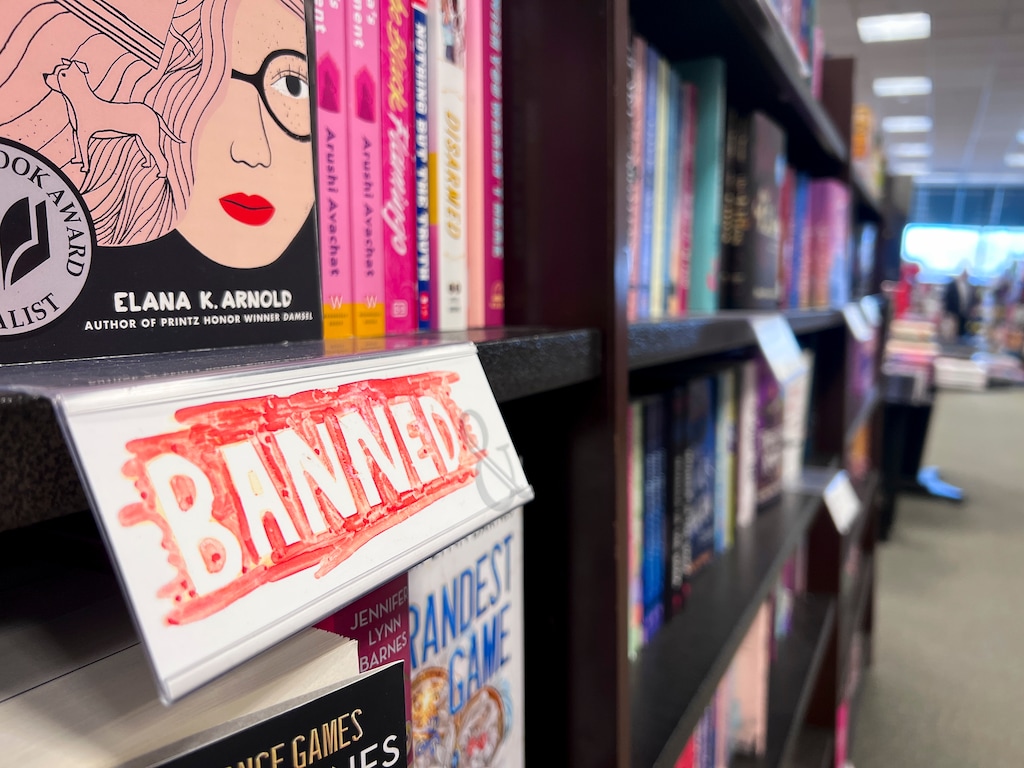
If you have heard anything about Utah recently (other than about its high-flying college football teams) it is probably in regard to its shameful law that sets out to ban certain books from the libraries of public and charter schools.
So far, 45 books have been removed, and destroyed. Most of them are by female authors, and many deal with LGBT themes.
What you may not have heard is that the Utah lawmaker most responsible for that law was soundly defeated in his latest attempt at re-election.
The blue wave that swept across the nation was felt here, too. Republican state Rep. Ken Ivory, after eight terms in the Utah House of Representatives, lost to a political newcomer named Drew Howells, a Democrat.
Howells, who served in both the Air Force and Army Reserve before receiving a medical retirement due to PTSD, pulled in 58% of the vote to Ivory’s 42%. A good thumping in a district that went for Donald Trump by a 5% margin two years ago.
Howells hadn’t sought elective office before, but had been active in the successful 2018 voter initiative to make marijuana legal for medical purposes.
To judge from both candidates’ campaign webpages, the book ban was not the main issue. Ivory’s online list of key issues doesn’t mention it.
Readers have to go a long way down Howells’ list of issues — a lot about veterans, affordability, healthcare, environmental protection, public transit, reproductive freedom — before getting to the tab “libraries and intellectual freedom.”
There you find his clever video — the only video on the issues page — about how much he and his charming service dog, Sherman, love going to the public library and how important reading is for young people. About how Howells is a proud member of the “Reading Rainbow” generation.
There he notes the books Ivory and company fear are often written at a grade level that too many Utah students haven’t mastered.
“It’s not about what kids are reading,” Howells said. “It’s that kids aren’t reading. Period.”
The book ban, Howells told me, was not number one in the minds of voters. As he and his supporters went door to door in the communities of West Jordan and Sandy, he said, they found people worked up over corruption in government and the cost of living.
But the cause of intellectual freedom was popular, and won Howells early support from the Utah Education Association and an organization called Let Utah Read.
It was also personal.
“I grew up a closeted kid in a Mormon home at the height of the AIDS epidemic,” Howells said in a series of Facebook direct messages we exchanged. “The only definition I had of who I was came from church pamphlets, and it was built on shame.”
The high school library, he said, gave him refuge.
“Books gave me language for who I was. I was able to see myself in the characters of the books, what love could look like, and how to keep myself safe.”
Parents have a right to monitor, and try to control, what their children read, Howells said.
“But at the same time, a high school teenager also has their own intellectual autonomy, and that should also be protected.”
Books are removed if found by a local school board, based on a complaint from a parent, to contain not just pornography but “objective sensitive material.” The law is being challenged in court, of course, by locals, by the ACLU and the estates of Kurt Vonnegut and Toni Morrison.
The actions flow from a 2004 state law, House Bill 29, Sensitive Material Review Amendments, carried by Ivory and passed overwhelmingly by the Republican supermajority. It commands that any book that has been removed by three school districts (or two school districts and five charter schools) must be removed from the shelves of all 41 Utah school districts and all 139 charters.
The Utah State Board of Education has the power to overrule such a ban but, so far, has not.
Republicans still control both houses of the Utah Legislature, though the margin is a little closer, as well as the governor’s office and the state Supreme Court. The book-ban law will probably remain on the books, for now.
But the knowledge that the state’s book-burner-in-chief has, like so many other culture war Republicans, been shown the door, should give the readers among us some comfort. And make Utah a little less of an outcast among literate humans everywhere.
George Pyle, reading The New York Times at The Rose Establishment.
George Pyle is the editorial writer for The Salt Lake Tribune.
The Salt Lake Tribune is committed to creating a space where Utahns can share ideas, perspectives and solutions that move our state forward. We rely on your insight to do this. Find out how to share your opinion here, and email us at voices@sltrib.com.