When a family believes a government agency’s negligence contributed to someone’s death, most people would expect the outcome of a lawsuit to depend on the evidence. What did officials know? What were they required to do, and could their actions have prevented the death?
In Utah, those questions can go unanswered because the law allows the government to avoid the lawsuit altogether.
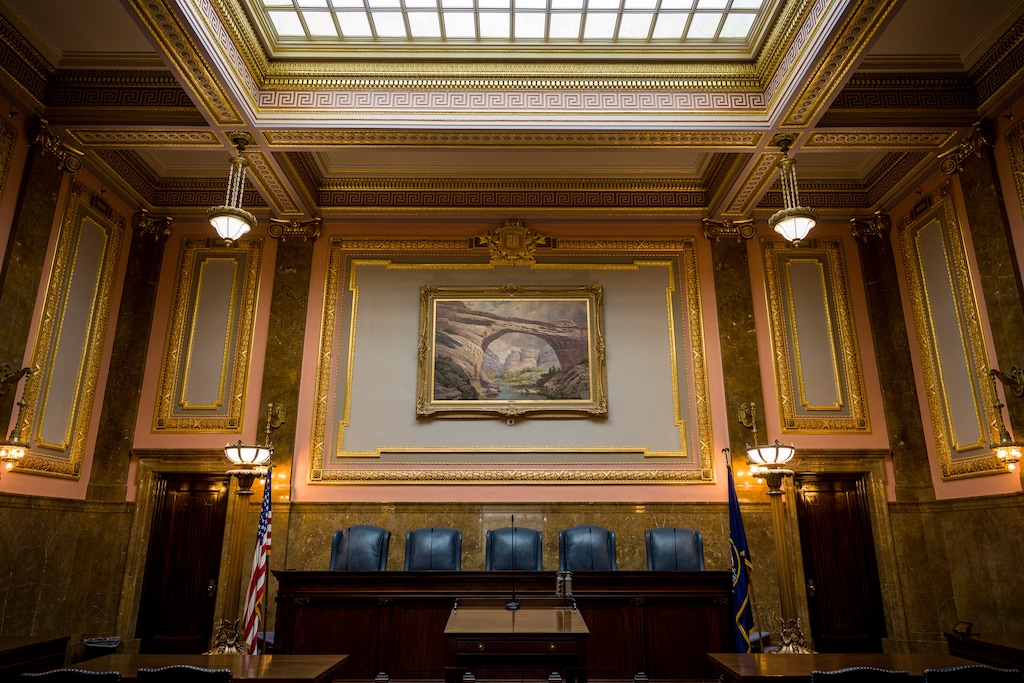
Our firm represents the families of Gabby Petito and Amanda Mayne, whose wrongful death cases were dismissed under Utah’s Governmental Immunity Act. Both families are challenging those dismissals before the Utah Supreme Court, with oral arguments scheduled for Dec. 9. Their appeals concern a constitutional protection that should matter to anyone who expects public institutions to answer for the harm they cause.
The Utah Constitution states that “the right of action to recover damages for injuries resulting in death, shall never be abrogated.” In ordinary language, that means the right to bring a wrongful death claim cannot be abolished. We believe the Governmental Immunity Act violates that protection when it prevents families from pursuing otherwise valid wrongful death claims against municipalities, like Moab City and Salt Lake City.
Gabby’s family alleges that Moab police failed to enforce Utah’s domestic violence laws during their August 2021 encounter with her and Brian Laundrie. Amanda’s family alleges that Salt Lake City police failed to take necessary action before her death in 2022. The appeals concern whether those claims may proceed; they do not ask the Supreme Court to decide the underlying allegations of negligence. Allowing the cases to move forward would give the families an opportunity to present their evidence, subject to the same burden of proof that applies to other negligence claims.
The difficulty is that governmental immunity can prevent that process even when a family alleges serious failure. Under the act’s exception for injuries arising from assault or battery, the fact that another person committed the fatal attack can shield the government from liability for its own alleged contribution to the death. This was the result in Tiede v. State, the 1996 Utah Supreme Court decision at the center of the constitutional challenge.
The issue also extends beyond the families our firm represents. Charlie Kirk’s family has filed a notice of claim alleging security failures of Utah Valley University before his death. In a state-law wrongful death action, the university could invoke the same assault-or-battery immunity even if its own negligence contributed to his death. Those allegations remain unproven. And a ruling for our clients would not necessarily resolve the Kirk family’s claims, which concern a state institution rather than a city.
A government agency can prevail on immunity without establishing that its employees acted reasonably. For a family seeking accountability after a loved one’s death, an immunity dismissal can end the claim against the agency without resolving whether its conduct contributed to that loss.
In Tiede, the court concluded that the Constitution’s wrongful death protection preserved rights that existed when the Constitution was adopted. It reasoned that no right to sue the state for wrongful death existed then, so retaining immunity did not take away a protected right. But we believe that analysis was based on incomplete briefing from the parties involved in the case and that it overlooked important aspects of Utah’s legal history. Our appeals also argue that Tiede’s treatment of the State does not control claims against municipalities, whose legal position differed from the State’s at the time of statehood.
There are legitimate concerns about exposing public agencies to litigation. Police make difficult decisions, often with limited information. Public resources are finite, and no agency can guarantee everyone’s safety. Those realities deserve consideration when evaluating what the law requires and whether an official’s conduct was reasonable.
Allowing a claim to proceed would still leave the family with the burden of proving it. They would have to show that the agency owed a duty of care, breached that duty, and caused the death through that breach. The government would have every opportunity to challenge the evidence. A court could still dismiss a claim that did not meet the legal requirements.
There is also public interest in allowing that process to happen. Examining how an agency handled a particular situation can reveal problems in its training or procedures. The possibility of having to answer for those failures in court gives officials another reason to correct them.
The Legislature should change a law that offers the government such broad protection from liability. The Supreme Court has a more specific question before it in these appeals: whether that protection violates Utah’s constitutional guarantee for wrongful death claims. We believe it does, and that the Court should decline to extend Tiede to these claims or, if necessary, limit or overturn it.
For our clients, that could remove the immunity barrier and afford them the opportunity to prove what they have alleged. For Utah, it would affirm that the government’s responsibility to follow the law includes respecting the rights of families seeking accountability for a loved one’s death.
(Judson Burton) Judson Burton is an attorney at Parker & McConkie.
Judson Burton is an attorney at Parker & McConkie, where he represents plaintiffs in personal-injury and wrongful-death cases. He serves as counsel for the families of Gabby Petito and Amanda Mayne in their appeals before the Utah Supreme Court.
The Salt Lake Tribune is committed to creating a space where Utahns can share ideas, perspectives and solutions that move our state forward. We rely on your insight to do this. Find out how to share your opinion here, and email us at voices@sltrib.com.