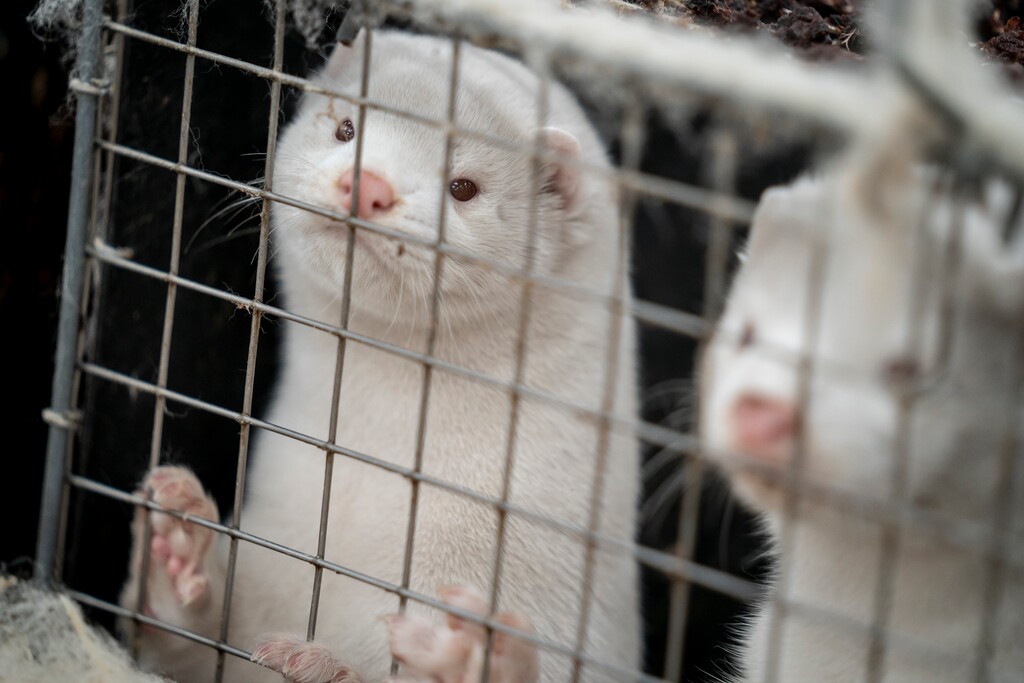
As a veterinarian sworn to promote public health and protect animal welfare, I am extremely concerned about Utah’s handling of the recent bird flu outbreak on a mink farm.
In August 2026, highly pathogenic avian influenza (H5N1) was detected at a Salt Lake County fur farm, making it the first outbreak in captive mink in the United States. Reporting by the Animal Welfare Institute, The Salt Lake Tribune, ProPublica, and The Guardian has brought national and international attention to Utah’s inadequate response.
Despite SARS-CoV-2 outbreaks across 12 Utah mink farms in 2020 and years of experience responding to H5N1 outbreaks in poultry, Utah officials had no established response protocol for managing H5N1 in mink. Infected poultry flocks are typically culled to prevent disease transmission and producers receive taxpayer-funded indemnity payments. However, because no comparable federal program exists for mink farmers, officials struggled to determine how to respond to infected mink.
State records revealed one official describing their options as seeking emergency vaccine approval or watching the mink die. The farm anticipated losing up to 80% of its animals, however officials did not implement a coordinated response to prevent further transmission and animal suffering.
This response raises serious concerns about worker safety, public health and animal welfare. ProPublica revealed that Utah stopped proactively monitoring workers exposed to infected animals after agriculture officials complained that monitoring discouraged farmer cooperation. Even after a worker was observed with a visibly red eye (a potential symptom of H5N1 infection) testing was not recommended.
Although the Centers for Disease Control and Prevention considers the risk to the public low, workers directly exposed to infected animals face greater risks. On Nov. 1, a Yakima County resident in Washington died after exposure to infected dairy cattle. Although unrelated to Utah’s mink outbreak, the case highlights the importance of disease monitoring.
Mink farming itself inherently increases disease risk, and breeding wild animals solely to confine and kill them for their fur is incompatible with positive animal welfare. Naturally solitary, semiaquatic animals that swim, hunt and roam large territories, mink on fur farms are confined to small wire cages. Utah appears to have no state-mandated minimum cage dimensions or enrichment requirements, but regulations in other states require as little as one square foot of floor space per mink. Such confinement is associated with chronic stress, abnormal repetitive behaviors, frustration and injuries. Housing large numbers of animals in close proximity also facilitates viral transmission and replication, creating opportunities for viral evolution. Improved biosecurity cannot eliminate the risk of future outbreaks when animals are confined in this manner and keeping wild animals cannot meet their needs.
Utah officials have cited concerns about mink farmers’ livelihoods as a factor in their disease-control decisions. For families who have operated these farms for generations, losing their businesses could be devastating. However, continued disease outbreaks also threaten those same livelihoods.
Utah needs a permanent, publicly funded phaseout of mink farming that provides fair compensation and helps affected farmers and workers transition to more economically resilient livelihoods.
Governments have successfully supported agricultural transitions before. In 2004, Congress eliminated federal tobacco quotas and price supports and established a ten-year compensation program for eligible producers and quota holders. The Netherlands, once a leading mink producer, accelerated its permanent ban during COVID-19 and allocated up to €150 million for compensation, with additional support for dismantling or converting facilities. Denmark also established compensation programs for mink farmers and related businesses following its pandemic-related shutdown.
Utah’s mink industry has already decreased dramatically. According to USDA data, annual production fell by 90% from approximately 959,000 pelts in 2014 to 95,230 in 2024. With fewer than 10 mink farms reportedly remaining in Utah, a targeted, publicly funded transition is a realistic option.
I urge members of the Utah Legislature to sponsor legislation establishing a permanent phaseout of mink farming, with fair compensation and transition assistance for affected farmers and workers. Such legislation should establish a deadline for ending mink production, prohibit new farms and expansion, and compensate farmers for permanent closure. A dedicated transition fund should support facility conversion, alternative businesses and worker retraining. Each farm should be required to develop a veterinary-approved closure plan that ensures appropriate animal care, prevents further breeding and prioritizes sanctuary placement where feasible. Humane euthanasia, when necessary, should be conducted under veterinary oversight, with the costs covered by transition funding.
Utah’s experience with COVID-19 and H5N1 has demonstrated the risks associated with mink farming and the limitations of responding to outbreaks as they occur. The state has an opportunity to prevent further animal suffering and protect public health while giving the remaining farming families a path forward. Waiting for another outbreak will only make that transition more difficult and potentially more devastating to farmers, workers, and the mink themselves.
Larrea Cottingham
Dr. Larrea Cottingham is a Utah-based veterinarian and former wildlife biologist. Her work focuses on wildlife and exotic animal medicine, expanding access to affordable veterinary care, and advocating for animal protection policies. She used AI to help edit and fact-check this commentary. The words and ideas are her own.
The Salt Lake Tribune is committed to creating a space where Utahns can share ideas, perspectives and solutions that move our state forward. We rely on your insight to do this. Find out how to share your opinion here, and email us at voices@sltrib.com.