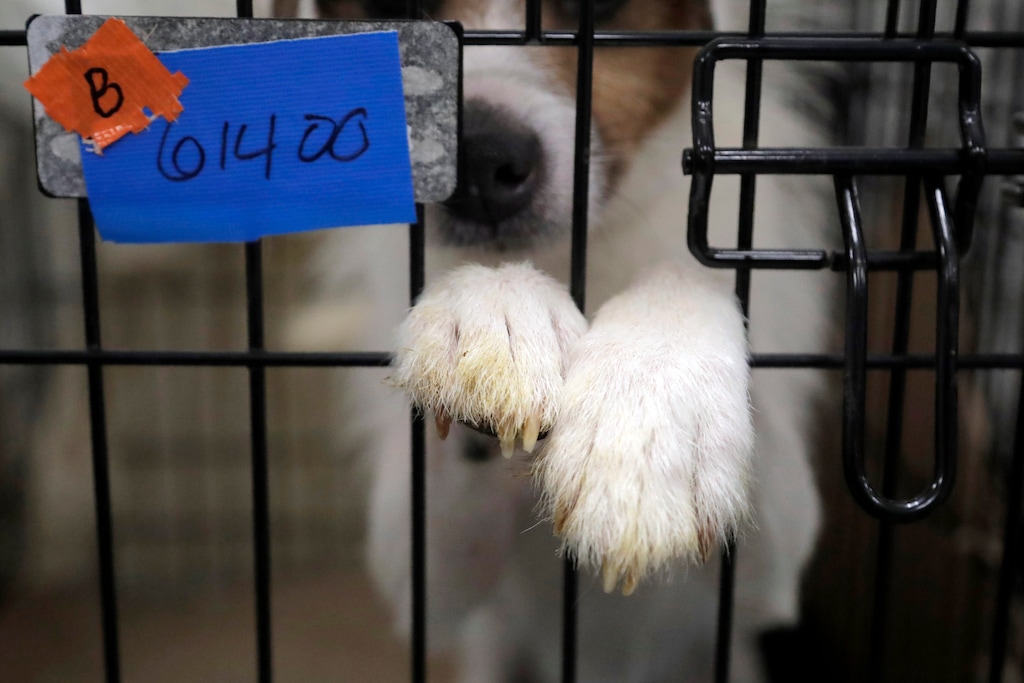
Anyone who has lost a pet knows how devastating it is to say goodbye. What’s more devastating, though, is hearing that your loved one is going to be decapitated and their head sent off to a lab.
This is an unfortunate experience that is not uncommon for pet owners in Utah.
When I started my social work internship at an emergency veterinary clinic, I found myself working on a lot of cases where owners elected humane euthanasia for their beloved pets. During my second week, I was asked whether I was familiar with the rabies testing protocol in Utah. I replied that I was not. The other intern looked extremely uncomfortable, and it was clear that he was dreading telling me. He then proceeded, begrudgingly, to tell me that if a pet has injured and broken the skin of a human within 10 days of the pet’s euthanasia, the pet needs to be tested for rabies.
At this point, I was wondering what I was missing because this all sounded pretty reasonable to me. The other intern continued, explaining that the only way to test an animal for rabies is to test brain tissue, which means veterinarians must remove the animal’s head and submit it to a lab.
I wish that this had just been a distasteful joke, a way to mess with the new intern. It was not. This is a real policy that impacts loving pet owners in Utah.
My intention is not to downplay the seriousness of rabies. Rabies is a deadly disease that should be prevented at all costs. This is exactly why people are required to keep their pets up to date on rabies vaccinations. The problem is that this policy does not account for vaccination status.
This policy doesn’t just target pets with aggressive or severe behavioral problems. There are many things that can happen at the end of a pet’s life, which could lead them to behave in a way that they normally wouldn’t. When pet owners make the difficult decision to euthanize, it is often because the animal is in a fair amount of pain or discomfort. Just like us humans, pets can act out when they are in pain. It might be as mild as a cat scratching their owner when the owner tries to administer medicine. I worked on a case where a dog became aggressive with its owners because it had dementia and sundowners.
I contacted the Utah Health Department to get some insight into the results of rabies testing on pets. Staff from the department reported receiving samples for rabies testing every day. When I spoke to them the afternoon of Sept. 18, they had already received two samples for rabies testing. The day prior, they had received five samples for testing. When I asked how many times tests had come back positive, she replied: “Currently, none.”
The Salt Lake County Animal Services directed me to an animal control officer who had been on staff for 33 years. I explained that I was interested in knowing how many times he had seen a positive rabies test in a dog or a cat. His response: “Virtually never.”
A pet emergency clinic in Salt Lake County reported: “We have sent out many [rabies tests], but none have been positive.”
This research is not a comprehensive study on this topic, but it does shed light on the policy. The loss of a pet is life-changing, and the grief that we experience can be overwhelming. I see this impacting people every day in my work as a veterinary social work intern. We can approach this issue with more compassion going forward.
Rabies testing requirements should take vaccination status into account. An unvaccinated pet that breaks a person’s skin should still be tested after humane euthanasia, but should a vaccinated pet automatically be subjected to the same procedure? In cases of uncertainty, I would argue that it is appropriate to consult a veterinarian for their professional opinion before making a decision.
We can still prioritize public health without adding unnecessary trauma to grieving pet owners.
(Emily Crist) Emily Crist is a student in the graduate school of social work at the University of Utah. She used AI to enhance her the background of her headshot.
Emily Crist is a student in the graduate school of social work at the University of Utah.
The Salt Lake Tribune is committed to creating a space where Utahns can share ideas, perspectives and solutions that move our state forward. We rely on your insight to do this. Find out how to share your opinion here, and email us at voices@sltrib.com.