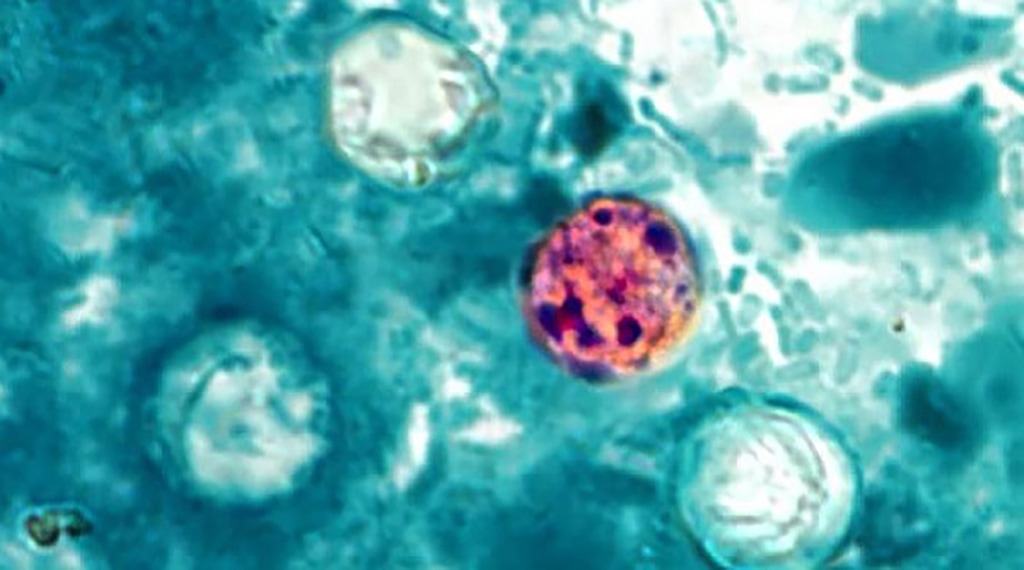
In my work, I seek to help prevent food safety risks and promote food safety education. This most recent cyclosporiasis outbreak illustrates that food safety is a collaborative effort, not just up to consumers. Here is what Utahns need to know about Cyclospora, how we can protect ourselves and where stronger prevention measures are needed throughout the food supply.
Cyclospora cayetanensis is a microscopic parasite, and the Centers for Disease Control and Prevention considers May through August the primary cyclosporiasis season in the United States. However, cases can occur at other times of the year. The parasite can enter the food supply through contamination during growing, harvesting, packing or distribution, and preventing that requires strong agricultural practices, effective water-quality management and continued collaboration among producers, regulators and public health agencies.
There is a great deal we can do in our own kitchens, and a great deal we cannot.
As consumers, washing fresh produce has always been the primary recommendation and remains an important food safety practice; however, in this case, it may not completely remove cyclospora. No known washing method completely removes cyclospora from contaminated fresh produce. Running water helps, but produce washes, including vinegar soaks and chlorine rinses, are unlikely to kill it because a resistant outer wall protects the parasite, can be difficult to remove from produce surfaces and resists sanitizing.
Cyclospora also differs from foodborne bacteria as it cannot multiply in food. The best way to control cyclospora is to cook the produce to 158 °F (70 °C), which inactivates it. It is the most reliable kill step, which is exactly why the current outbreak traces back to fresh lettuce.
However, we should still rinse vegetables; this removes soil and reduces the presence of many other foodborne pathogens, even if it cannot eliminate this one.
When we cannot solve a food safety issue in our kitchen, our best solution is to be informed. The CDC and the FDA post active investigations, and the Utah Department of Health and Human Services tracks what is happening here in Utah.
Cyclosporiasis — the disease caused by cyclospora — usually begins about a week after exposure (ranging from two days to two weeks or more). The key symptom is watery diarrhea that improves and then returns. If we remember our last doctor’s visit for diarrhea, we may have received a stool panel, a test for specific organisms rather than a comprehensive screening. Cyclospora testing may need to be requested specifically, sometimes across several samples, because shedding is intermittent. This matters because the infection responds to specific antibiotic treatment.
When we speak about detection, this parasite is genuinely difficult to detect in food. Identifying the source of an outbreak usually relies on patient interviews and traceback rather than a positive food sample, which means agencies must sometimes act to protect the public before laboratory confirmation of the food source is available. Continued investment in detection methods and molecular typing will shorten that gap.
Humans are its only known host; an infected person sheds the parasite, which then takes days to weeks outside the body before it can infect anyone else. That is why person-to-person spread is highly unlikely. It tends to enter production chains at the beginning, most often through contaminated agricultural water, and less likely through inadequate sanitation among personnel harvesting and packing. That makes controls for agricultural water and sanitation important interventions. A positive recent development is that the FDA’s pre-harvest agricultural water rule has recently been updated to replace periodic sampling with a comprehensive, risk-based assessment that examines the source, the delivery infrastructure, adjacent land use and animal activity. Then it corrects what the assessment reveals to better control contamination of our food supply.
For imported produce, the same logic applies to importers, who are responsible for verifying that their foreign suppliers have adequate preventive controls. Having global supply chains gives us affordable year-round produce; however, it also means that a single contaminated operation can reach dozens of states. That is a tradeoff to manage with preventive controls, surveillance and traceability, not a villain to name.
Preventing outbreaks such as this one requires shared responsibility. Consumers can stay informed and follow safe food-handling practices, while producers, importers, regulators and public health agencies must continue strengthening prevention, surveillance and traceability throughout the food supply. Food safety works best when each of us understands and fulfills our role.
(Jose Luis Brandao) Jose Luis Brandao is an assistant professor and Extension Food Safety Specialist at Utah State University.
Jose Luis Brandao is an Assistant Professor and Extension Food Safety Specialist at Utah State University. His work connects food safety research, regulation, and education to protect public health and strengthen Utah’s food system. Through applied research and Extension outreach, he helps consumers, food manufacturers, and community educators prevent foodborne illness and adopt science-based food safety practices.
The Salt Lake Tribune is committed to creating a space where Utahns can share ideas, perspectives and solutions that move our state forward. We rely on your insight to do this. Find out how to share your opinion here, and email us at voices@sltrib.com.