 Tony Semerad
 Tamarra Kemsley
Officials in rural Texas have OK’d two pivotal pieces of plans to build a large data center and power-generation plant on remote ranchland leased from The Church of Jesus Christ of Latter-day Saints.
Commissioners in the Texas Panhandle’s Cottle County have unanimously endorsed a special reinvestment zone covering 4,252 acres of native grasslands and rolling hills — much of it held by the church’s Farmland Reserve subsidiary — outside the town of Paducah.
The five-member panel also voted Monday in favor of a multimillion-dollar tax abatement request from private developer Aetheris that guarantees an immense infusion of cash into the area’s government services and nonprofits as part of the project.
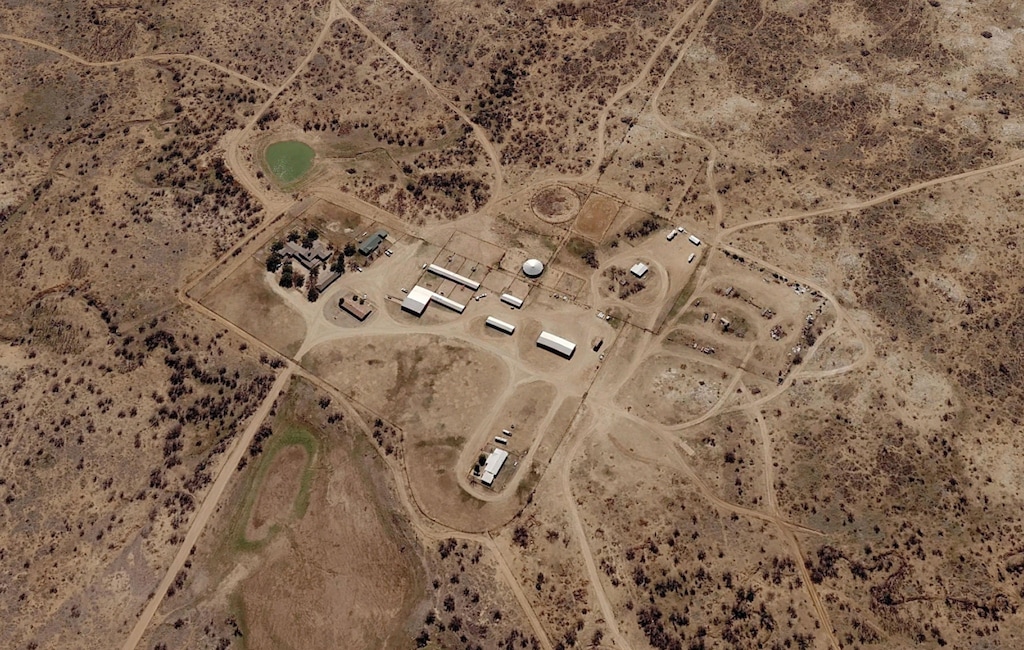
Monday’s votes effectively clear the way for Aetheris to lease up to 3,710 acres on Farmland Reserve’s sprawling Triangle Ranch about 15 miles east of Paducah — as well as an additional 542 acres from another landowner to construct the 96-megawatt data center.
(Christopher Cherrington | The Salt Lake Tribune)
The commission‘s actions trigger a 90-day clock for an Aetheris branch, RS 70 Land Holdings LLC, to start development and payments to the county. The affected region covers an arid corner of the church’s more than 100,000-acre landholding within the historic Triangle Ranch range, acquired by the church in the 1990s.
Promises to the community
Along with assurances the data center would use a “closed-loop” water-cooling system that doesn’t tap groundwater supplies, the developer also has proposed building a 180-megawatt natural gas plant that it says would power the center — without drawing from the electrical grid.
Aetheris has also made a long list of guarantees to Cottle County residents in two October open letters to the rural community.
The tax abatement agreement between Aetheris and Cottle County, meanwhile, is meant to guarantee at least 40 well-paying jobs for the area and pour millions into county government and nonprofits in economically ailing Paducah, a town of about 1,000 residents and the county’s only incorporated municipality.
Those Oct. 19 and Oct. 26 communiques from Aetheris also make assurances on minimizing the impacts on roads, dark skies, noise, heat, wildlife, housing construction and public safety for the rural community.
“We intend to be here for the long term,” Aetheris leadership wrote, “and to be a good neighbor.”
Presiding County Judge Karl Holloway confirmed with Aetheris executives on Monday that payments under the tax abatement deal would pump $1.5 million into county coffers within 90 days and another $2.5 million yearly.
That money, Aetheris has said, would go toward everything from emergency services and road improvements to the library, cemetery, schools and bolstering community-service groups.
Mixed support
There is support and opposition for all this from residents, judging from Monday’s hearing.
James Gilbert, a member of a longtime ranching family, warned that the data center would “change everything we’ve ever been about,” calling the development an affront to the area’s ranching legacy going back more than a century.
“To litter our land that our ancestors had built and had pride in and worked and raised their families on is a slap in the face,” Gilbert told commissioners, while holding up his family’s recent Texas heritage award for 150 years of ranching in the region.
In an interview with The Salt Lake Tribune, Gilbert talked about his great-grandmother arriving via covered wagon in 1907, a little less than a decade after his great-grandfather bought the ranchland.
Through the years, the ranch has seen ups and downs, he said, including a 1940s drought that all but brought operations to a halt. Time and again, it rebounded. But Gilbert, who operates 900 acres adjacent to Triangle Ranch, fears a data center could be the thing that finally does in the family business — one he had hoped to pass on to his eldest son.
“Water is a very, very precious commodity around here,” Gilbert said, expressing doubt about Aetheris’ plans to ship in all its water from outside the county. He also is unconvinced that the noise and light pollution would be as minimal as the company has been advertising.
And even if Aetheris remains true to its word, who’s to say another company doesn’t come in and buy it out one day? he speculated. What happens to the agreements in place with the county then?
Regardless, he lamented: “This will devalue our land.”
Paducah resident Laura Richards urged commissioners to delay their vote, in light of county and state turnover in the midterm elections that was likely, she said, to alter government’s stance on data centers and bring new regulation.
“The number that they could pay,” Richards said of Aetheris, “is much, much, much greater.”
‘Filling gaps’ for an ailing economy
Resident Lindy Osburn was among several who spoke in favor of the economic revitalization the data center could bring to the area’s schools, library services and other community assets.
After years of losing teachers, seeing graduating students move away and watching school programs decline, Osburn said, “I would love to see us be able to to fill in some of those gaps.”
Added resident Mona Gregory: “We have a different opportunity than a lot of places in Texas because it seems like we have a company that is desiring accountability, and we have an opportunity to hold them accountable.”
A Nov. 2 statement issued by AgReserve, a related for-profit church company operating in Texas, has said Aetheris is an independent company “not affiliated with Farmland Reserve or the church.”
It added that the Texas-based developer “is responsible for the proposed project and related development activities.”
Attempts by The Salt Lake Tribune to reach Aetheris officials for comment have so far proved unsuccessful.
The church company’s foray into partnering on data center development, the AgReserve statement said, matches Farmland Reserve’s “long-term investment strategy,” which includes “leasing portions of its properties for agricultural, renewable energy and other compatible commercial uses.”