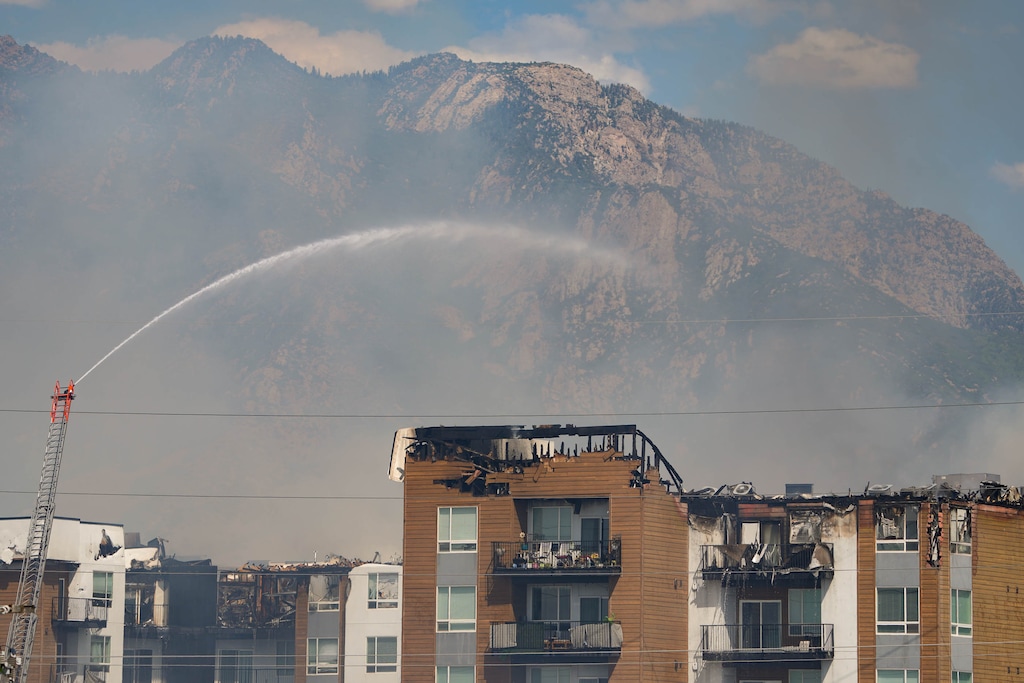
On July 31, I received the phone call every child dreads.
My 79-year-old father called me, his voice trembling, to tell me his apartment building was on fire. Somehow, amid the smoke, alarms and chaos, he managed to get my mother and himself safely down three flights of stairs with nothing but the clothes on their backs.
Everything else stayed behind.
Fortunately, my dearest friend (and now family hero) rescued them from an office building across the street. I couldn’t reach them due to road closures.
When I arrived to pick them up from her home, the overwhelming feeling was relief. They were alive. They were together. But that relief was quickly joined by another emotion: fear. Fear of what came next.
The rest of that evening became a blur of doom-scrolling for updates and listening as they recounted every terrifying detail. They saw neighbors carrying six screaming cats. They heard fire alarms blaring. Their elderly neighbors were trying to navigate dark stairwells. Firefighters were running toward a growing inferno while everyone else fled from it.
Courage often looks ordinary until you’re watching it unfold in real time.
Over the past several days, my family has been rebuilding life one necessity at a time.
A CPAP machine. Prescription medications. Clothing. Toiletries. Even a swimsuit for my father so he could keep up his workout routine. These small acts felt like hope.
What has carried us through has been the extraordinary generosity of others. Friends. Family. Neighbors. Members of my parents’ church. The Red Cross. Firefighters. Local municipalities. Complete strangers. People have donated clothing, offered places to stay, delivered meals, brought flowers, lent air mattresses, made phone calls, shared resources and wrapped my parents in kindness when they were at their most vulnerable. It has been humbling beyond words.
My parents have effectively lost everything. Imagine being nearly 80 years old and watching a lifetime disappear. Family photographs. Beloved books. Souvenirs collected over decades of travel. Children’s artwork lovingly saved for more than 40 years. Holiday decorations. Handwritten notes. The tangible reminders of a life well lived. Insurance can replace furniture; it cannot replace memories.
And yet, somehow, amid the ashes, something unexpected has emerged. We’ve become closer. We’ve cried together, laughed together, shared meals, solved problems and leaned on one another in ways we have never had to before. In losing possessions, we’ve been reminded that the greatest wealth has always been each other.
That lesson is priceless.
But if there is one part of this experience that has broken my heart almost as much as the fire itself, it has been watching how some residents have been treated afterward.
On Saturday, I sat with my father in a gymnasium while residents waited for permission to retrieve their vehicles. I watched people who had just lost their homes searching desperately for information about what came next. Too often, clear answers weren’t available. The atmosphere felt disconnected from the magnitude of what these residents were experiencing.
The communication from building management has only deepened that frustration. My parents watched their August rent payment process for an apartment they could not occupy. I’m told that many were later presented with deposit language requiring them to waive legal claims before receiving deposit money that was already theirs. Whether or not those decisions were legally permissible, they felt profoundly lacking in compassion.
Many residents say they didn’t have renter’s insurance. Many don’t have family nearby. Many don’t know where they’ll sleep next week.
My parents are fortunate. They had insurance. They have family. So many others do not.
My heart aches for those still sleeping in emergency shelters, wondering what tomorrow looks like while trying to process the trauma of losing their homes.
As I write this, my father has been given just 15 minutes to enter what remains of the building with nothing more than a laundry basket to retrieve whatever pieces of my parents’ former life survived. Fifteen minutes to search through the remnants of decades.
This experience has revealed both the very best and the very worst of humanity. I’ve seen firefighters risk their lives for strangers and their pets. I’ve seen neighbors become family overnight. I’ve seen communities rally around people they had never met.
And I’ve also been reminded that policies without compassion can deepen suffering, and that organizations facing tragedy have a choice: They can hide behind process, or they can lead with humanity. In my opinion, the owners and staff at the North Union building have shamefully chosen the former.
None of us knows whether disaster will one day arrive at our own front door. I hope it never does. I hope you never have to experience something like this. But if it does, the question won’t simply be what you lost. The question will be who you chose to become, and whether, when someone else’s world was burning, you added to their burden or helped carry it.
(Hayley Heaton) Hayley Heaton lives in South Jordan.
Hayley Heaton is a native Utahn who lives in South Jordan and has a deep appreciation for the people, communities and unique character of her home state. A loving daughter with a passion for politics, she enjoys staying informed and engaged on the issues and events that impact Utahns.
The Salt Lake Tribune is committed to creating a space where Utahns can share ideas, perspectives and solutions that move our state forward. We rely on your insight to do this. Find out how to share your opinion here, and email us at voices@sltrib.com.