Every generation of Americans faces a defining question: Will we expand democracy or restrict it?
Throughout our history, the right to vote has never broadened without struggle. From the 15th and 19th Amendments to the Voting Rights Act of 1965, progress has come when America removed barriers to the ballot and not when it created new ones.
Congress now faces that same choice.
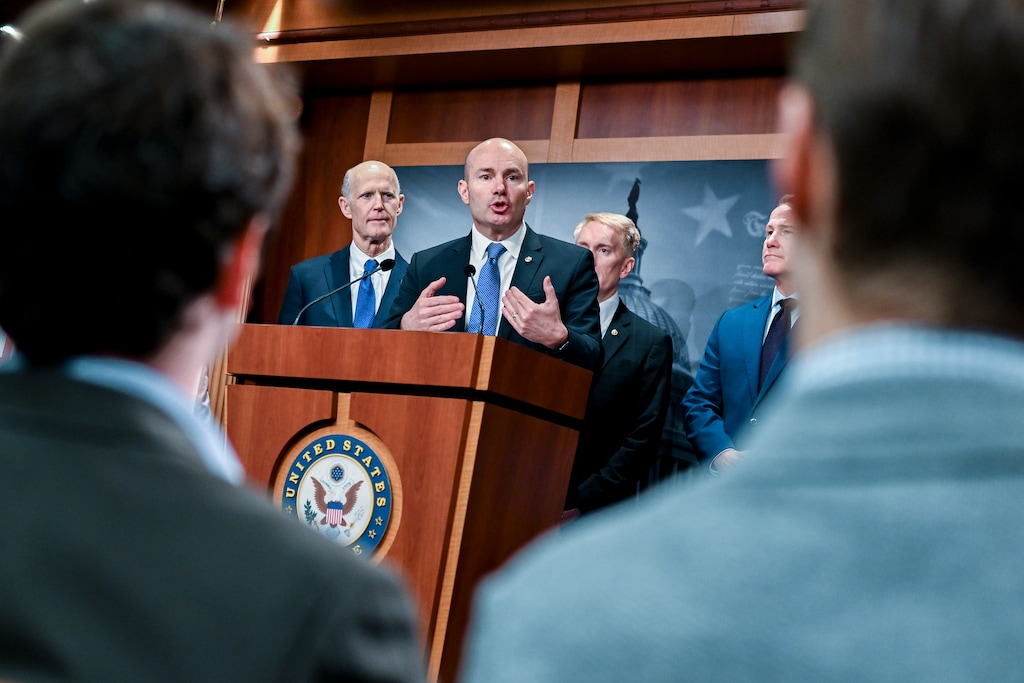
The Safeguard American Voter Eligibility (SAVE) Act (S. 128/H.R. 22), sponsored in the Senate by Utah Sen. Mike Lee, is presented as a way to protect election integrity by requiring documentary proof of citizenship to register to vote. Its title suggests it strengthens democracy.
It does not.
Instead, the SAVE Act risks creating unnecessary barriers for millions of eligible American citizens while addressing a problem that election officials, courts and independent investigations have repeatedly found to be exceedingly rare.
As President of the NAACP Idaho, Nevada and Utah Tri-State Area Conference, I have seen firsthand how voting rights are often eroded, not through dramatic acts, but through policies that appear reasonable on the surface while placing disproportionate burdens on certain communities.
History offers an important warning.
The Voting Rights Act of 1965 was enacted because states used literacy tests, poll taxes and burdensome registration requirements to keep Black Americans from voting. Those measures were often defended as necessary to protect elections. In reality, they were designed to suppress participation.
The SAVE Act raises similar concerns.
Supporters argue that requiring documentary proof of citizenship is simply common sense. But millions of eligible Americans do not have immediate access to the documents the bill would require. Obtaining them can mean taking time off work, paying fees for replacement records, traveling long distances to government offices or navigating complicated bureaucratic processes.
These burdens are not shared equally.
Women who changed their names after marriage may find their birth certificates no longer match their legal identification. Seniors born before standardized birth records became common often struggle to locate documentation. Rural residents, military families, students, tribal communities, people with disabilities and low-income Americans may face additional logistical and financial obstacles.
For these Americans, voting becomes more difficult, not because they are ineligible, but because the government has placed another hurdle in their path.
That should concern every American, regardless of political affiliation.
Equally troubling is the justification for the legislation.
Claims of widespread non-citizen voting have repeatedly failed to withstand scrutiny. Election administrators from both parties, courts, and independent reviews have consistently found such cases to be extraordinarily rare. Existing federal and state laws already prohibit non-citizens from voting and provide safeguards to verify voter eligibility.
Public policy should respond to evidence, not unfounded fears.
Creating sweeping new restrictions without evidence of a widespread problem risks manufacturing a crisis rather than solving one. That approach undermines confidence in our elections instead of strengthening it.
Even election officials responsible for administering secure elections have expressed concern.
Utah Lieutenant Governor Deidre Henderson, a Republican and the state’s chief election officer, has warned that the SAVE Act would hurt Utah voters while overriding state election laws that are already working effectively. She has also questioned whether the legislation could realistically be implemented.
When experienced election administrators raise concerns about both practicality and voter access, Congress should listen.
Civil rights organizations, including the NAACP, have also warned that the SAVE Act would disproportionately affect communities of color, seniors, women, people with disabilities and economically disadvantaged Americans while doing little to improve election security.
Protecting election integrity and protecting voting rights are not competing goals.
America can and must do both.
Secure elections depend not only on preventing fraud but also on ensuring that every eligible citizen can participate without unnecessary obstacles. Those principles reinforce one another. Democracy is strongest when elections are both secure and accessible.
Rather than creating new barriers, Congress should strengthen voting rights, modernize election administration and restore protections against discrimination through measures such as the John R. Lewis Voting Rights Advancement Act.
The question before Congress is larger than a single bill.
It is whether we have learned the lessons of our history.
The Voting Rights Act of 1965 represented America’s promise that unnecessary barriers to the ballot would no longer determine who could participate in our democracy. That promise remains unfinished, but it is no less important today than it was 60 years ago.
The SAVE Act asks Americans to accept new barriers in exchange for addressing a problem that has not been demonstrated to exist on any meaningful scale.
History teaches us that democracy is strengthened when more eligible citizens can vote, not when fewer can.
The right to vote is the foundation of every other freedom. We should be protecting it, expanding it and ensuring that every eligible American can exercise it freely. That is how we honor our history, strengthen our democracy and preserve the promise of equal citizenship for generations to come.
(Jeanetta Williams) Jeanetta Williams is the president of the NAACP Salt Lake Branch & Tri-State Conference of Idaho, Nevada and Utah. She is a former member of the NAACP National Board of Directors.
Jeanetta Williams is the president of the NAACP Salt Lake Branch & Tri-State Conference of Idaho, Nevada and Utah. She is a former member of the NAACP National Board of Directors.
The Salt Lake Tribune is committed to creating a space where Utahns can share ideas, perspectives and solutions that move our state forward. We rely on your insight to do this. Find out how to share your opinion here, and email us at voices@sltrib.com.