 Tony Semerad
Salt Lake City has moved swiftly to pass a six-month moratorium on new data centers in the face of a project unfolding in the Northpoint neighborhood.
The City Council approved the temporary land-use restrictions late Tuesday with a 6-0 vote with one member absent, after altering its meeting agenda at the eleventh hour Monday to add the item, which passed without a public hearing.
The ordinance removes data centers as an allowed use in manufacturing and business park districts for 180 days — the maximum period for such a ban allowed under state law.
City officials are directed to use the six-month interim, according to the council’s vote, to draft new development and zoning rules to address the impacts from data center projects on energy and water usage as well as propose ”mitigation measures for impacts from noise, heat, lighting and any other issues identified.”
Mayor Erin Mendenhall earlier Tuesday called the step “a healthy pause.”
The mayor said the city’s land-use rules “never contemplated these massive data centers” and that issues around their water usage alone are “tremendously in flux as that industry is evolving rapidly.”
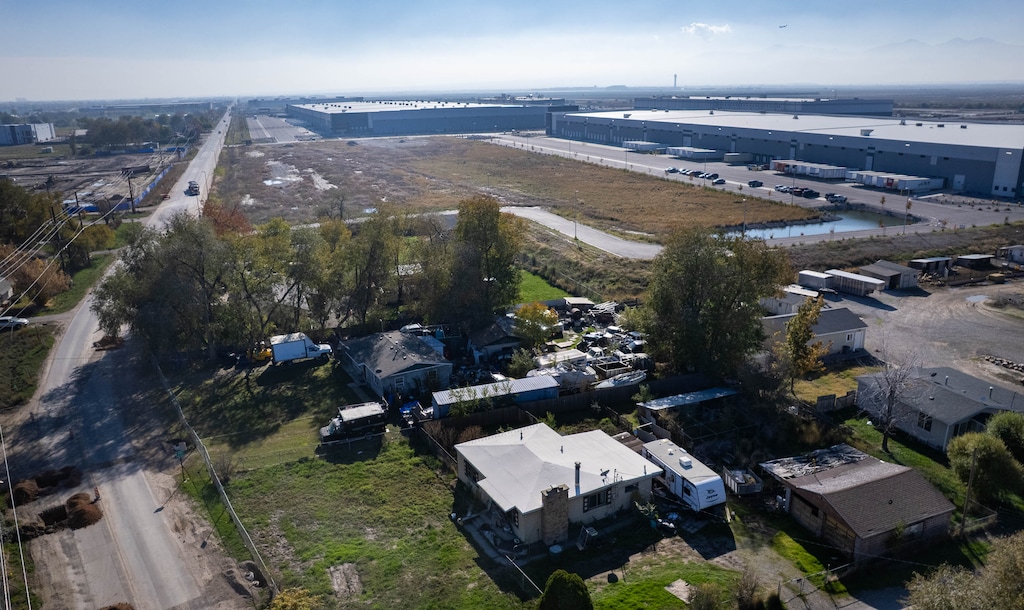
Many first learned last week of Florida development company Qlevr LLC’s applications for a state air-quality permit and city building clearance in pursuit of constructing a one-story, $105 million data center at 2258 W. 2950 North.
The proposed Northpoint data center is to be powered, documents indicate, by the standard electrical grid and would be located on what is now an open lot directly south of and across 2200 West from multiple homes, not far from the fragile fringe of the Great Salt Lake.
The city — which like the rest of Utah, faces longstanding drought conditions — recently passed a permanent 200,000-gallon daily cap on water consumption for non-residential land uses.
This pause, Mendenhall said, would allow for the hard work of researching and adjusting the city’s zoning and development rules “make sure what happens here is reflective of our capacity.”
The city’s newly approved ordinance has been justified in part by a finding that a proposed data center “would pose physical harms to nearby residents in the form of impaired air quality, significant adverse construction impacts, noise pollution and light pollution.”
The ordinance also says that the ban is needed to protect the city’s water resources, prevent residents’ electricity bills from rising and ensure that data center projects are subject to public input.
A representative from the city’s nonprofit Westside Coalition, Anthony Washburn, praised the council’s move, “due to the potential for the project to negatively impact community health and the environment in the Northpoint area.”
Attempts by The Salt Lake Tribune to contact officials at Qlevr for more information and comment have so far proved unsuccessful.
Following Tuesday’s vote, council member Victoria Petro, whose west-side District 1 spans the area, pointed to dire neighborhood impacts from sprawling warehouses in that area that were approved before the city’s zoning rules had a chance to catch up as a reason for instituting a data center ban now.
“A huge part of the concern I have with data center policy,” Petro said, “is that this is a sector of the economy that has been allowed to run free without the input of the neighbors.”
She said she was making the interests of Northpoint residents her top priority, while placing second those of migratory birds seeking refuge along the Great Salt Lake’s shores.
Capitol Hill and Avenues council member Chris Wharton also said that a recent Salt Lake County moratorium on data centers only applied in the county’s unincorporated areas, prompting leaders of Utah’s capital to step in.