 Jose Davila IV
The data center boom won’t skip Utah’s capital — if a Florida development company gets its way.
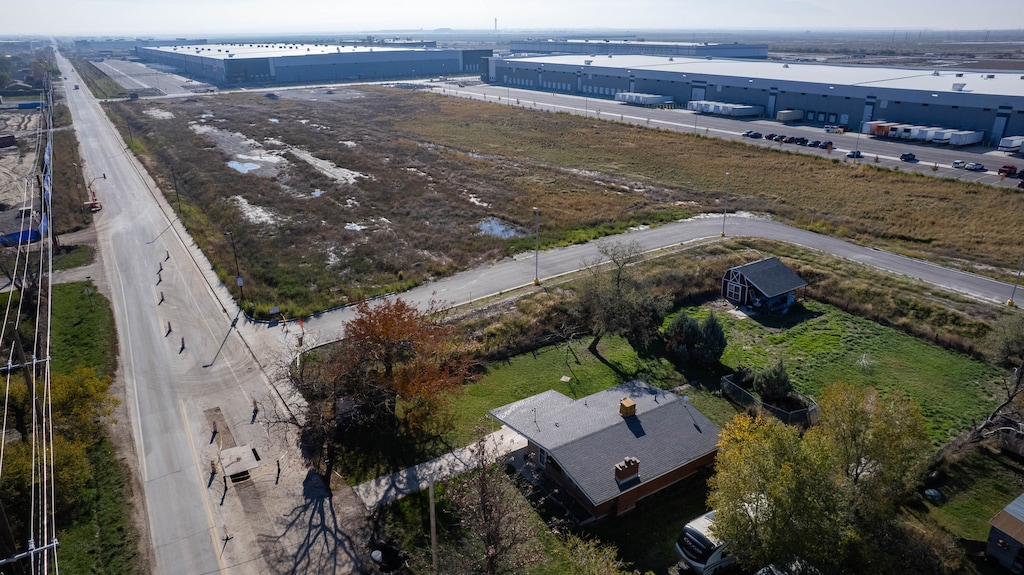
A company called Qlevr LLC filed a permit application with the Utah Division of Air Quality in late September in pursuit of building a data center — powered by the standard electrical grid — at 2258 W. 2950 North in the rural but rapidly changing Northpoint neighborhood of Salt Lake City.
The company needs a state air quality permit to run back-up generators for the structure if it’s built.
“The application requested a permit for diesel-fired emergency engines and associated fuel tanks to provide back-up power to the proposed data center,” Dungan Adams, an engineer with the air quality agency, said in an email. “I have requested additional information from the source and am waiting to review it.”
Adams said he didn’t have any other information about the proposal. Qlevr did not reply to questions about the project.
A city building permit application has also been submitted for the same address, but does not list Qlevr’s name. That application says the proposed data center would be one story and cost at least $105 million to build. City officials will have to approve the permit before any construction can start.
Salt Lake City Council member Victoria Petro, who represents Northpoint, said in a text on Friday that she hadn’t “heard about it yet” when The Salt Lake Tribune reached out for comment on the proposal.
The data center, if it comes to fruition, would land directly south of and across 2200 West from multiple homes. It appears to be a part of the larger Scannell Logistics Campus project under development to the north and west, though neither real estate company Scannell Properties nor brokerage JLL replied to requests for information about the property and its ownership.
The Salt Lake County recorder’s website lists the parcel owner as AC II 2691 NORTH 2200 WEST, LLC. That business is likely an individual holding company for the land and owned, in turn, by another firm. It is registered in Delaware, where corporate secrecy laws make it hard to determine actual ownership.
The property is zoned as a “business park,” according to the city’s zoning map. That means a data center would be allowed there under current rules, but it would have to use less than 200,000 gallons of water a day. Data center operators often use water to keep servers cool and running.
Qlevr, the proposed data center’s developer, has also pitched facilities in Charlestown, Indiana — outside of Louisville, Kentucky — and Inver Grove Heights, Minnesota, a suburb of the Twin Cities. Both have been met with significant public opposition, but have recently moved forward in their approval processes.
Both projects could use up to five megawatts of electricity at full capacity. The company plans to use a closed-loop cooling system (meaning water is continuously recirculated) to keep the servers from overheating.
What we don’t know:
• How much energy and water the Utah data center would use.
• What sort of data it would handle.
• How construction and operation might affect neighbors.
• Whether the project would deliver any economic benefits to Salt Lake City, like tax revenue or jobs.
The air quality permit application must go through multiple reviews and a public comment period — after Qlevr sends in more information — before the agency can approve it.