 Jordan Miller
 Jose Davila IV
Lee este artículo en español aquí.
Lesley Alvarez makes a 20-minute walk to her nearest TRAX station in Sandy each morning.
From there, she takes the Blue Line, then the Red Line and, finally, a Utah Transit Authority bus to reach her office in Taylorsville, where she works as a bookkeeper.
If she drove, her commute would be just as long as her walk to the station. Instead, it takes about an hour.
“I don’t drive,” she said. “I don’t have access to a car, and especially with the current economy, it’s a little bit more difficult to actually have and maintain one.”
Alvarez pays about $100 a month to get around Salt Lake County without a car, but that tab could be going up.
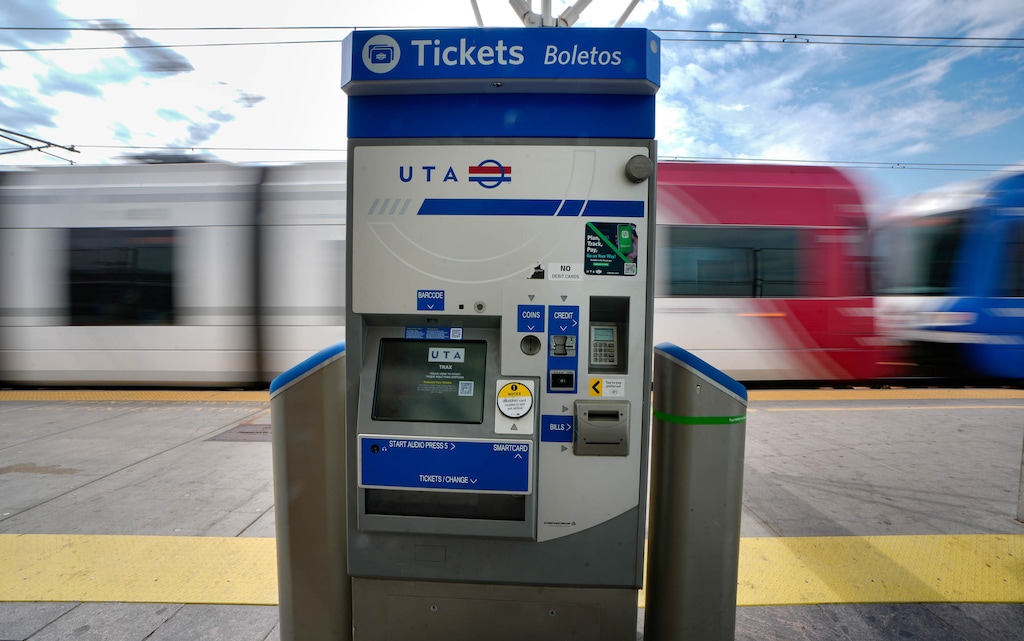
UTA, which operates transit along the Wasatch Front, plans to raise fares for the first time since 2013. The hike would make Utah’s public transportation among the most expensive in the country.
In fact, of 163 transit agencies surveyed in 2025 by the American Public Transportation Association, UTA’s proposed $3 fares would be tied for the highest.
The agency is currently soliciting feedback on the proposal, which would boost base fares from $2.50 to $3 as early as spring 2027, UTA public information officer Gavin Gustafson said. Utahns can submit comments on the potential increase until Sept. 9. UTA will also hold a virtual public hearing on the proposal Aug. 26 at 5:30 p.m.
(Francisco Kjolseth | The Salt Lake Tribune) A UTA bus is pictured at North Temple in Salt Lake City on Wednesday, Aug. 12, 2026. UTA is planning to increase fares from $2.50 to $3.
(Francisco Kjolseth | The Salt Lake Tribune) A TRAX train at North Temple in Salt Lake City on Wednesday, Aug. 12, 2026. UTA is planning to increase fares from $2.50 to $3.
The higher fares would apply to buses, TRAX, UTA On Demand services and FrontRunner. One-way express bus and ski bus fares would jump from $5 to $6.
If the higher fares are approved, Alvarez said she would be forking out an extra $20 a month. “I can easily buy a good amount of groceries for $20,” she said.
(Francisco Kjolseth | The Salt Lake Tribune) A FrontRunner train is pictured at North Temple in Salt Lake City on Wednesday, Aug. 12, 2026. UTA is planning to increase fares from $2.50 to $3.
UTA’s transit commission — a seven-member panel that replaced its board of trustees last month — will have some input on the proposal, Gustafson said. But the final decision on rates, he added, is likely to come by the year’s end from the agency’s executive officers once they analyze feedback from the public.
“The proposed base fare adjustment reflects the rising cost of providing transit service and the need to maintain the system for the long term,” Gustafson said. “The cost of operating, maintaining and expanding transit — and everything else in life, it seems — has certainly gone up.”
How UTA rates compare
(Christopher Cherrington | The Salt Lake Tribune)
Two big events loom on the horizon for UTA: next year’s six-month open house of the The Church of Jesus Christ of Latter-day Saints’ renovated Salt Lake Temple, and the 2034 Winter Olympics. The big picture of those events, Gustafson said, “certainly comes into play” with the need for rate hikes, but the main factor driving the proposed increase is rising overall costs.
Passenger fares make up 4% of UTA’s funding, according to the agency’s website. If the proposal goes through, UTA bus fares will tie transit agencies in Seattle and San Francisco for some of the most expensive in the nation, according to the 2025 report from the American Public Transportation Association, which surveyed more than 160 transit agencies that provide busing.
The Seattle and San Francisco metropolitan areas have around four times the population of the Salt Lake Valley, but more people often means more ridership funding those agencies, Gustafson said.
“Every transit system is its own ecosystem,” Gustafson said. “So it’s a bit of an apples and oranges. … It’s pretty difficult to compare one versus the other; local economies are different.”
Christopher Stout, co-founder of the Utah Transit Riders Union, said he understands why UTA may raise fares but opposes the plan.
(Francisco Kjolseth | The Salt Lake Tribune) UTA buses are pictured at North Temple in Salt Lake City on Wednesday, Aug. 12, 2026. UTA is planning to increase fares from $2.50 to $3.
“The 15-minute frequent buses used to be what they were pushing until the pandemic, and then they cut back a lot of the 15-minute service,” Stout said. “So that $3 that people will be paying, they’re getting less service. They’re even less service than what they were five years ago, or even 10 years ago.”
With a fare bump, he said, the system would be less able to serve those who most need public transit to get around and possibly face less demand.
Why not free fares?
Stout argues that, in general, making buses and trains free to ride could work for an agency with such small ticket revenue and that it would boost service by cutting down on wait times, especially for buses. Smaller agencies such as Cache Valley Transit District and Park City-based High Valley Transit already run without fares.
Although free transit service would increase ridership, eliminating fares would ask more of the system, while taking away “significant financial support” to provide that service, Gustafson said in an email.
As a regular rider herself, Alvarez opposes the higher fares, not least because she knows a lot of passengers make less money than her and will face more of a money squeeze.
On weekends, Alvarez tries to avoid taking the bus or TRAX because there are longer waits, making the system less usable. Instead, she hitches rides with friends and family.
She wants to see UTA expand service, with or without a price hike — but even if the fare increase goes through, the new funding likely won’t cover more transit options.
UTA’s fare revenue goes toward maintaining current service, while its capital budget — primarily funded by federal grants — pays for service expansions, according to UTA budget documents. One bus route would cost the agency around $17 million a year, and the additional revenue from the proposed fare increase would generate an additional $10 million, Gustafson said.
What the hike would do is prime the agency for potential expansions in the future.
“Fare revenue significantly contributes to supporting current service,” Gustafson said. “When current service levels are in a stable position, transit systems can then explore expansion opportunities.”
Jordan is a breaking news reporter at The Tribune. She graduated from the University of Oklahoma and has written for the Houston Chronicle along with the Enid News & Eagle. When she's not reporting, she loves watching football, reading books and painting.
Jose Davila IV covers west-side communities and is a Report for America corps member. He previously worked for KUNR Public Radio in Reno, The Toledo Blade and the Yale Daily News. He appreciates tips on the west side's best food, great hikes across the state and pickup volleyball games. Es bilingüe y ama los tostones de su padre más que nada.