“I would like to build a university of which the football team could be proud.” — George L. Cross, president of the University of Oklahoma, 1943-1968.
The mushrooming amounts of money in and around college athletics are soon going to be beyond the reach of many institutions of higher learning. If, that is, they want to remain institutions of higher learning, and not football teams with big libraries.
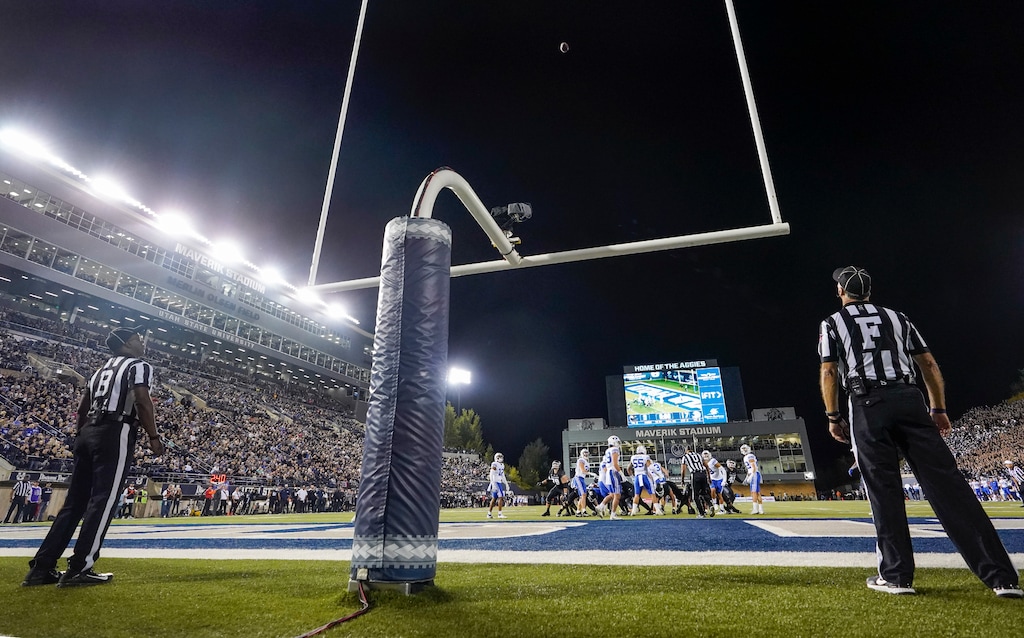
Witness, recently, a request from the president of Utah State University to increase the fees students pay to support athletics programs, whether they participate in them or not, by nearly 26%. That would have cost each student a total of $290 a year, on top of all the other tuition, fees and living expenses.
The Utah Board of Higher Education, wisely, vetoed that move, calling it part of an “unsustainable” burden on students.
USU President Brad Mortensen said he had hoped the fee hike would be temporary, a bridge helping the school make its transition to the Pac 12 athletic conference. In the long term, he said, USU would have to look for other income streams, such as sponsorships and other fundraising and more frequently hiring out its basketball arena and football stadium for concerts and other events.
That may not be enough.
Now that college-level athletes actually expect to get a cut of the millions of dollars that flow through their athletic departments, a lot more money is going to have to follow that path if schools are to be able to compete.
And any school that isn’t in the top rank of athletic powerhouses, any schools that aren’t the University of Utah or Brigham Young University, may soon be faced with a huge decision.
They may have to let their football programs go.
Or, at a minimum, move to smaller, less expensive conferences, with shorter travel distances and athletes who count themselves lucky to have scholarships, not millions in name, image and likeness contracts.
One justification for even having a football program is that it brings in enough money to pay for smaller sports such as swimming, track, tennis and golf. But if football is going to be the beast that swallowed the college, not bringing in enough revenue to pay for itself, there’s no way there will be enough money left over for the other activities.
Colleges and universities in Utah and nationwide must decide: Are we a football team with an academic side hustle, or an institution of higher education?
The people of Utah only need the latter.
Editorials represent the opinions of The Salt Lake Tribune editorial board, which operates independently from the newsroom.