We have reached the point where just about everything that anyone does or fails to do in Utah should include the most crucial question:
Do we have the water for this?
(Actually, we reached this point many years ago.)
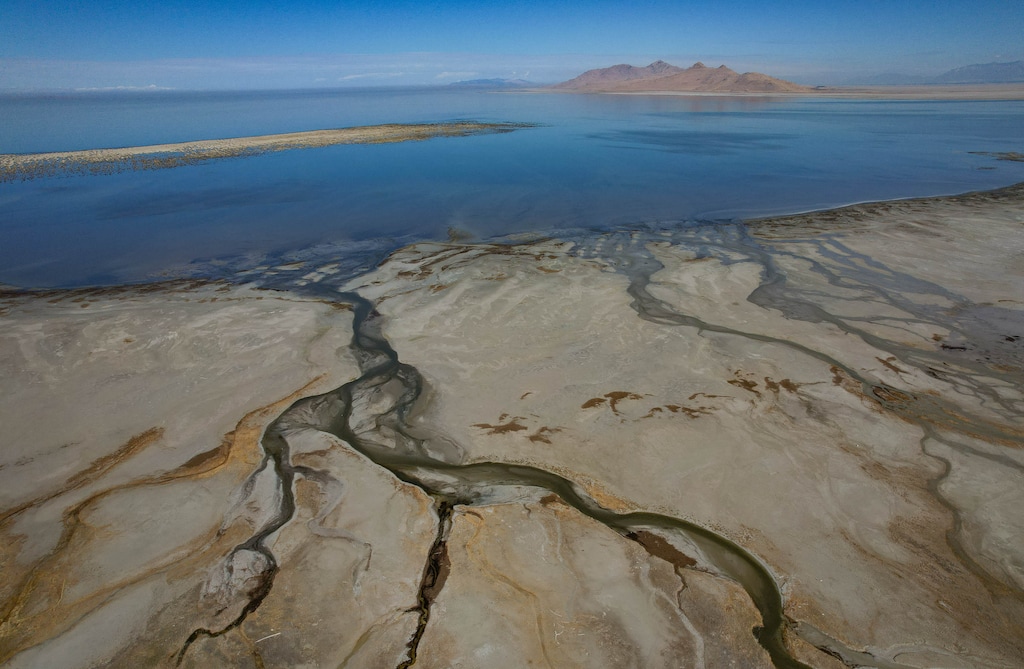
The Western United States continues to suffer through a megadrought with no end in sight. The flows in the Colorado River and the level of the Great Salt Lake scrape at historic lows. As human-caused climate change continues to fuel all of that, and more, finding ways to live with less water has become the responsibility of every one of us.
Oh, there may be ways to get more water. Piping it from the East or taking the salt out of Pacific Ocean seawater. But those would be giant projects costing many billions of dollars, and aren’t going to be online for years to come.
The job before us now has to be centered on conservation. At the federal, state, municipal and household levels.
It doesn’t matter if you are tending tulips, grooming golf courses, attempting agriculture, nurturing nuclear power stations or dedicating data centers, you shouldn’t be doing it if it is going to take more water.
And it’s no good saying you bought the water rights from the next county over. No amount of water rights will do anyone any good when there is no water to have rights to.
The seven states of the Colorado River Compact continue to whiz by deadline after deadline for coming up with new allotments to account for the fact that that river system never did have the amounts of water everyone was supposedly entitled to. And it certainly doesn’t have it now.
Utah continues to participate in the loggerheaded negotiations but, like the other affected states, can’t see past its own wants to consider the bigger picture.
Our state government is loading up to hire lawyers to sue the other states, or the federal government, over any solution it doesn’t like. That will be like suing the turnip because you didn’t get any blood out of it.
Utah’s political class has not stood altogether idle in the face of this. Laws and policies that direct more water to the Great Salt Lake are in place. The state is spending money to lease or buy water rights from agricultural and other users. A new state law requires the metering of not just the water we drink but also the “secondary water” that isn’t fit to drink but goes to water lawns and fields.
The Church of Jesus Christ of Latter-day Saints has donated some of its appreciable water rights to benefit the lake.
But it is not going to be enough until we get serious about every tool in the kit to conserve water.
The easiest lever to pull, as has often been said in this space, is to raise the price of water so that everyone, from the household to the golf course to the alfalfa field, feels the pain of profligate water use.
Higher prices will also provide a needed incentive for technological brainstorms — or copy cats — on ways to conserve water. Around the world there are useful innovations such as putting a roof over a canal, to slow evaporation, and putting solar panels on top of that roof, to generate electricity without climate-warming greenhouse gases.
And, oh, yes, we have to stop burning coal.
Using less water in Utah is no longer a good idea. It is a necessity.
Editorials represent the opinions of The Salt Lake Tribune editorial board, which operates independently from the newsroom.