 Robert Gehrke
Utahns who rely on medical marijuana could experience shortages and companies that serve them may face federal consequences, if the federal government carries out its plan — now paused — to ease restrictions on the drug.
In April, following an executive order several months earlier from President Donald Trump, the U.S. Drug Enforcement Administration announced it would reclassify medical marijuana from Schedule I — similar to heroin or LSD — to Schedule III, which can be prescribed for medical use.
That would seem to make selling medical marijuana easier for businesses, which for years have been violating federal laws that the DEA generally wasn’t enforcing. In that vacuum, Utah and other states have developed their own regulations to make the drug available to patients.
But the rollout of the DEA’s enforcement plans under the new drug schedule has created havoc for the industry in Utah and across the nation.
Late Wednesday, an appeals court in Washington, D.C., temporarily paused the new regulations from taking effect so it can hear arguments from the industry and several states that they should be permanently blocked.
Utah Attorney General Derek Brown is among those who are challenging the executive order.
Some Utah companies say they’ll defy the new federal directives rather than leave patients without their medicine.
“We have thousands of patients that depend on us. … These are people that are suffering from debilitating medical conditions,” said Narith Panh, chief growth officer for Dragonfly Wellness. “The last thing we’re going to do is put our patients in jeopardy.”
On Tuesday, Brown and attorneys general from North Dakota and West Virginia filed a brief with the court supporting a request from Utah company, Standard Wellness, for an injunction. They contend the DEA overstepped its authority and imposed arbitrary restrictions on businesses that can’t possibly be met.
Even before Brown stepped in, the company didn’t plan to halt sales in order to wait for new federal approval, Panh said. “We were not going to do that to our patients,” he said. “We were willing to take that business risk.”
In October, there were 118,238 Utah patients with active medical cannabis cards, according to state data.
Standard Wellness sued in federal court in Washington, D.C., asking a judge to block the changes before they were scheduled to take full effect Sunday. The company and others in the lawsuit contend the DEA’s new rules would create chaos in supply chains and upend the operations of state programs that have taken years to build.
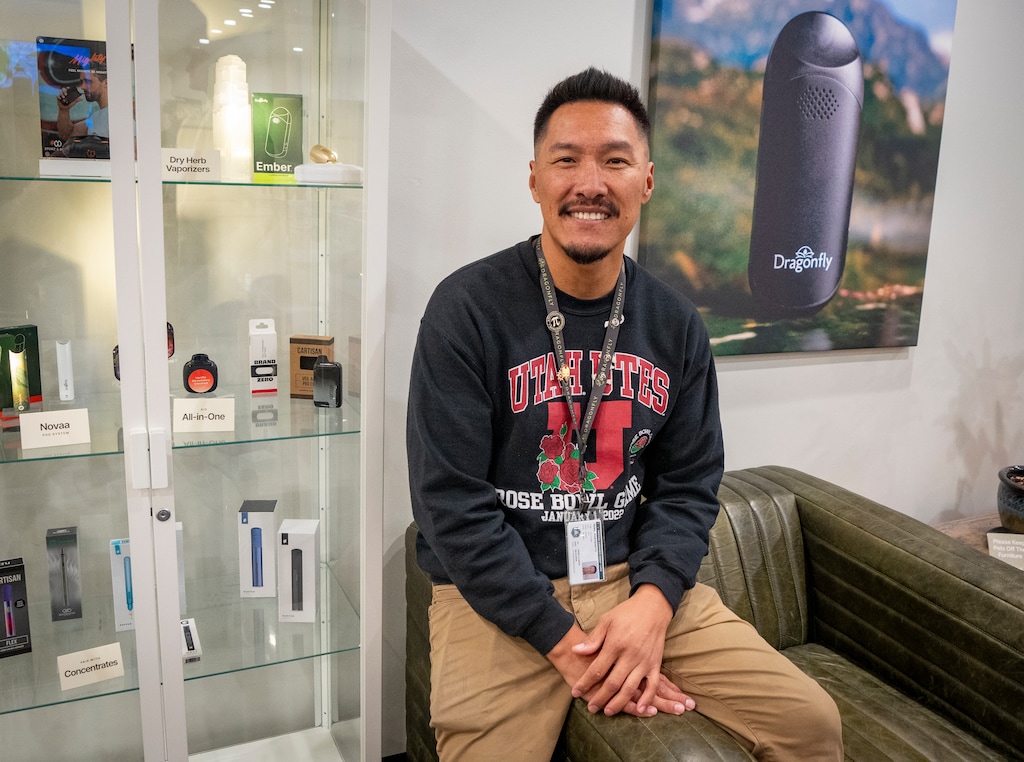
(Rick Egan | The Salt Lake Tribune) samples at Dragonfly Wellness, on Wednesday, Nov. 25, 2026.
Just ahead of the Thanksgiving holiday, the judges in the D.C. circuit issued their order halting the implementation so they can consider the motions from both sides. The order from the court said the stay “should not be construed in any way as a ruling on the merits of those motions.”
Salt Lake City-based Dragonfly is one of those that would be caught in what it says is an untenable position, should the DEA’s policy ultimately take effect.
The DEA set a June deadline for medical pharmacies to apply for registration with the agency. While the applications are being reviewed, the pharmacies may continue to operate under state guidelines.
A separate registration window opened for producers — those who grow and process the plants — to apply with the DEA.
But almost none of the producers knew about the deadline or the “magical back door” they had to use to apply, said Panh. That meant many companies like Dragonfly weren’t able to apply for permission to produce marijuana until the DEA subsequently reopened the application portal.
Throwing Utah’s cannabis market ‘into chaos’
The problem now is that in October — four months after the application deadline had passed — the DEA said it would prohibit pharmacies and producers that didn’t apply in the first round from doing business with one another. That means, come Sunday, Dragonfly wouldn’t have been to sell the plants it grows or products made from them in its own pharmacies in Salt Lake City and Price.
In Utah, seven of the state’s 12 cultivators and makers of marijuana products did not apply in time. Only two of the state’s 14 pharmacies did not, according to the state’s court filing. Unless the court had intervened, starting Sunday, seven of the state’s producers would have only been able to sell their products to two pharmacies, while 14 pharmacies that made timely applications could only buy products from five producers.
The DEA’s rule, Brown writes in the brief, “runs roughshod over Utah’s deliberate regulatory scheme. With so few companies given state licenses to begin with, the … division of those companies into two groups that cannot deal with each other will throw the Utah cannabis market into chaos.”
Panh said he appreciates the attorney general’s office standing up for Utah businesses in this instance.
“Basically they’re taking a stance,” he said, “of, ‘Hey, we’ve been operating a non-federally compliant cannabis program since we opened in 2019, and now all of a sudden you want to come and say we get to tell you whether you’re compliant or not? No thanks.’”
The Justice Department, in its response to the lawsuit, contends Congress gave the federal government the power to regulate marijuana and it is the businesses’ fault for failing to apply when they had the opportunity.
Blocking the DEA rule from taking effect, the department contends, interferes with the agency’s ability to enforce the law — which businesses have been violating for years — and to protect the public by requiring prescriptions and preventing unlawful distribution.
An example of states’ rights
Beehive Farmacy is in a similar situation to Dragonfly, said Bijan Sakaki, the company’s CEO. He applied for his retail permit, but did not apply for the production permit in time.
It leaves him in limbo, Sakaki said, because applicants who violate the DEA rule could have their pending applications rejected by the agency — and that could have potential repercussions on the businesses’ state licenses.
Currently, Sakaki is planning to continue operating Beehive as he had been before the DEA issued its new requirements. But with his pharmacy relocating from Salt Lake City to a new Draper location, he could have a lot to lose if the DEA decides to crack down on businesses that aren’t complying.
The DEA, he said, hasn’t been forthcoming on how, or if, it will enforce the policy or what it could mean for his business.
“I’ve spoken with local DEA representatives and their honest answer was: ‘You’ll probably know sooner than we do,’” Sakaki said.
It is reassuring, he said, that the state is siding with the businesses in pushing back against the DEA regulations.
“This is an instance of states’ rights saying, ”Hey, this could mess up what we have built,’” he said.
It could also impact patients who have come to count on certain products being in their local pharmacy, according to Brandon Forsyth, director of Utah’s medical cannabis division.
“We have engaged with federal officials and state leadership to seek a more flexible solution that protects Utah patients and operators,” Forsyth said in an email to The Tribune, “but the DEA has not shown any sign of modifying its approach.”
Incoming Senate President Evan Vickers, R-Cedar City, a traditional pharmacist who has been largely responsible for refining Utah’s medical marijuana program after a 2018 ballot initiative legalized the products, said the DEA action “throws our state pharmacies into a new arena.”
“On the fed side, they didn’t even know what it meant when they were talking about rescheduling, because it was clear they hadn’t thought it through real clearly,” Vickers said.