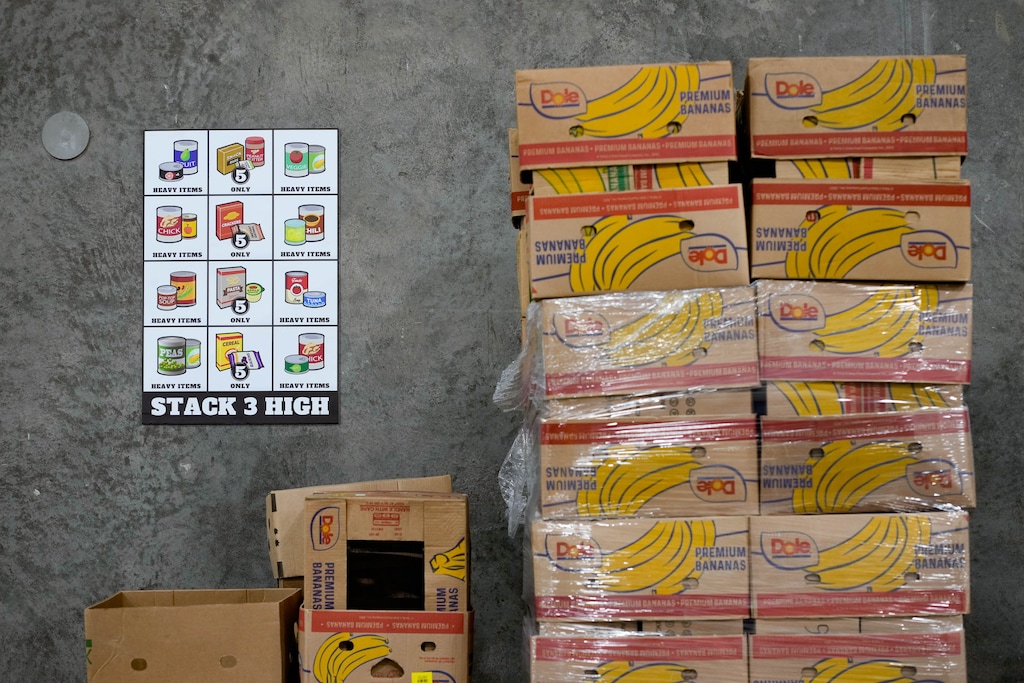
Utahns have turned for decades to emergency food providers, commonly known as food banks and food pantries, to help their communities. In a shocking announcement earlier this month, Community Action Services and Food Bank in Provo closed their doors after efforts to secure additional funding for operations fell short.
Emergency food providers all over the state are struggling to meet growing needs, as recent SNAP cuts sent thousands of older adults, refugees, disabled people and families with older children to pantries in search of support.
As Policy Director for Utahns Against Hunger, I have watched demand for emergency food rise every year during my tenure. As more and more Utahns struggle to afford food, we need to take a serious look at how we support our efforts to feed them.
Food banks and food pantries appeal in part because of the promise to use what might otherwise go to waste, a promise that too easily transforms into the idea that they produce something for nothing. But free food is never free.
As they scale, emergency food agencies face greater staffing expenses. Utahns pride themselves on high rates of volunteerism, but volunteer labor can’t bridge this gap.
Pantries need dedicated full-time employees to maintain consistent hours, handle sensitive and financial information, and to provide specialized skills. Full-time staff become even more important as emergency food providers are asked to also provide case work and other services aimed at building self-sufficiency. Many grants available to pantries will not cover staff, and many do their best with skeleton crews.
Pantries are also hit by the same economic swings that create demand for their services. As costs for goods and services rise, emergency food providers pay more, just as any other business would. For organizations that operate across multiple sites, increased costs for fuel take significant chunks out of a budget. Any economic crises also ultimately impact the donor bases for non-profits overall, meaning that fewer people are able to pitch in during hard times.
A stable response to hunger means stable funding for the backbone of that response, and even as charitably minded states like Utah cannot bridge that gap with charity alone. Emergency food providers already rely on federal commodity support through The Emergency Food Assistance Program and the Commodity Supplemental Food Program.
If we want our food pantries to leverage all the resources available to them, we need to support their critical infrastructure through similar investments.
We also need to commit to the existing programs for fighting hunger, like SNAP. Besides the size of government programs like SNAP, one of their main benefits as a tool against hunger is their ability to circumvent these barriers. SNAP benefits don’t rely on additional trucks or fuel, they get food to people through the supply chains that supermarkets have already built. They’re means-tested, not based on donations, so they automatically respond to economic downturns; a report from the Economic Research Service shows that $1 in SNAP benefits translates to $1.54 in GDP as the benefits of spending transfer to other economic activity.
Some may object to tax money going to anti-hunger programs at all, arguing that it is simply not the role of the government. The fact is that the government will pay for this response in one way or another. It may pay up front through commodity purchases and federal nutrition programs or it may pay after the fact through increased medical costs, homeless services and impaired educational outcomes.
More acutely, the refusal to fund our response to hunger still imposes a tax: It is a tax levied on compassion, on moral conviction. Relying solely on charity to solve this societal problem shunts responsibility onto those who are most willing to give. It can absolutely be heroic to fight hunger, but it shouldn’t take a hero. It should just be smart policy.
(Neil Rickard) Neil Rickard is the Policy Director at Utahns Against Hunger.
Neil Rickard is the Policy Director at Utahns Against Hunger, a policy and advocacy organization dedicated to ending food insecurity in Utah.
The Salt Lake Tribune is committed to creating a space where Utahns can share ideas, perspectives and solutions that move our state forward. We rely on your insight to do this. Find out how to share your opinion here, and email us at voices@sltrib.com.