In 14 years in Congress, I learned that the bills most likely to go wrong are the ones passed in a hurry, late in a session, before anyone asks what happens when they meet the real world. Alexander Hamilton warned of it in Federalist No. 70: “In the legislature, promptitude of decision is oftener an evil than a benefit.”
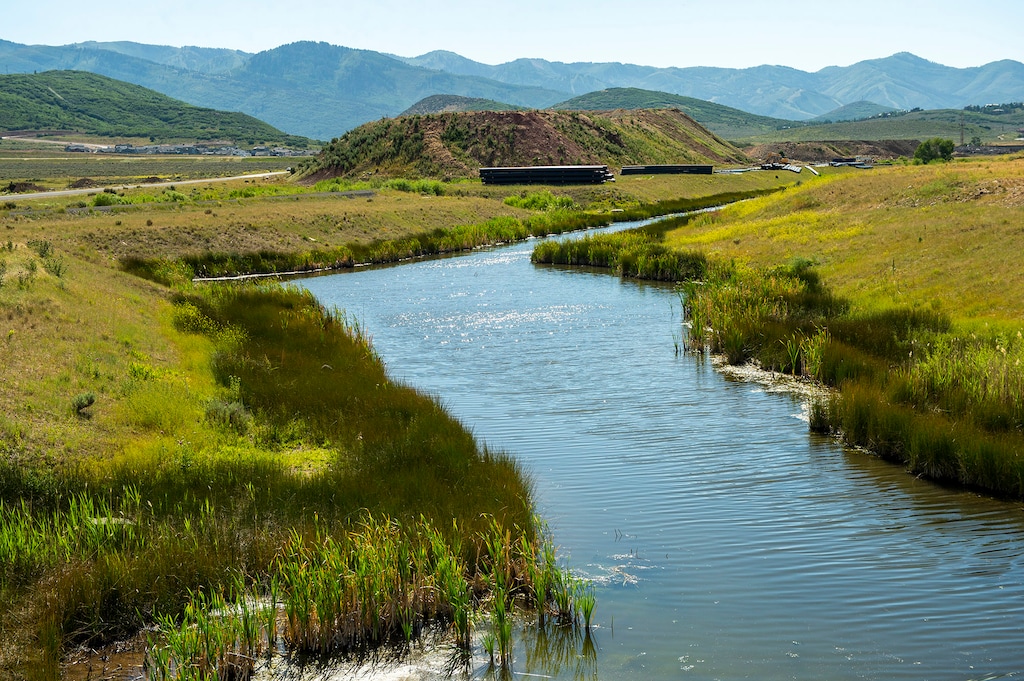
SB258, Utah’s 2024 “preliminary municipality” law, is a case in point. I am watching it play out on the open ranch land of Browns Canyon, a few miles from my home in Kamas. This month the Utah Lieutenant Governor’s Office began processing Ivory Homes’ request to create a new town there called Lost Creek.
Gov. Spencer Cox is right to set an ambitious goal of 35,000 new starter homes. Too many young Utahns are being priced out of the communities that raised them. The Tribune recently told the story of a single mother in Plain City who bought a starter home on one income. That is the American Dream working as it should.
But notice how it happened. It took months for the developer, with the state’s housing adviser, to persuade local officials. The county listened, and the plan went forward. That is how land use is supposed to work: slower than anyone would like, but accountable to the people who live with the result.
SB258 skips that step. It lets a few property owners, who need not live there, ask the state to create what amounts to a new town, sidestepping the county’s general plan, its zoning and the public hearings that normally test whether a project has water, roads and sewer. If the project falters, the county and its taxpayers inherit the problems.
Anyone who has written laws learns to ask one question: Who is accountable when it goes wrong? Under SB258, the honest answer is no one who can be voted out.
We have seen this before. In 2020, a little-noticed change in state law let Hideout annex open land in neighboring Summit County without that county’s consent. The window lasted just over 100 days before a bipartisan backlash closed it. Hideout acted before it shut, and in 2024 the Utah Supreme Court let its annexation of Richardson Flat go forward. A brief loophole took open land out of local hands for good. I can see that land from my window.
SB258 is following the same path. The Wasatch County Council unanimously called for its repeal, citing five structural flaws, and the Summit County Council followed on Oct. 7. Moab-area groups have sued, arguing the law is unconstitutional. These are not anti-growth communities. Summit County Community Development Director Peter Barnes tells me that, this year alone, the county approved about 1,345 new homes through its normal planning process, nearly half of them deed-restricted, affordable and attainable. As Summit Council Chair Canice Harte put it, “it’s the tool itself that we take issue with.”
Here in Kamas, neighbors have lined up outside the hardware store to sign petitions saying the same thing.
And Plain City is not Park City. In Summit and Wasatch counties, the cost of land, water and infrastructure means a market-rate “starter” home rarely starts anywhere near $450,000. Even new townhomes at Kimball Junction’s Studio Crossing list for $1 million and up. Smaller lots don’t change the cost of finding water or building a sewer system where none exists.
There is encouraging news. On Oct. 12, House Speaker Mike Schultz said a full repeal of SB258 “should be part of the conversation” when the Legislature convenes in January, and Gov. Cox said he is open to changes. When a law draws formal objections and lawsuits from the communities it affects, the fix is not to defend it but to rewrite it.
If lawmakers keep the preliminary municipality process at all, it needs basic guardrails: proof of water rights and infrastructure capacity before approval; consistency with the county’s general plan; petitioners with a real, long-term stake; financial assurances that protect taxpayers if a project fails; and genuine authority for the lieutenant governor to say no. Meanwhile, pending applications like Lost Creek should not be rushed to approval. Hideout taught us what happens when a door is left open on the way out.
Utah’s leaders are right to worry that our children and grandchildren may not be able to afford to live here. The answer is to build more homes the right way, in the right places, with the communities that will host them. A shortcut that skips the hard questions won’t deliver the dream, and it may cost us the trust we’ll need to get there.
(Dave McCurdy) Dave McCurdy represented Oklahoma's 4th District in Congress from 1981 to 1995 and later led national trade associations in the auto and natural gas industries.
Dave McCurdy represented Oklahoma’s 4th District in Congress from 1981 to 1995 and later led national trade associations in the auto and natural gas industries. He has lived in Kamas for 10 years and is a member of Wasatch Back Neighbors for Responsible Growth. He used AI to help edit and fact-check this commentary. The words and ideas are his own.
The Salt Lake Tribune is committed to creating a space where Utahns can share ideas, perspectives and solutions that move our state forward. We rely on your insight to do this. Find out how to share your opinion here, and email us at voices@sltrib.com.