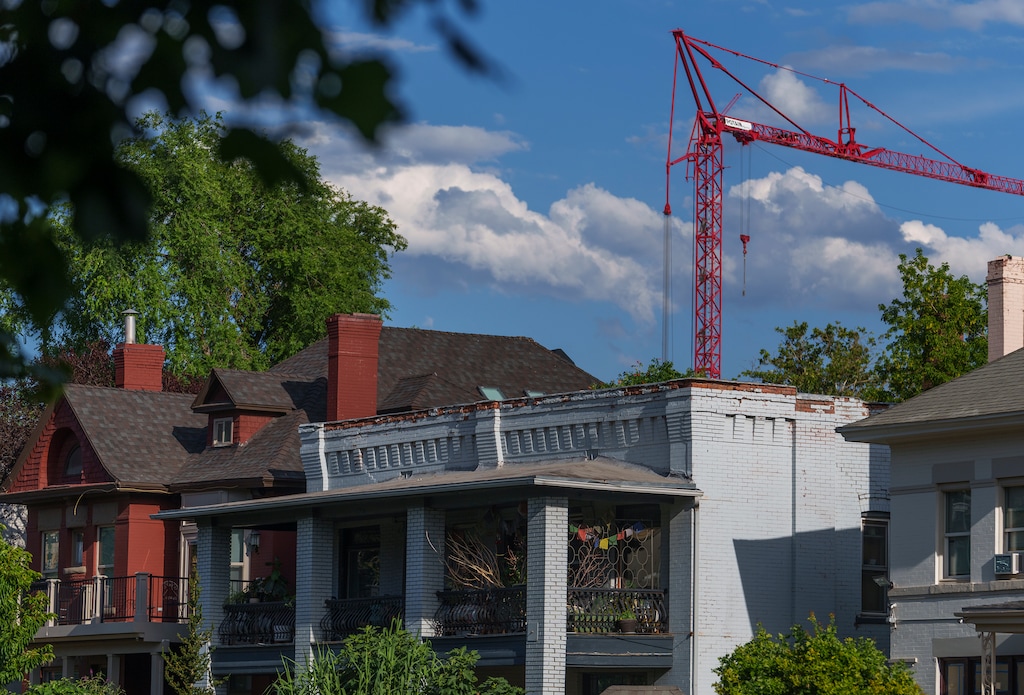
When I first visited Salt Lake City in 2019 in search of a new hometown, I skipped the rental car. I took TRAX downtown, walked to the TREK store on 5th East, rented a bike and spent days crossing the city. What I found astonished me: modest homes, quiet streets, attractive blocks, and coherent, livable neighborhoods.
Salt Lake City’s proposed Expanding Housing Options (EHO) zoning revision — especially its Small Lot Dwelling element — threatens neighborhood coherence by relying on an untested theory: that increasing density in established neighborhoods will deliver affordability.
Since the City Council launched the Legislative Action on March 4, 2025, the proposal has lacked transparency and broad public awareness.
My perspective is grounded in 35 years as a credentialed commercial construction executive and owner-manager of residential multi-unit properties, with experience in construction, development, practical understanding of zoning and building codes, and leadership roles in complex domestic and international construction projects.
During the April 13 planning division information session, I heard the staff presenter state more than once his “hope” that the EHO changes would achieve the city’s goals of affordability, family housing, walkability, water conservation and more. Hope is not a planning metric. Before altering the zoning ordinance impacting 77% of all residentially zoned land, the city owes residents definitive outcomes.
Planning Division staff have suggested that smaller homes in Durham, North Carolina, and Portland, Oregon, yielded purchase prices 40% below larger homes. Missing from their citations are long term effects on utility burden, property values, parking, civil code infractions and quality of life for existing residents.
Small Lot Dwellings, the proposal’s most consequential element, would allow one 1,200-square-foot dwelling per 2,000 square-feet of existing lot area. Depending on the lot size, up to six dwellings could be constructed on a lot currently developed with one single-family home. This would make affected neighborhoods prime teardown targets, and with no limits on commercial investors, many units would likely become rentals.
The Planning Division claims these drastic changes won’t affect “the character and unique qualities of each neighborhood” and that Small Lot Dwellings will produce “gentle infill.” These claims collapse when compared to the ordinance’s actual provisions: slashing 20- to 35-foot front yard setbacks in single family zones to a mere 10 feet, and “dropping” 30-foot tall, 1,200-square-foot homes in the front and back yards of an existing lot currently developed with a 16-foot tall bungalow.
For a proposal of this magnitude and scope — impacting most Salt Lake City households — residents deserved a multi‑media notification effort, including mailers, well-publicized forums and open give and take sessions with city leaders, not one-sided Planning Division presentations.
Instead, as discussed in the Feb. 17 City Council Working Session, the Planning Division said it lacked money for a mailer, and grass roots channels like community councils were not utilized to educate residents. Public events held were sparsely attended.
I am not opposed to density. For 33 years, I lived in dense Chicago neighborhoods. My last home — a 38‑foot‑tall wood frame duplex, constructed in 1893 on a typical 25-foot x 125 foot (3,125 sf) “Chicago lot” — fit seamlessly into a block of single‑family homes, duplexes and triplexes. With uniform front yard setbacks, it was difficult to distinguish among the varied housing types. My Chicago block had 20 dwellings per acre compared with six dwellings per acre of my Salt Lake City block.
The difference between Chicago and Salt Lake?
Nearly 200 years ago, Chicago was master planned for high-density. Salt Lake City was not. Forcing Chicago-style density onto neighborhoods never designed for it is not sound planning. If implemented, it will leave Salt Lake City’s fabric incongruous and aesthetically marred.
If the City Council were genuinely committed to its goals, it would not gamble with decades‑old established and thriving neighborhoods. It would:
Focus on State Street and other blighted corridors.
Incentivize redevelopment where infrastructure already supports density.
Preserve naturally occurring affordable housing—older homes—that run the risk of being demolished under these proposed ordinance changes.
Seek alternative perspectives, not just those of the Planning Division.
Salt Lake City is largely built out. That is not a failure; it reflects a mature and desirable city. Attractive places often cost more, and that reality deserves careful attention. As such, it is worth asking why detached single-family homes — the housing type many young and growing families continue to prefer — are under increasing pressure by current planning proposals.
As families leave and schools close, the city should consider whether these policies are helping preserve the kinds of neighborhoods families need.
Salt Lake City must prioritize evidence over national narratives. Upzoning is not a magic wand. It is a tool that can cause irreversible harm when misused. Citizens expect continuity in development patterns. EHO discards that expectation.
The real question is simple: Can we meet the challenges of our growth without destroying the things that make Salt Lake City unique? Right now, the answer under EHO is no.
A coalition of residents is asking the City Council to pause EHO and related Planning Division initiatives until residents are fully informed, competing viewpoints are heard and neighborhood impacts are honestly debated. Learn more at www.neighborhoodhousingalliance.org.
(Peter Wetzel) Peter Wetzel worked in commercial construction for 35 years.
Peter Wetzel lives in Salt Lake City. He has worked in commercial construction for 35 years.
The Salt Lake Tribune is committed to creating a space where Utahns can share ideas, perspectives and solutions that move our state forward. We rely on your insight to do this. Find out how to share your opinion here, and email us at voices@sltrib.com.