Give him credit, Utah Attorney General Derek Brown knows how to tell a good story. In his recent Salt Lake Tribune op-ed – “Conservation and constitutional limits are not opposing values. Utah can defend both.” – Brown tells a tall tale about how the Antiquities Act has been misused for nearly a hundred years and how Utah politicians love public lands. We know neither of these is true. For more than 40 years the Southern Utah Wilderness Alliance (SUWA) has been working to protect America’s redrock wilderness, including Grand Staircase-Escalante and Bears Ears National Monuments, from the clutches of politicians like Brown.
In June, the country celebrated the 120th anniversary of the Antiquities Act, a pivotal law that authorizes presidents to establish national monuments to protect “historic landmarks, historic and prehistoric structures, and other objects of historic or scientific interest” as national monuments. And while Brown’s op-ed would have you think that this means Congress only intended to protect discrete prehistoric sites, that’s simply not the case.
Less than two years after the Antiquities Act became law, President Teddy Roosevelt established Grand Canyon National Monument, coming in at over 800,000 acres and designated to protect the area’s unique geology. Many monuments, large and small, followed; many were established to protect plant and animal species, ecosystems and landscapes, as well as irreplaceable cultural and paleontological sites.
All told, presidents of both parties have used this authority more than 160 times over the past 120 years to protect the nation’s most significant public lands and resources. And while some of these decisions may have been initially unpopular — often critiqued by politicians who wanted to see these places drilled, logged and exploited — they have withstood the test of time and are widely regarded as the right decision. We wouldn’t have Utah’s Mighty Five today if presidents hadn’t protected four of these parks first as national monuments.
Every single time a president has been sued for using this congressionally granted authority — and there have been many such lawsuits — they failed. Contrary to Brown’s version of events, the courts considering these cases ensured that the “objects” protected by presidential proclamation were of the type Congress intended and that the monuments weren’t excessively sized.
Monument opponents tried this game in 1996 after President Clinton established the Grand Staircase-Escalante National Monument, complaining that Clinton exceeded his powers under the Antiquities Act. The late Utah federal district court judge Dee Benson considered and rejected these arguments, concluding that the monument protected resources intended to be covered by the Act and that it was not “too big.”
The recent decision by the Tenth Circuit Court of Appeals to send Utah’s lawsuit challenging President Biden’s restoration of the Grand Staircase-Escalante and Bears Ears National Monuments back to district court is consistent with the long tradition of federal courts holding that they have jurisdiction to consider such cases. And like every single case that has come before it, we expect Utah’s to fail.
The larger issue animating Brown and his boss, Gov. Spencer Cox, deserves some scrutiny. Though Brown tries to wrap himself in the Constitution and argue that Utah is simply trying to do what’s right, we can all see right through that. Brown and Cox, like so many Utah politicians before them, can’t get out of their own way.
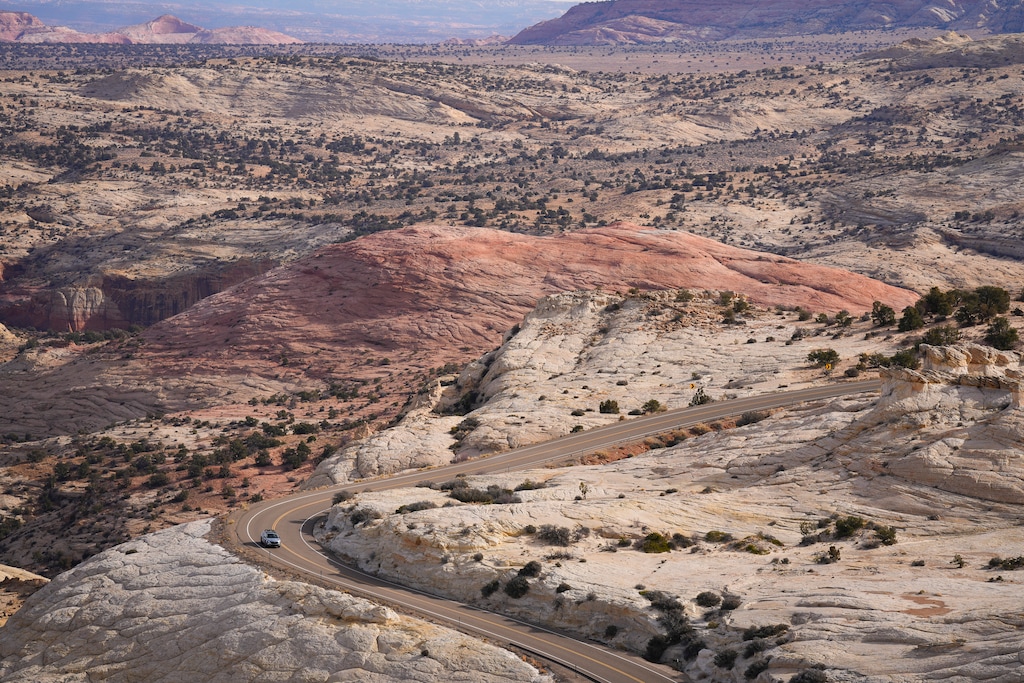
The federal public lands in our state are the envy of the nation. From Grand Staircase-Escalante and Bears Ears to Labyrinth Canyon to the Dirty Devil to the Book Cliffs, the sheer diversity of these tens of millions of acres is amazing. Ask any guide or outfitter in towns like Escalante, Green River or Moab, people aren’t coming to look at drill rigs, mines or smokestacks. Instead, they want to hunt, fish, sightsee and recreate — whether by foot, horse, boat or vehicle — on their public lands; lands owned by all Americans that are part of our shared heritage. Report after report confirms that public lands, including national monuments, are the backbone of resilient local economies and jobs.
And yet, Cox and Brown can’t help themselves. To what end? As a part of Cox’s scheme to wrest control of public lands from the American people and into the hands of local politicians? To bring more mining, drilling and out of control off-road vehicle use to the monuments? Poll after poll confirms that Utahns, by an overwhelming majority, don’t want to see those things happen. Instead, they want the monuments and the things that make them special protected for current and future generations.
Brown closed his op-ed by saying that the state of Utah “intends to finish what [it] started.” The Southern Utah Wilderness Alliance and our partners from across the nation will work tirelessly to make sure that there is in fact a swift end to this litigation and that Utah politicians’ misguided attacks on the monuments end up atop the trash pile of bad ideas where they belong.
Steve Bloch is the legal director at the Southern Utah Wilderness Alliance (SUWA).
Steve Bloch is Legal Director for the Southern Utah Wilderness Alliance (SUWA). SUWA is Utah’s largest conservation organization and is dedicated to preserving America’s redrock wilderness.
The Salt Lake Tribune is committed to creating a space where Utahns can share ideas, perspectives and solutions that move our state forward. We rely on your insight to do this. Find out how to share your opinion here, and email us at voices@sltrib.com.