The clock is ticking for Utah taxpayers as a critical public land policy is now officially on the chopping block. On June 11, the Trump Administration began the process of rescinding the 2024 Bureau of Land Management (BLM) Oil and Gas Rule.
As a professional in the outdoor industry in Moab and an elected official in Grand County, I have seen firsthand how the Utah economy benefits from public lands. Revenues come to our state through a wide variety of sources, from tourism to oil and gas royalties. In Moab, the Park Service, the Forest Service and the Bureau of Land Management are among our largest employers.
But the lasting benefit of public land to the overall Utah economy comes through the quality of life that access to the great outdoors provides. Recreation assets like trails, rivers and lakes have become mainstream economic drivers. From our rural counties to Silicon Slopes, Utah’s outdoor opportunities are attracting business investment because people want to live where they can get outside.
Yet, our officials in Washington continue to ignore these 21st century economic drivers and instead are poised to make a decision that is certain to degrade our public lands.
Multiple use on public lands means we need to share the land with resource extraction like oil and gas development, and in Grand County we have worked to balance our resource extraction opportunities with our trails, river access and climbing areas while simultaneously benefiting from our many producing oil and gas wells.
The BLM Oil and Gas Rule enacted in 2024 was designed with this type of multiple use in mind. When an oil and gas company drills a well, they put up a bond that covers the cost of plugging that well and cleaning up the site when it runs dry. For this system to work, the bond must be large enough to cover today’s actual costs. Prior to 2024, oil and gas bonding rates had not been raised since the 1960s. When rates are too low, some operators simply abandon their sites, leaving a landscape of orphaned wells where trailheads or other uses could be thriving.
Despite this clear need, the current administration has decided to rescind the 2024 Rule and roll back bonding rates to those woefully low 1960s levels.
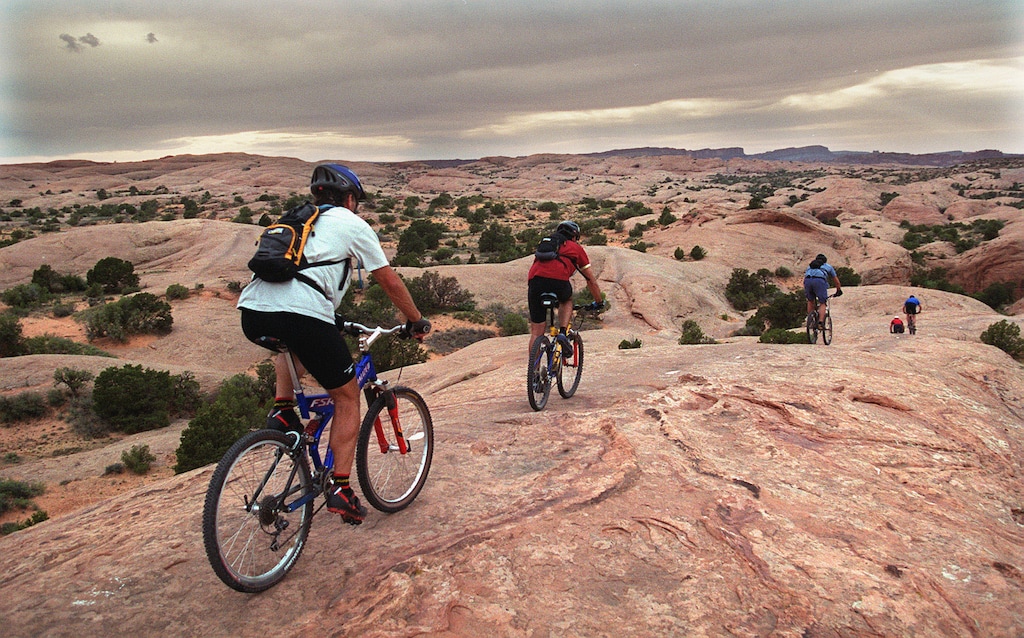
It gets worse. The 2024 Rule also included the first-ever preferential treatment for recreation assets during the leasing process. Many are surprised to learn that favorite trails or campgrounds currently enjoy no inherent protection from being leased for drilling. In 2020, the world-famous Slickrock Trail here in Moab was nominated for leasing, and it took an emergency intervention from local rangers and Gov. Gary Herbert to save it. The 2024 Rule would save everyone that trouble by identifying and protecting recreation assets before they are ever put on the auction block.
While Utah’s congressional delegation does not have a direct vote on this rollback, they hold significant influence over the administration’s energy agenda. Utah has long reaped the rewards of energy development, but there is no reason to burden taxpayers with the cleanup or transfer the liability to state authorities. Today, 89% of Westerners believe oil companies should be financially responsible for cleaning up their sites.
While we all use oil and gas, there is no reason for taxpayers to pick up the tab on clean up or miss out on important royalties from resources on the public lands which we all own. It is time for Utah’s elected officials to support our rural communities by keeping in place practical tools for managing multiple use, like the BLM Oil and Gas Rule.
(Jacques Hadler) Jacques Hadler managed Moab Cyclery for over a decade. He was elected to the Grand County Commission in 2020 and re-elected in 2024.
Jacques Hadler managed Moab Cyclery for over a decade. He was elected to the Grand County Commission in 2020 and re-elected in 2024. He is the current head coach of the Moab NICA bike team for whom his two daughters compete. His opinions are his own and not necessarily those of the Commission.
The Salt Lake Tribune is committed to creating a space where Utahns can share ideas, perspectives and solutions that move our state forward. We rely on your insight to do this. Find out how to share your opinion here, and email us at voices@sltrib.com.