Note to readers • This is part of a collaborative project between The Salt Lake Tribune and the Cougar Claw, Kearns High School’s student newspaper. Read more about these young Utahns’ experiences and perspectives here.
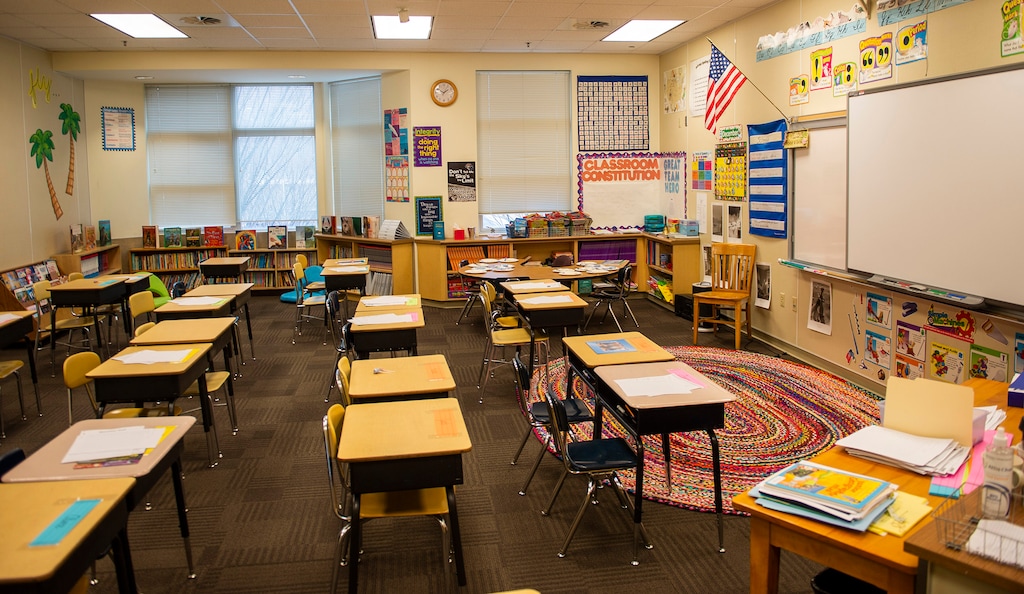
Every empty desk has a reason behind it. We just stopped asking what it was.
The easiest answer is that students stopped caring. But the convenient answers are how empty desks become permanent.
Sure, some students skip class because they don’t care, but presenting that as the whole story is incomplete. When curriculum feels disconnected from real life, when grades measure compliance instead of growth, disengagement isn’t rebellion. It’s exhaustion.
Others disappear for reasons that have nothing to do with laziness. There are family emergencies, mental health challenges, unstable housing and many other factors. These aren’t character flaws, they’re circumstances. Yet the system’s default response in most cases is punitive regardless of the cause.
I’ve seen students explain their situation only to be met with silence or disbelief. I used to assume there was no good reason for students to skip class. I realized I wasn’t looking at the full picture until I became one of them.
When my grandma was diagnosed with lung cancer this year, school was the last place I wanted to be. I knew I had my responsibilities at home watching my brother and keeping the house in order. I never put them aside despite the constant backlash from teachers and family for my daily attendance issues.
Through weeks of struggling with depression, the classroom wasn’t a place I could focus in. I needed space to be alone. There were days I’d be sitting in the school parking lot dreading the thought of going to class. Everyone could tell something was wrong but couldn’t understand the problems I was going through
I talked to a few teachers about it, and many were understanding — they had empathy for my situation. Many of them didn’t have a problem with me doing work outside of class in the meantime. But once it became a situation that lasted longer than a week or so, I started facing pushback.
I was told that school attendance should be prioritized regardless, and I felt discouraged. I was mourning for someone that had not yet left my life, so it was never a thing I could just get over and get out of my mind. That caused me to not show up to my classes for about five weeks.
My grades dropped, I constantly argued with my family about school. I never had free time because I was trying to catch up on classes. I let myself get comfortable with not going to class and fell behind.
Eventually, I stopped waiting for people to notice I was struggling. I tried the school’s resources, but support wasn’t built for what I was actually going through.
I know what it feels like when not showing up becomes the only thing that makes sense. The classroom started to feel more like the problem than the solution.
But then I started to realize that avoiding school wasn’t making anything better. Every day I didn’t show up, more problems started to pile up. My grades, my relationships, my mental health — they were all things being affected by not going to class. I understood that if I wanted to get through graduation, showing up, even if I wasn’t ready, was the first step I needed to take to get my life under control.
The biggest reason I felt I could never get back to class was because I fell so far behind that it felt pointless catching up that late into the year. I wish my teachers or counselors tried to implement a step-by-step plan to get me back into class. If that was the case, I could’ve caught up sooner.
I wished more of my teachers could’ve reached out to help me when I was struggling. It feels like most students like me are hardly reached out to by their mentors regarding their education outside of the classroom, and that could be a good start to chronic absenteeism.
Sometimes I think I would’ve found my way back sooner if what I was coming back to felt meaningful. When the work in front of you doesn’t connect to your life, it’s hard to feel pulled towards the classroom, even when you want to do better. That’s where the deeper issue starts to show.
When students like me learn by doing, by building, by creating, they won’t learn as efficiently as other students who learn best by how the system was designed.
A system that was never built for everyone cannot be surprised when everyone doesn’t show up. Attendance isn’t only a student’s problem, it’s a reflection of whether school is giving a reason for students to be there.
If you stopped showing up, it doesn’t mean you gave up on your future. It might mean the environment stopped meeting you where you were. Recovery from chronic absenteeism isn’t just about walking through the door, it’s about finding the teachers, the classes and the reasons that make it worth coming to class.
The system should do better, and it needs to. But I also learned that waiting on it to change won’t get me through graduation.
(Rick Egan | The Salt Lake Tribune) Ryker Tovey is a member of the Kearns High journalism class, on Wednesday, May 13, 2026.
Ryker J. Tovey is a Kearns High junior and is currently on track to graduate a year early. He enjoys long walks on the beach, and his goals in the future are to live a life of freedom without restrictions of poverty.
The Salt Lake Tribune is committed to creating a space where Utahns can share ideas, perspectives and solutions that move our state forward. We rely on your insight to do this. Find out how to share your opinion here, and email us at voices@sltrib.com.