Note to readers • This is part of a collaborative project between The Salt Lake Tribune and the Cougar Claw, Kearns High School’s student newspaper. Read more about these young Utahns’ experiences and perspectives here.
Last December, my cat Jasper was passing away. As any person would, I wanted updates on him. Unfortunately, I had no way of knowing how he was doing because I couldn’t check my cellphone during class. Because of this, I wondered each day if that would be the day he would go.
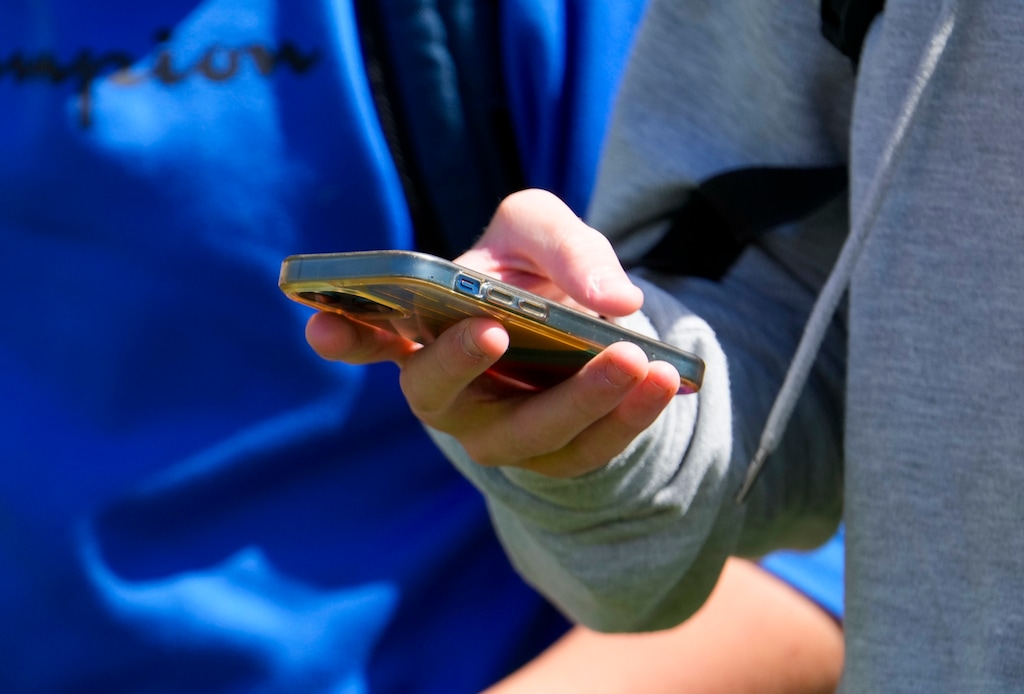
I’m a freshman at Kearns High, where cellphones are banned during class time. If I wanted updates on my cat, it could only be at lunch, the only real time I could check my phone. I wasn’t able to focus during class, so my grades slipped.
Now, sometimes I worry: What if my grandpa passes? What if my mom passes? What if any of my loved ones pass?
For a time, this worried me so much I couldn’t work and, instead, I focused on dread.
I see why we banned phones. The statistics show that banning phones can help with improving grades, gaining friends and increasing attention spans. I see that, and it has been working well at Kearns. I have even seen my friends’ grades go up, so I know it’s been helping.
But now lawmakers have decided to expand it further — even after good progress has already been made.
Lawmakers passed a new law in March which allows school districts to ban phone use from bell-to-bell, which is significantly different from what Kearns does now.
I’m against the law because it makes it so that students with stressful events happening in their lives, like when my cat passed away, can’t check their phones until after school and may worry all day instead of part of the day. That affects everything, including our ability to do work and have social interactions.
Also, many students need their phones to do assignments or turn in assessments because they might have lost their school-assigned Chromebook and simply don’t have the money to replace it, so they have to use their phones as a substitute.
Many students don’t have stuff to do at lunch and, if phones were banned from that, what would we do, just sit there bored? I have severe social anxiety and, even when I made friends, I still didn’t hang out with them for a while. I don’t like games on Chromebooks, so I didn’t have much to do.
My main concern with bans such as these is that we high schoolers should not be given the same treatment as elementary students. We are adolescents, not toddlers, so why are we being treated as such?
Lawmakers should let growing humans learn how to be an adult and learn how to improve ourselves — by limiting our own screen time — without relying on the law to fix our problems.
As elected officials create and pass laws, they should be listening to the people who are affected — in this case, the students. As a student myself, I am doing my job by sharing how the laws affect me. Now we need the lawmakers to do their job and listen.
I believe it is beneficial to put our phones away during class. But give us the ability to check them if we have problems. For example, we could explain the situation and ask our teachers to have our phones to check notifications we deem essential.
I see the problem with my idea: Teachers don’t know if you have your phone for an actual problem or not. And if I were a teacher, I also wouldn’t want students to lie just to be on their phones or for them to be on their phones constantly and not care about all the hard work I put in for them.
The best solution I have is letting teachers see what you are doing on your phone in these situations. I realize teachers still have work they have to do while students are checking their phones.
Though teachers are responsible for enforcing the cellphone bans, they aren’t the ones who came up with it. This was the lawmakers, and they’re looking at two things: students’ grades improving and social interactions getting better the less cellphones are used. But lawmakers don’t know how the ban on cellphones affects our mental health.
Even though most of us are under 18 years old, we are affected by the laws written by adults. And yet, these same adults don’t even listen to us, so why speak up?
The new law is far too strict for when someone is going through something stressful. The current law — banning phones in class — is enough and should remain the current rule.
(Rick Egan | The Salt Lake Tribune) Ryker Sparks, a member of the Kearns High journalism class, on Wednesday, May 13, 2026.
Ryker Sparks is a freshman at Kearns High and is on the staff of the Cougar Claw.
The Salt Lake Tribune is committed to creating a space where Utahns can share ideas, perspectives and solutions that move our state forward. We rely on your insight to do this. Find out how to share your opinion here, and email us at voices@sltrib.com.