Note to readers • This is part of a collaborative project between The Salt Lake Tribune and the Cougar Claw, Kearns High School’s student newspaper. Read more about these young Utahns’ experiences and perspectives here.
Schools worldwide have reported a large decrease in academic achievement in the past few years. Most people would blame it on the rise in social media use, AI in schools or even just declining mental health in adolescents.
The main component, to me, is that students don’t know about resources in their community. When I talked to my school counselor and school psychologists, the conversation gave me room to brainstorm my future. I’m now graduating early and have plans to go into early childhood education. I want to be a preschool teacher.
These are just basic resources I used that could help other students, too.
I am a junior graduating with the class of 2026. I’ve always hated school, waiting for the day I’d leave. Going into high school, even this school year, I had no plans of graduating early. I made the decision in November, after a sociology class inspired me to suddenly try. But before I could begin, I had to figure out my career, time management, taking on the workload and basic stress management.
And I used my school — the place I’d hated — to help me.
So, since November, I have been completing a plan my counselor and I put in place. My goal was finishing two online classes in one month, every month, until graduation. I managed my study hours after school, spending two hours everyday on both workloads.
After deciding to graduate early, I wasn’t sure where to go or who to talk to. My plans for after graduation were something I hadn’t considered, but the need to make a decision was approaching faster than I was prepared for. Based on my own background — and what I hear from those around me — I know I am not alone in this.
Every year there are slang terms referencing some sort of academic withdrawal: freshman funk, sophomore slump, junior jitters and senioritis. Many students report having at least one run in with academic burn out. I’ve experienced burnout multiple times, though I’m so burnt out it turned into motivation. I began to work even harder towards graduation.
This shared experience begs the question: What can a student struggling with burnout do?
While I was never a huge fan of school, I can say, after further research, schools do provide resources for those who may need them. Students struggling with mental health problems, related or unrelated to school, can go to the school psychologist or counselor. Those who are struggling with post-graduation plans — or even just making it to graduation — can always talk to college advisors and counselors, as well.
Psychologists and counselors are there to guide students through whatever is impacting their learning experience. This is beneficial in areas not just involving school. Though for me, it boosted productivity. I was more motivated to complete my work before relaxing, and I was able to get my work on time — if not early, in some cases.
School psychologists, like Kearns High’s Taylor Jackson, helped me learn more about not only self regulation, but management when it comes to academics and personal life.
“I find a lot of students are overwhelmed by the prospect of being out there in the world,” Jackson says. “Being able to navigate their own mental health in an independent setting is overwhelming.”
College advisors can also provide space to help with financial aid and plans for education in the future.
“I’m kind of the school’s resource for scholarships, applications, financial aid and a majority of other college questions.” Colin Foster, Kearns High’s college advisor, told me.
The Utah State Board of Education requires schools to have student services and support. Students can use these resources to help them both academically and mentally. I’ve benefitted from the resources that Kearns offers, helping create stability in my own plans for the future.
So, to the trusted adults in our lives: We need support as we navigate transitioning from high school to adult life. You may feel limited in your knowledge or ability to assist us as we progress. But even if you can’t help us with everything we need, being able to guide us towards people with the resources to help us is beneficial.
After I reached out to my counselor to create a plan and discuss the possibility of graduating early, I felt more secure in my ideas and goals. I also spoke with the college advisor and my mentor to develop my future college and career aspirations. I created a plan, and I figured out what was holding me back. I became less afraid about the future and school.
Other students can do this, too, to create a firm foundation for after graduation.
Using the school’s resources to establish a set of goals can be beneficial to students as they figure out post-high school plans. These tools help build students’ independence and confidence in their future, regardless of where they go.
No matter what career you pursue, utilizing your assets can help students thrive.
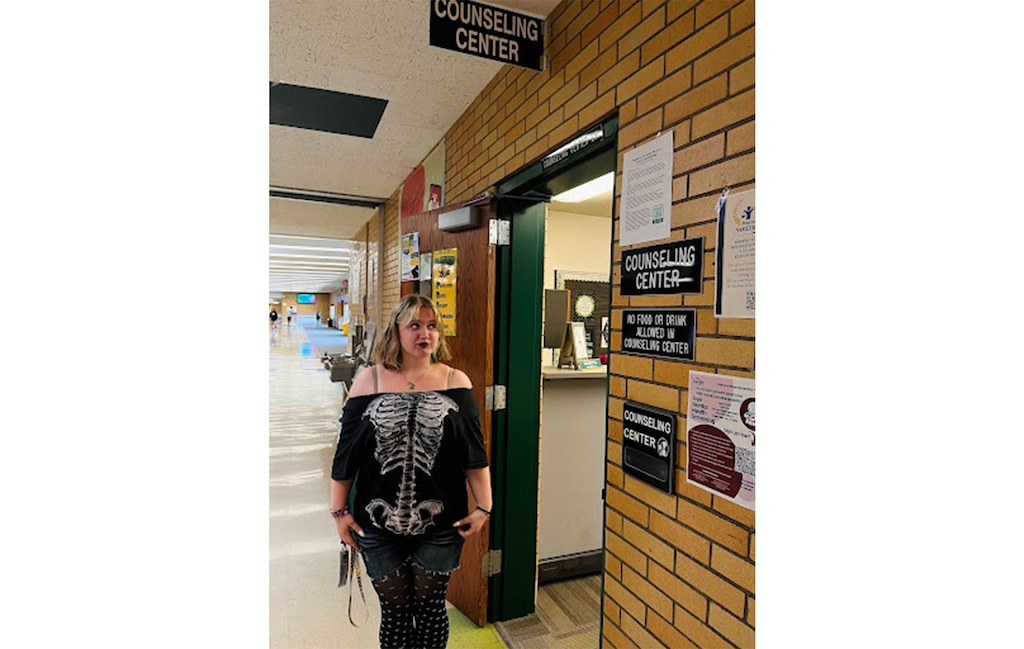
(Rick Egan | The Salt Lake Tribune) Jamie Eaton, a staff writer for Kearns High's Cougar Claw, on Wednesday, May 13, 2026.
Jamie Eaton is a junior at Kearns High School, and is a staff writer for the Cougar Claw, the school newspaper. Upon her early graduation, she hopes to go into early childhood education. When she’s not at school she can be found at home or the park with a blanket and a book.
The Salt Lake Tribune is committed to creating a space where Utahns can share ideas, perspectives and solutions that move our state forward. We rely on your insight to do this. Find out how to share your opinion here, and email us at voices@sltrib.com.