Note to readers • This is part of a collaborative project between The Salt Lake Tribune and the Cougar Claw, Kearns High School’s student newspaper. Read more about these young Utahns’ experiences and perspectives here.
This year, my life goals unraveled in a way I didn’t expect.
For most of my life, I thought I had everything figured out. I was going to be an attorney. It was a plan I carried for years, one that gave me a sense of control I didn’t feel anywhere else.
Even as I held onto that plan, I knew it wasn’t something I truly loved. Still, I stuck with it. It felt safe. It felt “honorable,” as my mother would say.
Looking back now, I can admit something I couldn’t before: I would have hated it.
There is comfort in telling people you have a plan, even if that plan doesn’t feel like your own. But control and passion are not the same thing.
My relationship with music started quietly at 10 years old with the viola. I wasn’t very good at it, but the community kept me coming back. I eventually had to quit due to circumstances surrounding COVID, but when I reached middle school, I signed up for concert band. That’s when I picked up the flute.
This time, it was entirely different.
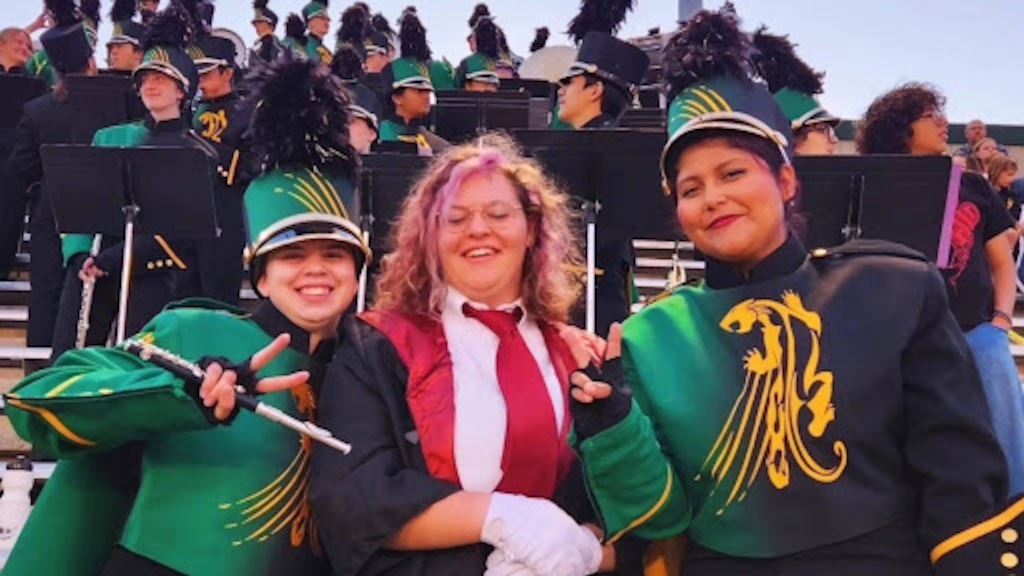
The connection was immediate. The sound, the technique, the way it came naturally in those early years, it sparked something in me. I stayed with it through junior high and into high school, joining ensembles like the Kearns High marching band. I learned how to march with my group and have even competed in multiple competitions. But even as my involvement deepened, I never seriously considered music as a career.
Growing up, I constantly heard that music wasn’t a “real” career. It was something reserved for the exceptionally talented or the financially secure. For everyone else, it was framed as unstable, impractical, even irresponsible. I watched talented students choose different paths, not because they lacked ability, but because they were told music wouldn’t support them.
I believed that, too.
It wasn’t until I joined the Symphony Club that my perspective started to shift. The club offered discounted tickets to live symphony performances for Kearns High students in the program, and at first, it just seemed like something fun to do with friends. But sitting in those concert halls changed something for me.
Watching professional musicians perform with intention, passion and a quiet hum of excitement, it challenged everything I thought I knew about the field. Their work wasn’t just talent, it was discipline, storytelling and purpose.
After one performance, I had the chance to speak with a Utah symphony musician who shared a quote that stayed with me: “Where words fail, music speaks.”
For the first time, music didn’t feel like a distant dream. It felt possible.
That realization pushed me to take the next step. I started researching private lessons, college programs, scholarships and career pathways. What I found was both motivating and discouraging. The opportunities exist, but access to them is limited.
At Kearns High School, the lack of resources in the arts is hard to ignore. Programs rely heavily on fundraising and community support. Students in activities like cheer, dance and marching band often pay significant out-of-pocket costs just to participate. In marching band, I have paid more and more fees every year. This year, I paid around $200 just to be in the program.
Meanwhile, schools with more funding have access to better equipment, more opportunities and greater visibility.
The gap is real, and students feel it.
My marching band experience is a testament to how discouraging resource gaps can be. We would take the field only to watch other schools perform with equipment and full staff we couldn’t afford. It wasn’t a lack of interest holding us back, it was funding. My peers agreed that seeing that disparity at every competition was disheartening.
It raises an important question: How are students supposed to pursue their passions when the support system isn’t there?
For many, the answer comes back to the community.
The people you meet while pursuing what you love can make the difference between giving up and pushing forward. I am lucky enough to have a strong and impactful music community. My instrumental teacher at Kearns, Charles Dye, encourages us to get out of our comfort zones, gives us resources and always makes sure that we are in high spirits even when the gap between us and other schools is apparent.
Choosing music wasn’t part of my original plan at all. In many ways, it disrupted everything I thought I knew about my future. But it also gave me something that the plan never did: a sense of purpose and excitement.
And sometimes, that matters more than having everything figured out.
(Courtesy photo) Michelle Jimenez-Campos is a member of the 2025-'26 Kearns High journalism class.
Michelle Jimenez-Campos is a junior at Kearns High School and is the community beat editor at the Cougar Claw. After high school, Michelle plans on pursuing a career in symphonic performance and hopes to travel the world performing in different symphony orchestras. In her spare time, she enjoys learning all kinds of things from music to practical life skills.
The Salt Lake Tribune is committed to creating a space where Utahns can share ideas, perspectives and solutions that move our state forward. We rely on your insight to do this. Find out how to share your opinion here, and email us at voices@sltrib.com.