 Robert Gehrke
In 2018, voters did something unprecedented, putting three initiatives on the ballot — to expand Medicaid, legalize medical marijuana and ban gerrymandering — and passed them all.
This fall, voters will be asked if they want to make it significantly harder for some initiatives to pass.
Amendment B, on ballots going out in a few weeks, would require any initiative that would create, expand or increase taxes to get 60% support from voters.
Had this idea been in place in 2018, the Medicaid initiative and the medical marijuana question, both of which created new taxes to pay for the programs, would have come up well short.
The possibility that Utah’s already difficult ballot initiative process could become even more onerous has groups that have fought to preserve citizen initiatives sounding the alarm.
“We’ve seen [the Legislature] continuing to increase these barriers to using the ballot initiative process in Utah and we see that as a problem,” said Elizabeth Rasmussen, executive director of Better Boundaries, the group that backed the 2018 anti-gerrymandering effort.
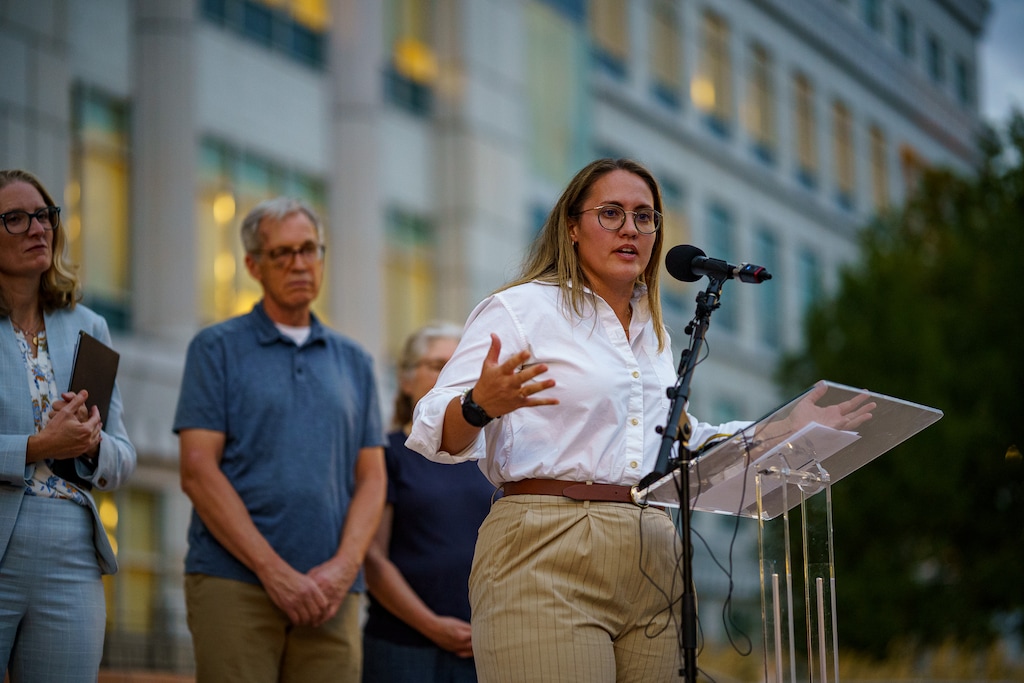
To that end, Rasmussen’s group and a coalition of other organizations on Monday will launch a campaign aimed at convincing Utahns to vote no on the proposed amendment.
“Amending the constitution is not a small thing, especially when you’re taking away a power from Utahns. So we want to make sure voters understand what this amendment does, and that is taking away a right that citizens have had for 125 years,” Rasmussen said.
The sponsor of the amendment, Sen. Lincoln Fillmore, R-South Jordan, doesn’t see it that way.
Fillmore has said raising the threshold to pass a tax increase via a ballot initiative protects taxpayers from having to pay more for a new program that barely has a majority of voter support.
“It doesn’t give me pause, because I think families are struggling in meeting their bills right now,” he said in an interview. “Property taxes are going up and incomes are not keeping pace with inflation, and it’s right for the government to protect people’s ability to afford their own lives.”
Fillmore’s amendment will have groups fighting for its passage. The Utah Taxpayers Association, a business-backed advocacy group, is ramping up its push to sway voters in favor of the change.
“When you’re talking about, ‘Let’s take more money from a family or business,’ we want to make sure it’s for certain. This is really what the public wants and this is the right thing for the state,” said Billy Hesterman, president of the association.
“I felt like 60% was a good compromise and not going to 66% or higher,” he said. “This makes it so it’s a larger majority, but not something that is outrageous.”
In 1998, voters approved a similar amendment that required any ballot initiative dealing with hunting to get a two-thirds vote to pass.
Utah already has a high bar to get initiatives on the ballot. Proponents of an initiative have to gather nearly 141,000 signatures from registered voters, meeting specific thresholds in 26 of 29 state Senate districts. They have to hold regional meetings to present the initiative and then get a majority of the vote.
Only two citizen initiatives in 125 years have received more than 60% of the vote. One was to make English the state’s official language, and the other was change the state’s laws regarding property forfeiture in criminal cases. Both passed in 2000.
Rasmussen said she fears that, if Amendment B passes, the Legislature will take an expansive view of what would constitute a tax hike and stretch it to make a host of possible initiatives out of reach.
“The language is very vague,” she said. “It’s not clear how it will be applied, so I just ask voters of Utah: Do you trust the Legislature and those on Capitol Hill to make that judgment?”
As of now, the proponents of Amendment B have a sizable lead. A poll released last week by Noble Predictive Insights found that half of Utahns support the higher threshold while 21% are opposed — a 29 percentage point advantage.