 Leia Larsen
Note to readers • This story is made possible through a partnership between The Salt Lake Tribune and Grist, a nonprofit environmental media organization.
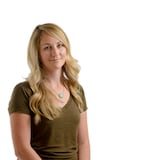
Republican candidates Kara Toone and John Taylor say they want to bring more transparency and integrity to politics, along with greater scrutiny of data centers and artificial intelligence, if elected to represent Utahns in House District 14.
Instead of seeking reelection, incumbent state Rep. Karianne Lisonbee is challenging U.S. Rep. Blake Moore in Utah’s new 2nd Congressional District.
House District 14 includes parts of Clearfield and Syracuse in Davis County, and borders the drying Great Salt Lake. Taylor works in the pharmaceutical industry, according to his campaign website. Toone is the executive director of the Davis Education Foundation.
The Salt Lake Tribune posed the following questions, based on a reader survey about the issues Utahns felt were most important this election season, to each of the four candidates. Their answers — listed in alphabetical order — may have been edited slightly for length, style or grammar.
A plurality of voters, more than 30%, said elected official corruption is the primary issue driving who they’ll vote for, with another nearly 14% of voters saying it is their second-highest issue. Why are so many Utah voters concerned about corruption in politics? How will you build trust with Utahns?
Taylor: At the state and federal level, we have seen an incredible amount of fraud, waste, abuse and lack of transparency. People see politicians working for themselves and not for the interests of the people. There are many good legislators trying to bring the priorities and focus back to the people’s interests, but there are things that can improve. I will sponsor legislation, similar to Truth in Taxation, but for Truth in Private Public Partnerships, where the people have a defined process to hear and voice concerns and avoid rushed decisions that are made without the people’s voice.
Toone: Voters don’t feel they’re getting the full story from those who are supposed to represent their interests. They want to see the whole picture: they want to know who met when, what was said, who stands to benefit and whether people impacted by decisions had the opportunity to give input *before* it’s too late to turn back. They just want the truth — but telling the truth sometimes upsets people, and folks don’t cast votes for politicians with whom they are upset. I will always tell the truth, no matter the consequence. I might lose support, but it would be worth it to keep my integrity intact.
After corruption, more than 16% of Utah voters said everyday affordability — like the cost of housing, groceries, gas, etc. — is the first thing on their minds as they vote this year. Another 15% said it is their second-highest issue. What will you do to help make life more affordable for Utahns?
Taylor: I will address the root of the problem — out-of-control government spending. Things are expensive because the feds have spent themselves into a corner. The only way to wipe out $39 trillion in debt is for the federal government to implement quantitative easing, which they did on Dec. 1, 2025. Since, we have already seen the value of our dollars diminish, and that drives up costs, among other things. I can’t influence much at the federal level, but I can insist on austerity measures and an aggressive reduction in spending at the state level. We need to diminish our spending appetite.
Toone: Utah legislators filed a record 1,015 bills last session and passed more than half. But most Utahns still feel squeezed by housing, groceries, gas, health care and basic expenses. Our legislators have no business running that many bills until the focus is on what people really need: relief. In my first session, I won’t run bills of my own. I’ll work to stop bad bills, cut through pet projects and support funding that helps regular Utahns see a real difference in their monthly budgets. In my second session, I’d like to focus on entry points to the housing market for young Utahns.
Utah has experienced drought for much of the last two decades. The availability of water is the third-most pressing issue for voters this year. What can elected officials do to ensure Utahns have enough water for the future?
Taylor: While I don’t want to impose on the freedoms of the people, I think we can create some incentives to become water-wise with our landscaping. I don’t want to force people, but would rather incentivize and entice them to be more water-conscious. If we do appropriate money for water, I want that money to go to meaningful solutions like reducing the phragmites or maybe a pipeline from the Snake River in Idaho, etc. However, I’m more adverse for money spent to run commercials to scare everyone into compliance, and I don’t trust big spending that just goes into endless studies that lead nowhere.
Toone: There are some promising philanthropic and policy levers being pulled that will help with Great Salt Lake restoration, and I am following working groups and conservation efforts closely. House District 14 is the gateway to Antelope Island and the Great Salt Lake, so lake health is paramount. I hope that the $1 billion Great Salt Lake rehabilitation request from President Donald Trump to Congress will pass this year. Each of us needs to do our part, and I hope to lead by example. I installed native plants and drip line irrigation in my own yard that is drastically reducing my family’s water use.
Should the state continue to pursue nuclear energy, yes or no? What can be done to address Utah’s growing energy needs?
Taylor: Yes. We absolutely have to make energy, in all forms, a priority. With a growing population and with advancing technology, we have an ever-increasing need for more energy — and if we are short, we can be caught with astronomical energy bills. I’m generally a proponent of the free market drive and process to fulfill the need for more energy. I do want local citizens to have some forum to voice their concerns and give input when there is a project being considered for their community. I will insist we prioritize our water and energy needs.
Toone: Yes. We need to approach this issue from all angles. No one source of energy has yet been able to check all the boxes we need: renewable *and* reliable; plentiful *and* clean; affordable *and* sustainable. We need to be open to using all the resources available to us while we work to develop technologies that can give us the power we have come to rely upon. I want us to have ongoing discussions about the relationship between our consumption and its necessary costs and consequences — and then decide together what we’re willing to tolerate in order to maintain the lives we’ve become accustomed to.
In 2018, voters narrowly passed the Better Boundaries initiative, creating an independent redistricting commission and prohibiting partisan gerrymandering. The Legislature’s attempts to significantly weaken the Better Boundaries initiative spawned years of litigation, culminating in a court adopting new congressional boundaries. Who should be responsible for drawing Utah’s political boundaries? Why?
Taylor: Power is given to the people via elections. Elections are the only way the Founding Fathers could transfer this power to the people. Therefore, the accountable representatives should be the ones that draw the maps. Because of partisanship, no matter who draws the map, it will lean towards their political favor, and frankly it should lean toward the majority voice. We should not favor the minority at the expense of the majority. People say it’s unfair, however, the Founding Fathers would disagree — the majority rules and elected representatives represent the voice and will of the people.
Toone: My opinion on this is less important than that of Utah voters. They decided in 2018 that they wanted an independent commission to make those determinations — a choice they have under Utah’s Constitution through the initiative process and that they have never seen fully realized. I can understand why voters don’t want politicians setting the boundaries for their own voting districts. It can lead policymakers to prioritize their own political futures over the will of their constituents. We’d be in a better spot if lawmakers had listened to what people were trying to tell them.
Is there an imbalance of power between the Legislature and the courts? If so, what should be done about it?
Taylor: Yes. As a nation, we have always struggled with this Federalist 51 argument. We should always strive to keep the proper powers in their proper lanes. The judiciary, in the eyes of the Founding Fathers, was never intended to wield so much lawmaking precedent and power. Judges are chosen on merit. However, these days, some judges are pretty biased. Even though judges try to remain politically impartial, their political tendencies do influence their thinking and how they make decisions. Because of this, we need to ensure that the Legislature retains lawmaking powers.
Toone: The balance of power between our branches of government is set forth in the U.S. and Utah Constitutions, and adherence to that separation is crucial. I don’t like to see the lines between the branches of government blurred. Neither the executive nor the legislative branches should attempt to sway the public’s opinion of the judicial branch — and the reverse is also true. Each needs to stay in its own lane and let results speak for themselves so voters can form their own conclusions.
What do you believe is the most pressing issue before voters this year? What can be done to address it?
Taylor: One would be artificial intelligence and the technology behind it. We are seeing major privacy challenges. I would like to implement a HIPAA-style approach to all digital information — a form of DIPPA (Digital Information Privacy Protection Act). Many banks and others already have systems for training and awareness in place, but it needs to be implemented across all technological spectrums. Energy and water are also major concerns, but the biggest and most pressing concern is the cost of goods and services. Reining in government spending, among other things, can help with rising costs.
Toone: The three topics I’m hearing most about right now are affordability, Great Salt Lake health and data centers. Ultimately, all our discussions need to come back to the relationship between cause and effect. Addressing these issues comes at a cost — and we need to make decisions *together*, in a deliberate and transparent process, about whether those costs are too high and who bears them. If we decide the costs are too high, we have to change behaviors so we don’t incur them. If we opt not to change our behaviors, we must understand that we are each responsible for a portion of the consequences.