 Megan Banta
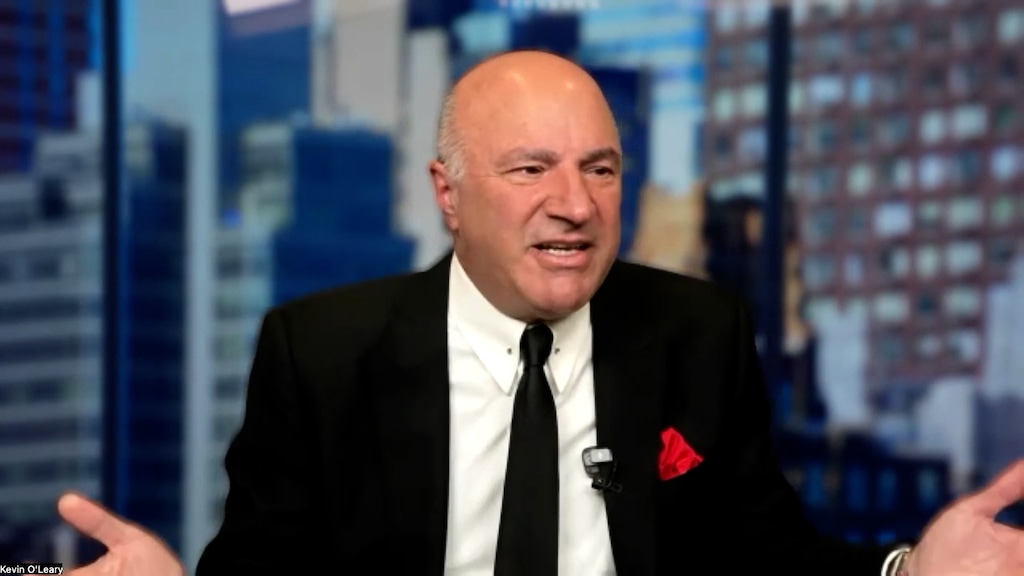
Celebrity investor Kevin O’Leary isn’t backing out of plans to build a hyperscale data center campus in Box Elder County, even after Utah’s top lawmaker on Monday called for the project to be dramatically scaled back.
“I’m not walking away,” O’Leary told The Salt Lake Tribune on Monday, hours after Senate President J. Stuart Adams sent a letter calling for a 75% reduction in the proposed 40,000-acre data center project. “It’s not who I am. I don’t work that way.”
The letter from Adams, who also chairs the board for the Utah Military Installation Development Authority that approved the development, prompted so much outrage, O’Leary said, that his phone “lit up like it was going to melt.”
The celebrity investor told The Tribune he didn’t hear from Adams ahead of receiving the letter and hasn’t yet talked to him about it.
It “didn’t go over well,” he said, because it’s not the agreed-upon deal.
“I made that deal with Adams,” O’Leary said. “We looked each other in the eye. It means a lot to me.”
Some of Adams’ demands — like sending excess water to the Great Salt Lake, land conservation and using heat-capture technologies — are things O’Leary said he would consider or already has to do to get permits for the project.
But he described the demand for a 75% “haircut” – a number he initially thought was a typo – as “outrageous” and said it took “some serious cojones” to make. It would be like selling someone a house and then telling them they can live in the upstairs toilet, he said.
Adams’s decision to send the letter has to be a reaction to “political blowback,” O’Leary said, adding he thinks the Senate president decided to send the letter on his own, and not in conjunction with other state leaders or MIDA.
Asked if he thought an upcoming primary, where the senator faces several Republican challengers, was related to Adams’ decision, O’Leary said he doesn’t see how it could be related to anything else.
“How can it not?” O’Leary said. “He’s listening to the people.”
Adams, in a statement Monday afternoon, said: “I share the concerns of my constituents and hope Mr. O’Leary responds appropriately and implements the changes needed to address them.”
Shifting mindset
As the day has gone on, O’Leary said, he has shifted from anger and having “a little throw-up in the back of my throat” over the letter to discussing with his team whether there is a way build a smaller-scale project for now and to address public angst.
The data center project proposed for Box Elder County has quickly drawn widespread opposition across the Beehive State, fueled by concerns over what the project could mean for air quality, water resources and the already stressed ecosystem around the Great Salt Lake.
The swift action on the project by MIDA and county officials also has drawn vast criticism, and even sparked a failed effort that sought to give voters the chance to overturn the county’s approval of the project area.
O’Leary has repeatedly said that China is behind organizing the protesters opposing the plan and spreading misinformation. He reiterated his belief of Chinese involvement and the spreading of misinformation on Monday, but acknowledged there are “real people with real concerns” who he wants to work with in Utah.
But there may be a silver lining to the letter, the investor explained.
It’s possible that Utah could serve as a new model and proving ground for building data centers without as much of a public blowback, he said. Asked what it would take to win people over on new data centers, O’Leary said more transparency would lead to more trust as “all falsehoods get thrown out the window.”
“He’s asking us to do a tasting kitchen,” O’Leary said. “I’m not against it if it solves this problem.”
He is working with his engineers to figure out what’s possible while still keeping the likely tenants of the data center happy. That will take a couple of days, he said.
Salt Lake Tribune politics editor Jeff Parrott contributed to this story.
Note to readers, 5:35 p.m. • This story has been updated to include a statement from Senate President Stuart Adams.