 Sean P. Means
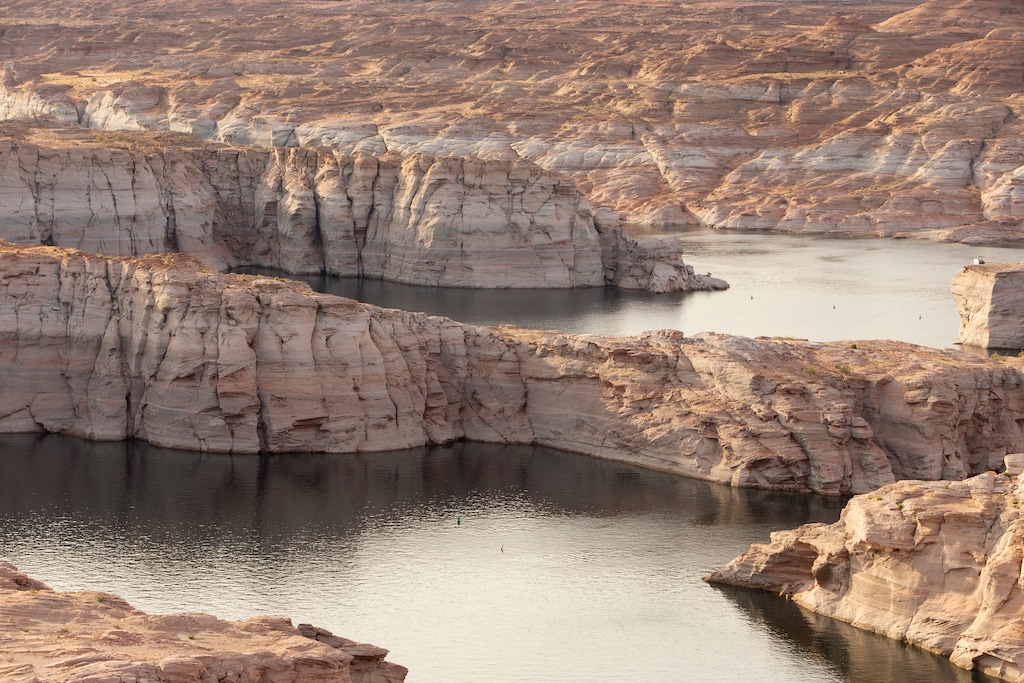
Heavy rain that caused flooding last week in the Four Corners area of Utah, Colorado and New Mexico has had what water experts say is a beneficial side effect: A marked rise in the water level of Lake Powell.
Saturday’s daily measurement of Lake Powell’s level was at 3,526.1 feet above sea level — which is 1.1 feet above the level the day before, and 7.1 feet above where the lake was two weeks ago, according to the Lake Powell Water Database. It’s also 9.5 feet above the lake’s lowest point on Sept. 15.
“That’s phenomenal this time of year,” Gene Shawcroft, chair of the Colorado River Authority of Utah, said Sunday.
That rise — which Shawcroft said likely will go to 10 feet when Sunday’s measurements are made — amounts to about 600,000 acre-feet of water going into Lake Powell. That’s equivalent, he said, to twice the capacity of Jordanelle Reservoir.
“Lake Powell’s elevations were approaching very critically low elevations, and this 10 feet will make a big difference,” Shawcroft said, adding that “it doesn’t solve the problem by any stretch of the imagination.”
Saturday’s measurement was 19.55 feet below where the lake was exactly one year earlier, according to the database. And, Shawcroft said, the lake’s lowest point in September was 180 feet below where the lake would be if it was full — which hasn’t happened since 1983.
Paul Miller, service coordination hydrologist for the National Weather Service’s Colorado Basin River Forecast Center, said Sunday that the 9.5-foot rise is “a drop in the bucket,” but still good news.
“It’s a nice start to the water year, which is welcome,” Miller said. The current water year started Oct. 1, and runs through Sept. 30, 2027.
Shawcroft said that because most of the rain falling in the last two weeks has been upstream of Glen Canyon Dam, Lake Powell’s downstream sister, Lake Mead, has not seen a similar rise in its water level. In the last two weeks, Lake Mead’s water level has risen just 0.06 feet, according to a database of that lake’s measurements.
On Sunday, the San Juan River’s rise had prompted evacuations and road closures in three Utah towns in the Navajo Nation — Bluff, Montezuma Creek and Aneth — the Navajo Department of Emergency Management reported on Facebook.
The National Weather Service in Grand Junction, Colorado, reported “catastrophic flooding” along the San Juan River between Four Corners and Mexican Hat. A flood watch would remain in place in the Bluff area through Sunday evening, the weather service said, and a flood warning would be in place through Tuesday morning.
Miller said the water causing Sunday’s flood conditions in the San Juan River won’t reach Lake Powell until late Sunday evening or early Monday morning — so the lake’s levels likely will go up even more.
The San Juan River was contributing about 105% of its average amount of water in September, Miller said, and about 152% so far in October. Also this month, Miller said, about a third of the water flowing into Lake Powell has been coming in from the San Juan River — well above the 13% the river usually contributes in October.
On the other hand, Miller said, the Green River Basin is contributing as much water as is typical for October, while the upper Colorado headwaters are only contributing about 64% of the water that area produces in October.