 Jessica Schreifels
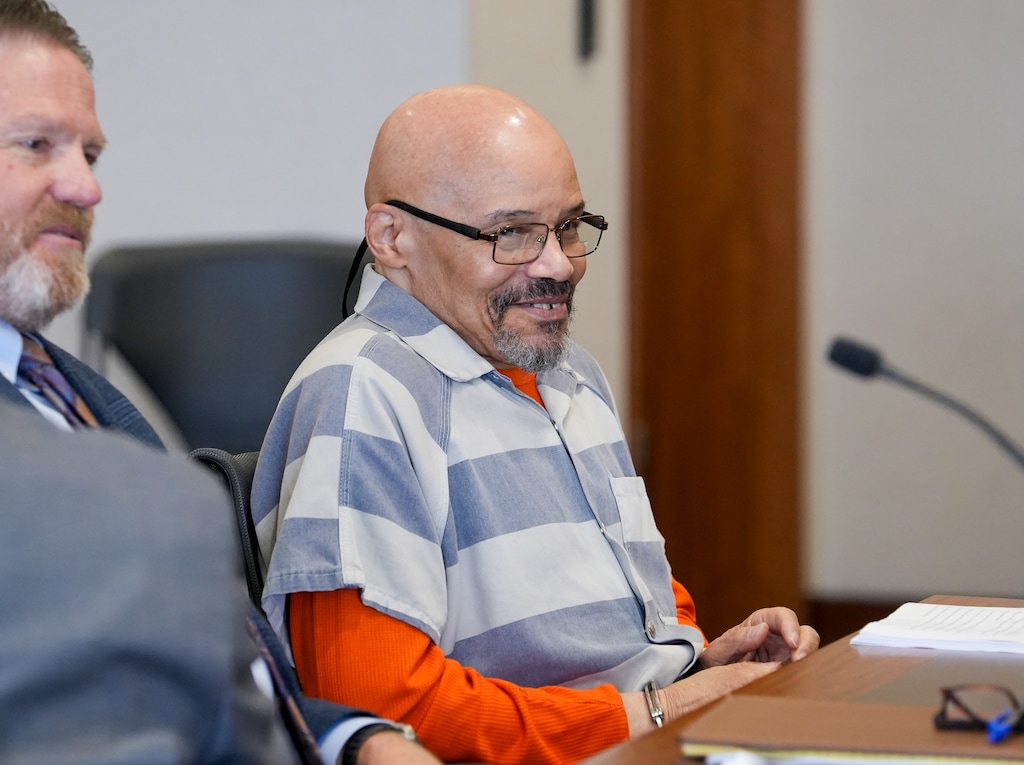
For decades, Douglas Stewart Carter lived on Utah’s death row under the threat of a lethal injection execution. On Wednesday, 41 years after he was charged, prosecutors announced that crime scene DNA doesn’t match his — and that they will no longer seek to put him to death.
But the Utah County Attorney’s Office didn’t ask to dismiss the case: Carter still faces an aggravated murder charge, though prosecutors said in a news release they are re-evaluating the evidence and asked a judge to schedule a bail hearing.
Taking the death penalty off the table is a start, defense attorney Neal Hamilton said in an interview — but he asserted Utah County needs to put an end to the prosecution, which was already shadowed by allegations of police misconduct prior to the new DNA developments.
“The state of Utah has stolen 41 years of an innocent man’s life,” Hamilton said Wednesday, shortly after the prosecutors’ announcement.
Carter, who is now 71, was convicted in 1985 of murdering a Provo woman named Eva Olesen, who was the aunt of the then-Provo police chief. She was killed in her home, stabbed ten times and shot in the back of the head. Her husband found her body partially undressed with her hands tied behind her back after he said he had been out visiting a friend.
It wasn’t until earlier this year that Utah’s crime lab developed a suspect DNA profile from key evidence in the killing, prosecutors have said, including the knife that was used to stab Olesen and blood found on a doorknob.
Prosecutors received a crime lab analysis on Tuesday, Utah County Attorney Jeff Gray wrote in a court filing, which “excluded Carter as a possible contributor to those DNA profiles.”
But Gray asserted the DNA doesn’t completely exonerate Carter: Olesen was also shot with a .357 or .38 caliber gun, which has never been found. He said witnesses reported that Carter’s wife owned a .38 caliber gun that was also never located.
And, the county attorney said, Carter allegedly confessed to multiple people — though the validity of those confessions has been questioned, and in 2022, led to his conviction being vacated.
Even so, Gray wrote, he concluded that the new DNA evidence is sufficient reason to withdraw the intent to seek the death penalty, re-examine whether to move forward with the prosecution, and readdress whether Carter can be released. (Prosecutors last month fought Carter’s request for bail at a hearing.)
Hamilton said Carter, who is Black, was convicted despite multiple people seeing a white man leave the crime scene, and blonde pubic hair allegedly being found on Olesen. He said nothing connected Carter to the scene until a Provo detective was able to obtain a purported confession from Carter after he had been interrogated for three days by police in Tennesseee, where had been arrested.
“For 41 years, Doug has said he didn’t do this,” Hamilton said. “All of the evidence points to somebody else.”
A judge reversed Carter’s conviction in 2022 after finding Provo police engaged in misconduct when they paid and threatened witnesses who later said they lied about Carter confessing to them that he killed Olesen.
Hamilton said Tuesday that he didn’t feel like Utah County prosecutors meaningfully looked at and weighed the evidence since then — noting that prosecutors initially said evidence had been lost, but then reversed course and said they had the evidence which had the suspect’s DNA on them.
The prosecution was “haphazard,” he said. “They prosecuted him because they believed they had the right person. At no point is there any indication that they actually considered the evidence.”
Prosecutors filed their motion withdrawing the possibility of the death penalty late in the afternoon on Wednesday, and the judge hasn’t yet set a new bail hearing. Carter is scheduled to be in court next on Nov. 10.