 Jessica Schreifels
Provo • A man who has spent decades on Utah’s death row is asking a judge to dismiss his aggravated murder case, alleging investigators engaged in misconduct and ignored evidence pointing to other suspects.
Douglas Stewart Carter’s conviction and death sentence in a 1985 killing were already overturned after a judge found Provo investigators paid and threatened witnesses who later said they lied.
Now, in a new motion filed Friday, his attorneys argue the misconduct ran deeper — alleging an investigator suppressed evidence and steered prosecutors away from charging the victim’s husband.
The victim, Eva Olesen, was the aunt of the then-Provo police chief. She was killed in her home, stabbed ten times and shot in the back of the head. Her husband found her body partially undressed with her hands tied behind her back after he said he had been out visiting a friend.
Provo police focused on Carter as a suspect after getting two tips, according to a Utah Supreme Court ruling: that Carter was a possible suspect in a “vehicle trespass” offense near Olesen’s home shortly before the murder, and that Carter’s wife had apparently rushed home after learning of Olesen’s killing to see if Carter had been involved.
(Chris Samuels | The Salt Lake Tribune) Fourth District Judge Derek Pullan presides over a hearing for Douglas Carter in Provo, Friday, April 3, 2026. Carter was sentenced to death for a 1985 murder, which was overturned in 2025.
There was no physical evidence tying Carter to the crime scene, according to the ruling — but police built a case against him largely based on an unrecorded purported confession and witness testimony, including from a couple who told jurors that Carter bragged about the killing and demonstrated how he had stabbed Olesen.
He was convicted at a 1985 trial and sentenced to die.
But last May, the Utah Supreme Court reversed that conviction and ordered a new trial, affirming a judge’s finding that police and prosecutors had failed to disclose financial payments to the couple who testified, or that police had threatened those witnesses. The couple later retracted their testimony, sharing that police had told them what to say.
Other suspects cast aside
Carter’s defense attorneys argued in their Friday motion that the lead investigator in the case ignored evidence pointing to other suspects — including the victim’s husband.
They noted in their court filing that Olesen’s husband, Orla Olesen, was the first and primary suspect for the first several months after her death. His relationship with his wife was troubled, their friends told investigators, and the man “frequently spoke ill of Eva and openly discussed not needing her around,” according to the motion.
And though Olesen was killed in the couple’s living room, investigators found blood-stained cloths in their bathroom, according to the motion. Police noted that her husband appeared to be clean and freshly shaven when officers responded after he alerted authorities.
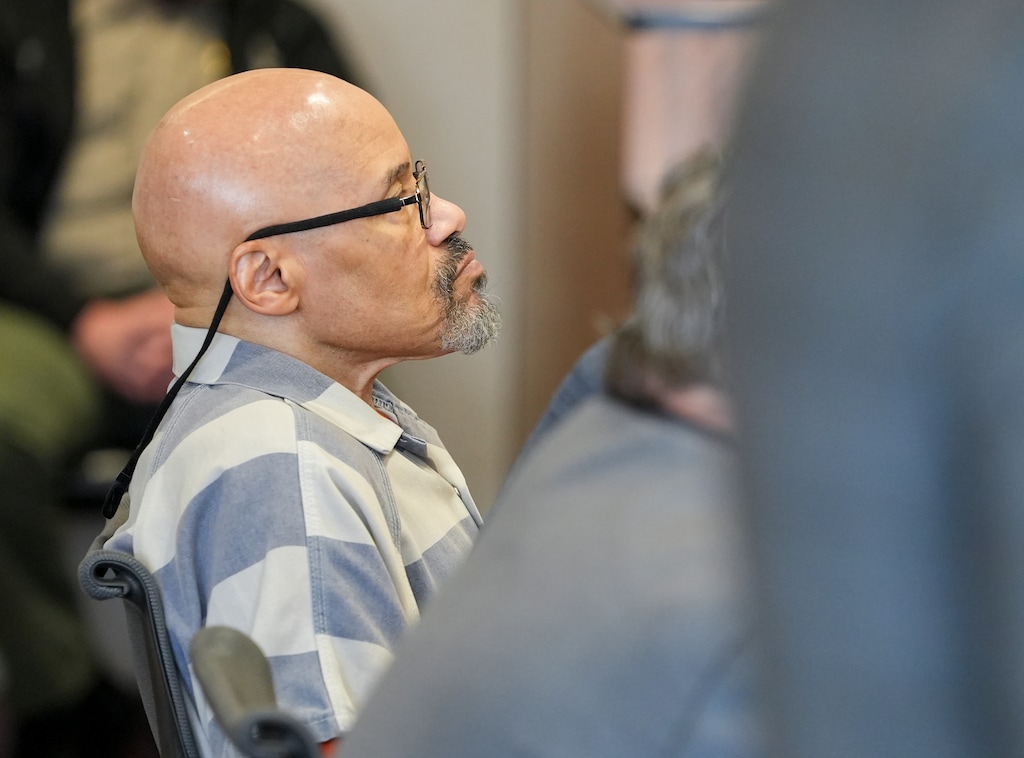
(Chris Samuels | The Salt Lake Tribune) Douglas Carter listens to his attorney, Richard Gale, during an appearance in 4th District Court in Provo, Friday, April 3, 2026.
The husband took a polygraph test, according to the motion, and when the results indicated he was being deceptive, Orla Olesen allegedly stormed out of the room and called Provo police Lt. George Pierpont — who was leading the investigation — to complain.
The day after the test, the county attorney told Pierpont he planned to file criminal charges against Orla Olesen, but Pierpont allegedly asked him to hold off so he could continue investigating.
Charges against him never materialized, and as Carter’s attorneys note: “Although Orla was investigated and nearly charged for Eva’s murder, all evidence collected during the investigation has been lost.”
Orla Olesen died in 2009. All of the clothing he was wearing the night of his wife’s death, and the blood-stained rags found in the bathroom, are gone, as are blood swabs taken at the home.
Also gone is evidence that potentially pointed to another man, who lived nearby and resembled a person multiple neighbors saw near Olesen’s home prior to the shooting. That man was white; Carter is Black.
The other man was initially considered a suspect after police also found blood-stained clothes in his home, according to Carter’s motion, but he was ruled out after the state’s crime lab determined the blood type found on those clothes didn’t match Olesen’s.
(Chris Samuels | The Salt Lake Tribune) Defense attorneys Richard Gale, center, and Neal Hamilton speak during a hearing for Douglas Carter in 4th District Court in Provo, Friday, April 3, 2026.
Carter’s attorneys argued in the motion that had this evidence been kept, it could be retested using more precise forensic testing developed since the 1980s.
“The depth and breadth of misconduct known is staggering, and the likelihood of additional misconduct having occurred but not yet realized is chilling,” the motion reads.
“Douglas Carter spent over 40 years on death row for a crime which he, and the evidence, says he did not commit,” it continues. “Legally, enough is enough.”
Evidence was not ‘innocently lost,’ defense argues
The motion also alleges Pierpont reached out the FBI during their investigation for a “behavioral analysis report” about who the killer most likely could be.
Just last week, Utah County prosecutors learned after speaking with Pierpont, who is now in his 80s, that when the results didn’t support Carter as a suspect, Pierpont told the FBI not to send the report.
Deputy Utah County Attorney Erwin Petilos said in court Friday that local police and prosecutors still do not have that report.
The defense attorneys argue that there is “reasonable likelihood” that Pierpont destroyed the evidence pointing to other suspects.
“Considering the breadth and depth of misconduct that is known,” their motion reads, “the State ought to no longer enjoy the presumption that lost and missing evidence was innocently lost.”
Carter was in court on Friday, and smiled at several points in the hearing. The motion to dismiss was not argued, but the man’s attorneys asked for a bond hearing given the new revelations. That hearing was set for June.
(Chris Samuels | The Salt Lake Tribune) Douglas Carter appears in 4th District Court in Provo, Friday, April 3, 2026.
When asked by 4th District Court Judge Derek Pullan whether prosecutors dispute the facts in Carter’s latest motion, Petilos said there’s one point his office disputes. He didn’t detail Friday what that was.
Theresa Olesen, Eva’s daughter-in-law, said after Friday’s hearing that the evidence issues are frustrating, but she doesn’t think the case’s original investigators acted maliciously. She still believes Carter killed her mother-in-law.
“If I didn’t think he was guilty, I’d be the first to say let him go. But I do,” she said. “I believe he’s guilty.”
(Chris Samuels | The Salt Lake Tribune) Theresa Olesen, the daughter-in-law of victim Eva Olesen, speaks after a hearing for Douglas Carter in 4th District Court in Provo, Friday, April 3, 2026.