 Samantha Moilanen
Fifteen years ago, Trent and Kristina Owen carved out a life in the Tushar Mountains above Beaver.
Trent, a general contractor, built several homes in the area, some near Eagle Point ski resort, where he has worked as a ski and snowboard instructor in the winter, Kristina Owen said. The small ski community also is where the couple raised their two children, Aspen, 8, and Jasper, 1.
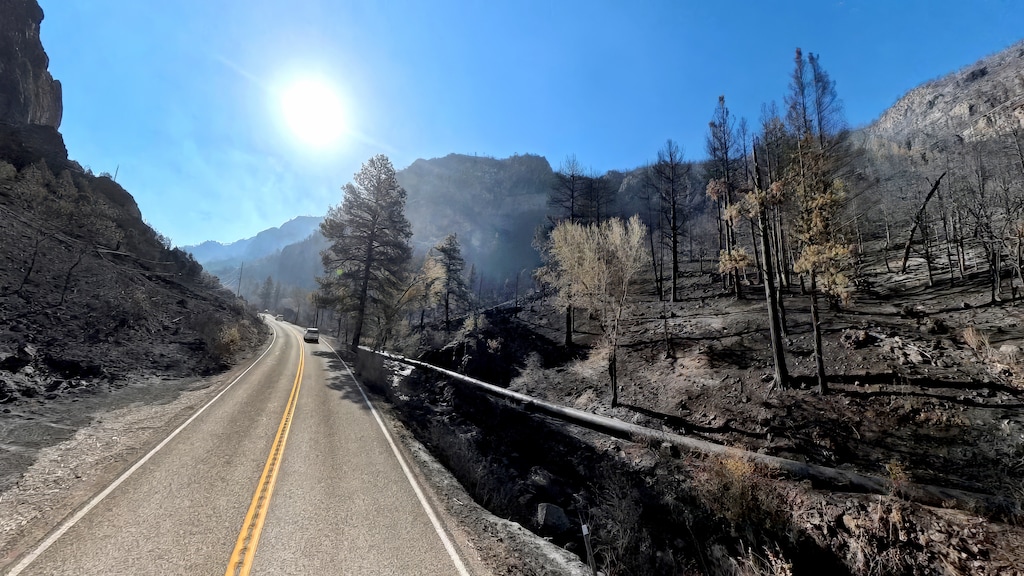
Then the Cottonwood Fire swept through, and their home — and much of their mountain community — went up in flames. Three of the homes Trent was working on were also destroyed.
“It’s a lot to take in when you go up there ... and knowing what it used to look like, and now what it looks like, is pretty shocking,” Kristina said after Trent returned from the mountain last week and saw the destruction.
For little Aspen, Kristina said, “everything she knew is gone.”
(Kristina Owen) Trent and Kristina Owen lost the home where they raised their children, Aspen, 8, and Jasper, 1, when the Cottonwood Fire burned through it in June. The family is now looking to rebuild.
The Owens are among at least 17 families who lost their primary homes in the blaze, according to Tara Tucker, executive director of the Beaver, Iron and Garfield Chamber of Commerce, which is leading efforts to help those who were displaced.
But the fire didn’t just take homes. For many in Beaver, Tucker said, it ravaged the lands that supported their businesses, their jobs and their way of life.
Many of those affected worked at Eagle Point, she said, and “lost everything.”
Tucker herself owns Tucker High Adventure Tours, a Beaver-based outdoor company that leads guided adventures in the Tushar Mountains, along with a bike and ski shop. Her business depends on the area’s recreation draw. She also lost rental properties in the blaze.
“Because so much burned on the mountain, and we did a lot of our business up there,” Tucker said, “it’s kind of like we lost our livelihood.”
(Kristina Owen) Eight-year-old Aspen Owen joins her dad, Trent Owen, at Eagle Point Resort in the Tushar Mountains above Beaver.
Across Beaver, she said, many people are now asking, “What’s our next step?”
The town, which sits along Interstate 15, relies in part on tourism tied to the Tushar Mountains. Tucker said businesses are already bracing for a difficult summer after the fire forced the cancellation of major events, including the Crusher in the Tushar gravel bike race and the Beaver Canyon Half Marathon and 10K.
“We want to focus on getting these businesses what they need as well, because this is hurting so many people,” Tucker said. “... and just letting people know that we’re still here.”
The Cottonwood Fire has burned more than 97,000 acres east of Beaver and has been called one of the “most destructive” wildfires in Utah history. As of Thursday, the fire was 87% contained.
Officials have said at least 150 structures — including primary homes, family cabins, condominiums and structures at Eagle Point Resort — were destroyed.
Searching for a new home
When the evacuation order came, Kristina Owen had only moments to decide what to take.
“What do I do? What do I grab?” she remembered thinking. And in the rush to leave, she had to choose what mattered most beyond her family of four, their dog and their cat.
After fleeing the fire, they stayed with family in Colorado before returning to Beaver, she said, where they are now searching for a place to rent before 8-year-old Aspen starts third grade in the fall.
(Kristina Owen) Kristina and Trent Owen with their children, Aspen, 8, and Jasper, 1. The family lost their home in the Cottonwood Fire and is now trying to rebuild.
Like the Owens, other displaced families are struggling to find places to live in an area with limited housing availability, Tucker said.
The Beaver, Iron and Garfield Chamber of Commerce has helped some families find temporary shelter by covering the cost of rental trailers near Minersville Reservoir, Tucker said. But many are still searching for longer-term housing and the basic necessities they lost when they fled.
“One of the couples came to us a week after the fire and said, ‘Is there any way we can get a pillow?’” Tucker recalled. “I mean, just these things that you don’t think about. ... It’s just so disheartening.”
Looking to rebuild
(Kristina Owen) A rainbow near Kristina and Trent Owen’s home by Eagle Point ski resort before the Cottonwood Fire burned through the area.
While the mountains are now marked by a burn scar, Kristina Owen said the family is determined to return and rebuild — both for themselves and for the generations who may one day call the area home again.
Trent Owen said he also hopes to help other families rebuild and piece back together the landscape that was burned. Still, as the Owens work through the insurance process, they worry the money available may not be enough to replace what the fire took.
Like many others affected by the blaze, the family has turned to community support, starting a GoFundMe to help with the costs of rebuilding.
Tucker said the chamber also is accepting donations through a GoFundMe, Venmo and fire relief accounts at Utah Independent Bank and State Bank of Southern Utah.
“Hopefully, the community will get to rise again in a way,” Kristina Owen said. “Nobody wants the fire to win.”