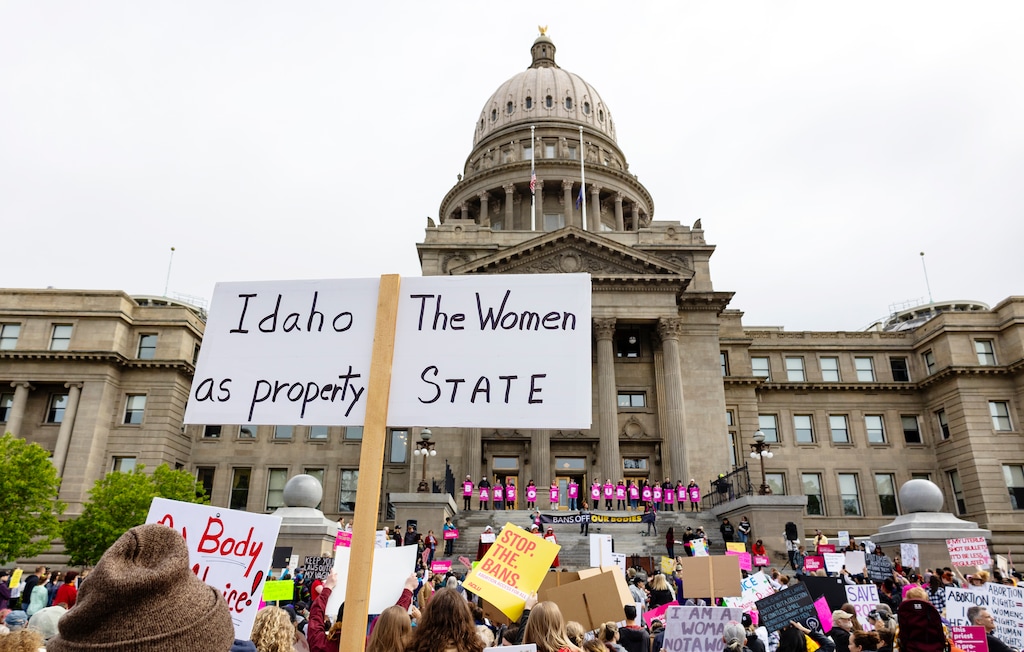
Abortion rights won in three of the four states where they were on the ballot, joining several red states that have kept or bolstered abortion protections since the Supreme Court overturned Roe v. Wade in 2022.
Ahead of the midterm elections, faith groups advocated both for and against the ballot measures.
• Missouri voters rejected a proposed abortion ban on most abortions, with exceptions for fetal anomalies, medical emergencies, rape or incest. The ban would have also amended the state’s constitution to prohibit hormones, puberty blockers and gender transition surgeries for minors. Instead, Missouri’s existing law, which protects the right to an abortion up until fetal viability, stands.
• In Virginia, voters backed a measure to add a right to reproductive freedom in their state constitution. The new measure allows abortion during the first two trimesters of pregnancy and adds protections for fertility care and contraception.
• And, in Nevada, voters supported an amendment to their state constitution protecting the right to an abortion until fetal viability. The change was initially approved in 2024 but required a second vote to amend the constitution.
• A different outcome prevailed in Idaho, a deep-red state, where voters rejected an effort to lift the state’s abortion ban. Idaho bans nearly all abortions after conception.
[Read The Salt Lake Tribune’s coverage of the Idaho and Nevada votes.]
The abortion-rights group Catholics for Choice celebrated the wins. Lauren Bailey, director of organizing and engagement, criticized bishops who had “asked Catholics to prioritize clerical priorities over the will of the people.”
“Tonight shows that no amount of campaign spending or pressure from the pulpit will convince people to let religious leaders and politicians control their reproductive health choices,” she said in a statement.
Darcy Hirsh, vice president of government relations and advocacy for the National Council of Jewish Women, a Jewish feminist civil rights organization, said the group’s Jewish values had compelled them to support the abortion-rights measures that passed. “Tonight, we celebrate what is possible when people come together to turn those values into action,” Hirsh said in a Tuesday statement.
Religious conservatives condemned the abortion wins, with some suggesting that the Republican Party had not gone far enough in fighting for unborn lives. Kristan Hawkins, who leads the religious anti-abortion nonprofit Students for Life, said on social media that the results were in part due to President Donald Trump’s online presence and broken promises. Rhetoric from Trump and the “podcast/influencer world,” she said, “told young people we don’t care about born humans as well as those in the womb.”
“When the GOP has weak leadership and refuses to fight abortion,” she wrote, “we lose elections and babies die.”
And Tony Perkins, president of the conservative evangelical advocacy group Family Research Council, said on the social media outlet X that the election results could be a “chastisement upon a party that became complacent on moral and value issues.”
Ahead of the midterms, an October poll by Pew Research Center signaled that abortion was less of a priority this election; voters who said abortion is “very important” fell from 56% to 46% since the last midterm elections in 2022. Instead, voters’ top concerns included the economy and the future of democracy.
Since the Supreme Court overturned the national right to an abortion in 2022, voters in more than 10 states, including Ohio, Arizona and Montana, have passed abortion-rights measures. The number of abortions nationwide has also risen slightly, according to research firm KFF, a change largely attributed to the accessibility of medicated abortions.
Note to readers • Ellie Ashby and Aleja Hertzler-McCain contributed to this reporting.