Now that you have finished bingeing the fifth season of “Fauda,” I have another recommendation for you.
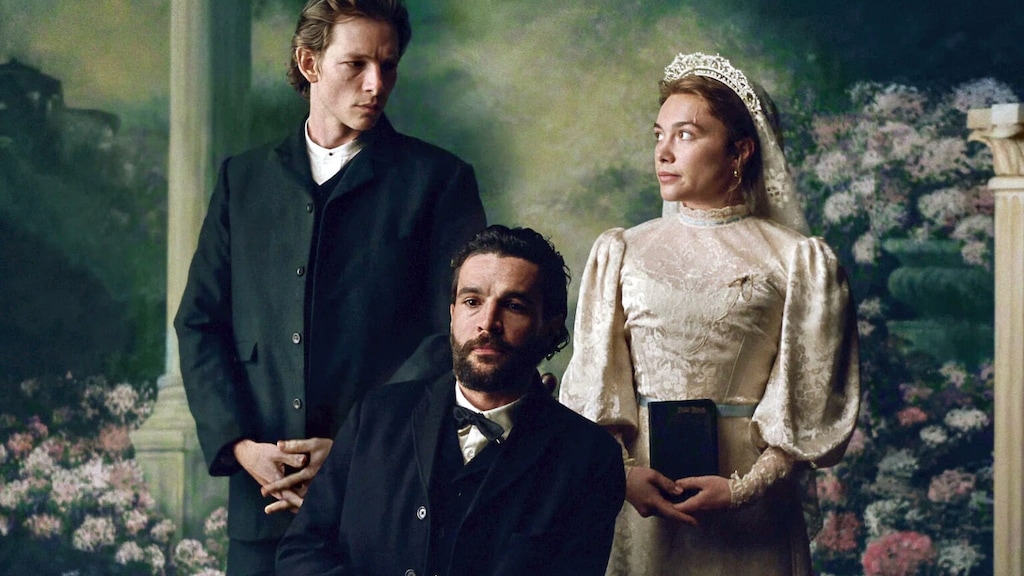
It is “East of Eden,” the seven-episode limited series on Netflix, based on John Steinbeck’s 1952 novel. Zoe Kazan created and wrote it, and Florence Pugh stars as Cathy Ames.
It is simply an amazing viewing experience. If you had the time, you would finish it in one sitting and be glad you did.
But you might also wonder why I am reviewing this series. You might say that a saga of farmers in California’s Salinas Valley at the turn of the 20th century hardly seems like Jewish territory.
You would be wrong. There is much here that is Jewish, or at least metaphorically Jewish.
This story is more Jewish than it knows.
First, the story is biblical. Steinbeck wrote a modern midrash on Cain and Abel, which gives us the oldest motif in biblical literature: sibling rivalry.
The story is biblical in another sense as well. It tells the story of sibling rivalry twice — first through Adam Trask and his brother, Charles, and then through Adam’s twin sons, Caleb and Aron.
That is the story of the book of Genesis — and beyond. The split between siblings is primal, deep and pervasive.
From Cain and Abel; to the sons of Noah; to the sons of Abraham, Ishmael and Isaac; to the sons of Isaac, Esau and Jacob; Jacob’s wives, Rachel and Leah; Jacob’s sons, Joseph and his brothers. Then, Moses and his siblings, Aaron and Miriam — all the way to the house of David, which plays out like an ancient version of “Succession.”
I have always imagined it this way. Each generation, making a silent vow: I will not repeat the patterns of my father.
Except they do, and we do. It is part of that thing that we call epigenetic trauma. Yes, it is deeply human, and it is also deeply Jewish.
The meaning of timshel
Shall we talk about how generations work?
Then, you will recall that Zoe Kazan is the granddaughter of Elia Kazan, who directed the 1955 film version that made James Dean a star.
Kazan has said that she felt the resonance of her own family connection to the material as she brought it to the screen.
That is called legacy. Zoe builds on her grandfather’s work, which is her inheritance — much as Isaac redug the wells his father Abraham had dug, wells the Philistines had stopped up, and who called them by the same names his father had given them (Genesis 26:18).
Second, the story is Jewish in its very vocabulary.
Both the novel and the series turn on a single Hebrew word, timshel.
The word comes from Genesis 4:7. God has rejected Cain’s offering, and Cain is furious. God warns him that sin crouches at the door, that it desires him, and then God says: ve-atah timshol bo — “yet you can be its master.” The King James Bible renders it “thou shalt rule over him,” which sounds like a promise. The American Standard Version renders it “do thou rule over it,” which sounds like an order.
Lee, the Chinese cook and servant who helps raise Adam’s boys, insists on a third reading: “thou mayest.” That reading implies the possibility of choice.
In the novel, Lee reaches that conclusion with help from learned Chinese elders who consulted a rabbi.
In the series, Lee says that Jewish scholars in San Francisco found the word for him. Kazan’s version sends Lee to the Jews themselves.
In reality, the word is timshol, and it does not mean “thou mayest” on its own. It means something closer to “you will rule” or “you may rule,” depending on how you read the biblical imperfect tense. Rashi explains the phrase this way: If you want to, you can overcome it, i.e., the inclination toward evil, the pull toward the dark side.
Had the series used the more accurate meaning, “you can master it,” the story would have worked just as well. It all works.
Finally, there is the confrontation between evil and good.
Good and evil
The most evil character in the story is Cathy Ames. She sets fire to her parents’ house with them inside it. She shoots her husband and abandons her newborn twins. She goes to work in a Salinas brothel, poisons its madam, Faye, and takes over the house under the name Kate.
But there is a depth to her character that resists easy analysis.
Yes, she is cold, evil and cynical. But she is also profoundly tragic, broken and traumatized.
The story offers us Cathy’s counterpart: Lee, played with enormous warmth by Hoon Lee. He cooks, gardens, keeps the books and raises the twins. In every way that matters, he becomes their mother.
(Netflix via RNS) Actor Hoon Lee in “East of Eden.”
I do not think that you will find, in any contemporary film or series, a character as purehearted, or as emotionally and spiritually generous, as Lee. I would go so far as to say that he embodies chesed, the steadfast loving-kindness that the Torah attributes to God and asks of us.
Remember that Elia Kazan’s film cut Lee out entirely. His granddaughter restored him.
Why?
Because we live in a world that needs Lee. We live in a world in which darkness feels ever present and malevolence seems to reign. In such a world, Lee’s presence in this story is a lamp burning in a dark house.
Watch “East of Eden.”
It is amazing, and it is very Jewish.
Note to readers • The views expressed in this opinion piece do not necessarily reflect those of Religion News Service.