 Tony Semerad
Salt Lake City leaders have dialed back a major proposal to allow new smaller backyard homes in existing residential neighborhoods.
Property owners taking advantage of the housing incentives — if the new rules are ultimately approved — would have to live on-site, according to a straw poll by the City Council on Tuesday.
That so-called owner-occupancy requirement and a few other changes to the city’s plan for expanding housing options are expected to be added in advance of public hearings on this latest housing strategy, now scheduled for Nov. 10 and Nov. 17.
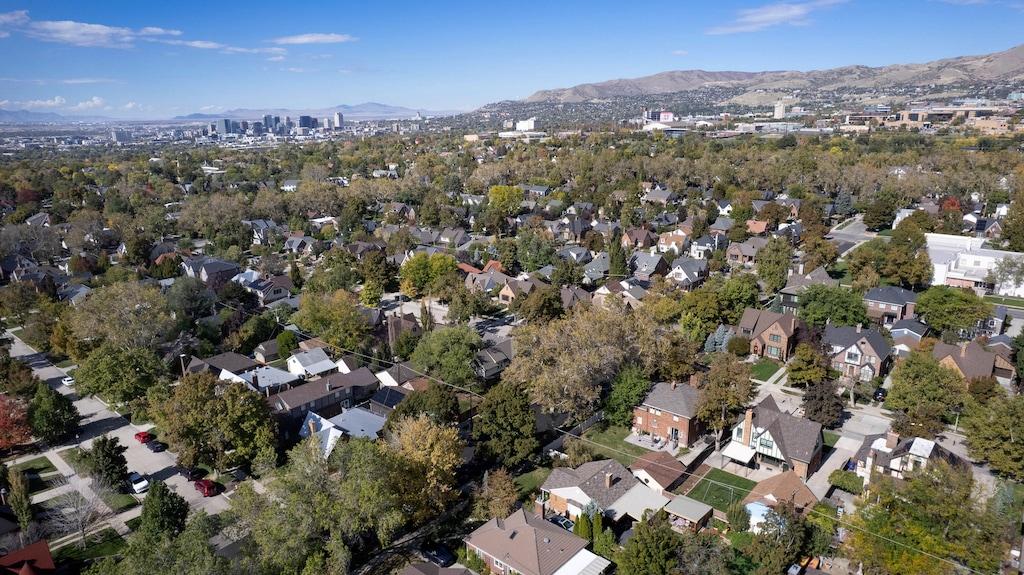
(Francisco Kjolseth | The Salt Lake Tribune) The Avenues in Salt Lake City would see a relatively small percentage of residential lots affected by the city's latest proposals to allow smaller dwellings in existing backyards.
“I just want to encourage us to think about that incremental approach,” said council member Erika Carlsen, representing Ballpark-centered District 5. “That can allow for us to tweak some things and then see how the market responds.”
The latest zoning options are being vetted as the city continues to grapple with a severe housing affordability crunch, where up to 85% of renters in the city cannot afford to buy.
With a recent recommendation for approval from the city’s planning commission, this plan and its revisions could come to a council vote as soon as December.
What the options would do
In an attempt to encourage the development of more affordable units such as smaller single-family homes, duplexes and townhomes next to existing homes, Utah’s capital is vetting new zoning rules that could affect up to three-quarters of existing residential lots citywide.
The proposed changes would permit backyard dwellings as small as 1,200 square feet, on land footprints as small as 2,000 square feet while creating a new category of smaller dwellings in city code.
The new rules would also, among other things, modestly boost permitted building heights, reduce some required setbacks from other properties and tweak how much of a lot a home might actually cover.
The package would require one off-street parking space per new dwelling constructed.
The rules, designed to encourage what city planners call “gentle infill” and layered density in established neighborhoods, have drawn both strong support and vehement pushback from a wide range of residents, community councils and housing advocates.
Supporters see it as a crucial way to make a place for more workers earning average wages and new families in the city’s costly markets for both rentals and homes for purchase.
Opponents characterize it as a risky venture that could alter or even destroy the character of existing neighborhoods.
Why require owner-occupancy?
(Salt Lake City) A map showing residential zones where Salt Lake City hopes to tweak its zoning and design rules to expand construction of smaller backyard dwellings.
Carlsen argued on Tuesday that adding the owner-occupancy requirement would better suit the city’s goals of encouraging homeownership as well as affordability.
The move also reflected concerns, according to council colleague Chris Wharton — representing District 3 covering the Avenues, Marmalade and Guadalupe — that the changes might inadvertently entice corporate and institutional buyers to swoop into the market and, possibly, lead to more demolitions of existing homes.
Other colleagues on the council, though, warned that adding an owner-occupancy rule would almost certainly further limit the number of homeowners who might take advantage of the new incentives.
City planners estimated around 130 property owners over the next four years might actually add these kinds of smaller dwellings. Council chair Alejandro Puy said the total number of new units — with the owner-occupancy requirement added — would likely shrink to only a couple of dozen or less between now and 2030.
“We’re talking about potentially very few units across the whole city that could potentially be triggered by this,” Puy said Tuesday. “But again, this is about doing it right.”
The council also called for a review of the plan’s proposed changes to setbacks for these smaller dwellings, mostly to ensure they more tightly match homes surrounding them. However, members rejected a suggestion to boost the permitted land footprint under the rules to 3,000 square feet from the current 2,000 square feet.
What neighborhoods are likely to be affected most?
(Christopher Cherrington | The Salt Lake Tribune)
Meanwhile, analysis from city planners suggests that with the proposed zoning changes, somewhere around 13,100 residential properties total would actually be eligible for new dwellings.
That estimate takes into account elements like backyard sizes and configurations, driveways, available space for parking and other factors.
Nearly a third of those properties are located in the city’s northwest and west-side neighborhoods, while another quarter or so sit in Sugar House, according to their analysis.
The city’s east bench, meanwhile, has about 17% of those eligible properties and 13% are found in the wider Central City area. Only about 5% and 3% are located in the Avenues and on Capitol Hill, respectively.