 Gordon Monson
What The Church of Jesus Christ of Latter-day Saints is doing with its recently announced Sunday meeting block change is a good idea done wrong. It could be adjusted to make it a good idea done right. And the best part of the correction is that it’s as sensible as it is simple.
For those on the outside looking in, and for those on the inside looking in, traditionally there are three fundamental sections to Latter-day Saint Sabbath services: 1) sacrament meeting, the principal worship gathering for everyone; 2) priesthood meeting for male members and Relief Society and Young Women for female members; and 3) Sunday school for everybody, divvied into various classes, usually according to age. Simultaneously, there’s also Primary, which is an instructional endeavor for the kids.
Church leaders shortened that block from three hours to two, starting in 2019. The explanation they used was that they thought it would be a fine idea to have families spend more time studying the gospel together at home rather than mostly separated at the meetinghouse. They put sacrament meeting at about an hour, and called for priesthood/Relief Society and Sunday school to rotate from week to week for the remaining time.
Now, they want sacrament meeting to stay at an hour — and no more than that — then Sunday school to last for 25 minutes and priesthood/Relief Society to meet for 25 minutes, with five minutes between sessions to visit and get to the next class.
OK, let’s lay it out here all simple and plain. That’s not going to work. Not the way it’s intended.
First, having been in hundreds of Latter-day Saint churches for thousands of meetings for what’s been at least a million hours, maybe a billion, maybe a trillion, or what most certainly seemed to be, there is no way that members will get from one gathering to another in five minutes, let alone get seated and reassembled, ready to listen and learn. Ain’t happening, folks. No way in heaven or hell.
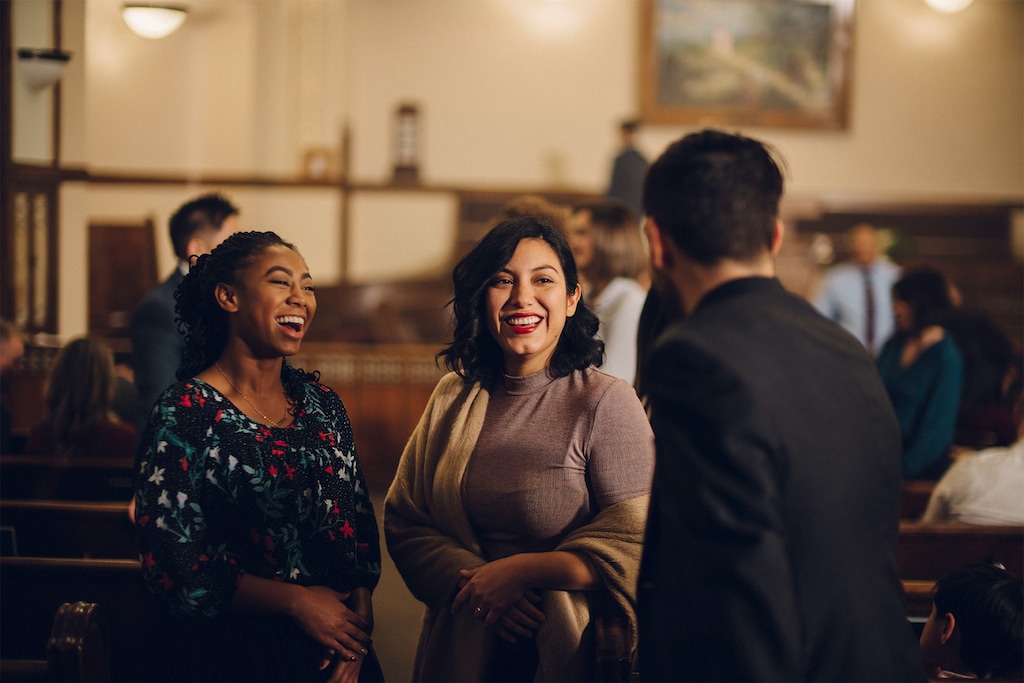
And that’s a good thing. One of the best attributes of Latter-day Saint worship is the association of church members, one with another. Visiting, one with another. By my experience, especially living in areas outside of Utah, but in the Beehive State, too, followers of the faith, when they are congregated together, want to talk. It’s not just idle chatter. It’s real fellowshipping, humans asking other humans how they are doing, how they are thinking, how they are feeling. It’s one of the best parts of the Latter-day Saint experience, and one that likely does as much good for the soul, provides as much inspiration as anything that’s spoken and taught in the proper meetings and classes.
Second, speaking of classes, as a longtime instructor in the faith, in Sunday school and priesthood, I can tell you that 25 minutes — make it 20 and probably 15, when all is said and done and settled in — isn’t enough time to teach squat, at least squat that is useful. It’s enough time to express perhaps a single idea and then to head off to the next meeting. Another of the best aspects of Latter-day Saint classes is the discussion that is spurred. It’s not about — shouldn’t be — a know-it-all individual standing in front of others, preaching, lecturing, pontificating about some obscure set of scriptures or repeating a General Conference talk that’s already been consumed by members. It’s more about presenting principles and allowing people to discuss the pragmatics of making them real in their own lives and the lives of their loved ones.
Anybody going to get that done inside of three or four fistfuls of minutes? What’s more likely to happen is teachers will give their own thoughts for the day, for the week, and — boom — the bell will ring. The only members who will prefer the brief sessions are the instructors in youth classes, who often are handing out Snickers and Tootsie Rolls and Smarties, watching the clock and hoping for mere survival.
Having all the elements every week is a positive step. But here’s the solution to the negatives: Divide the time up a bit differently. Rather than having the splits an hour, 25 and 25 minutes each, with the five minutes in between, lay the minutes out this way: 40 by 30 by 30. That way, sacrament meeting would have time for announcements, the passing of the sacrament, or Communion, which is the centerpiece of the Latter-day Saint service, a commemoration of the Atonement of Jesus Christ and a commitment to try to follow him, and then one talk and music. That’s it, one speaker and singing. Then 30 minutes would be brief, but enough time, if started promptly, to have meaningful lessons in which members can learn and discuss faith topics, can relate to one another, and make it worthwhile. That leaves 10 minutes between sessions for the irreplaceable “foyer church” at the heart of Latter-day Saint communities.
That wouldn’t be so hard now, would it?
The meetings would have substance, gatherings would be good, the time wouldn’t be, as the church hymn says it, “far spent,” and then all the faithful can rush home to stuff their faces, take a nap, play video games, watch football, basketball, baseball … err, I mean, study the scriptures together, and eagerly prepare to do it all over again next week.
(Francisco Kjolseth | The Salt Lake Tribune) Tribune columnist Gordon Monson.
Gordon Monson has been a columnist at The Salt Lake Tribune since 1993. Before coming to Utah, he was a sports and feature writer at the Los Angeles Times and the Los Angeles Daily News. He's hosted a sports-talk radio show in Salt Lake City for 22 years, the past 16 years at 1280 AM/97.5 FM The Zone.