The United States is suffering under the leadership of a clique that proudly holds in contempt any form of science or expertise.
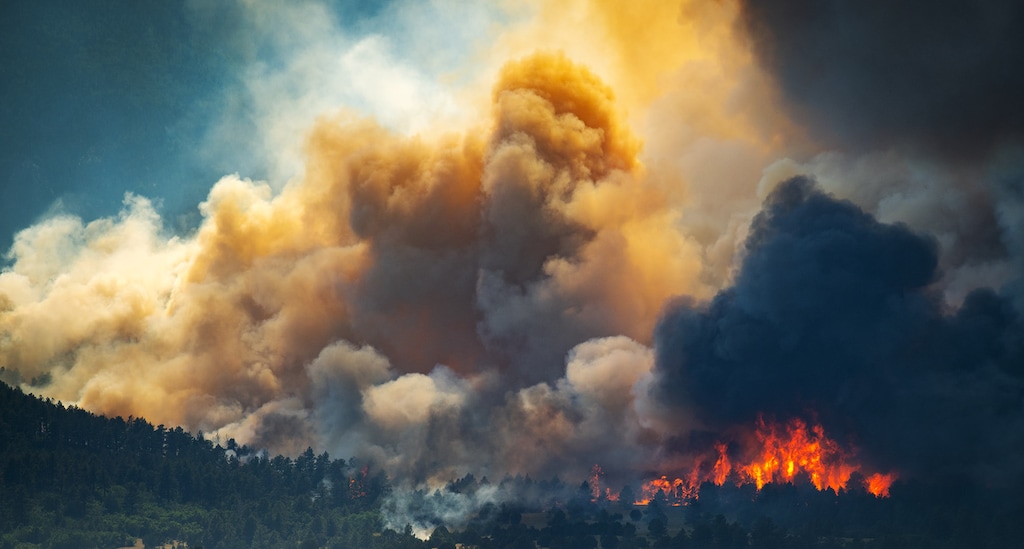
So just when the American West finds itself caught in a horrific wildfire season, the Trump administration has cut back on public lands personnel and significantly rearranged the agencies tasked with fire suppression. So it is reasonable to wonder if the spending cuts and bureaucratic shuffling have left our public lands, our nearby properties and our brave firefighters more vulnerable than they would otherwise have been.
Sen. John Hickenlooper, a Colorado Democrat, has called on the heads of the Interior and Agriculture departments to conduct a quick investigation of a June 27 incident that led to the deaths of four firefighters battling the Knowles Fire in his state. Utah’s elected officials, mourning the Aug. 7 deaths of two helicopter pilots fighting the large Widemouth 2 fire, should demand no less.
Under a Trump executive order, which was not approved or even seen by Congress, firefighting personnel from four Department of the Interior agencies — Bureau of Land Management, National Park Service, U.S. Fish and Wildlife Service and the Bureau of Indian Affairs — were melded into a combined agency known as the U.S. Wildland Fire Service. The U.S. Forest Service, part of the Agriculture Department, maintains its own firefighting organization.
Some experts say that even the combined firefighting service is far too undermanned to tackle the job. Others worry that the rapidly cobbled-together structure hobbles necessary communication among different offices and outposts.
People who know about such things also express alarm that the Wildland Fire Service is overly focused on immediately extinguishing even the smallest brush fire. This despite research to support the idea that some fires should be allowed to take their natural course — as they all did before white settlement of the West — to burn off some low-lying brush and plants. Stopping that natural process, some experts say, only builds up more fuel for future fires, which will be larger and more fierce as a result.
A recently published report from a consortium of six nonprofit news organizations across the West, including The Salt Lake Tribune, lays out the questions in more detail.
Given the ongoing megadrought across the American West and the ever-more-obvious impact of human-caused climate change, the structure and policies of our firefighting agencies should not be left to executive whim.
Congress, and the people, should have a serious look at what is being done, and what needs to be done. The problem is only going to get worse.
Editorials represent the opinions of The Salt Lake Tribune editorial board, which operates independently from the newsroom.