“Rarely is the question asked: Is our children learning?” ― President George W. Bush
The 43rd president’s endearing tortured grammar is difficult to answer under the best of circumstances.
Under Utah’s school voucher program, aka Utah Fits All, it is nigh on impossible. Just figuring out where the money is going — never mind whether its recipients are being properly educated — requires sifting through a daunting thicket of sometimes impossible-to-decipher receipts.
The office of Utah State Auditor Tina Cannon had to create an AI tool to go through hundreds of thousands of receipts submitted to the program and its then-manager, a company called ACE Scholarships, for the 2024-2025 school year.
Even with that special effort, the auditor’s report was only able to nail down what happened with some 41,000 transactions accounting for roughly $17 million in taxpayer dollars allocated to the program.
That’s only about 20% of the 212,856 transactions, which added up to $67.7 million in scholarship spending that year. That means Utah taxpayers, so far, have no idea where the other $50 million went.
As far as the auditors could tell, most of the money did go to uses that were allowable at the time — private school tuition, homeschooling expenses, computer hardware and software, furniture, clothing and musical instruments.
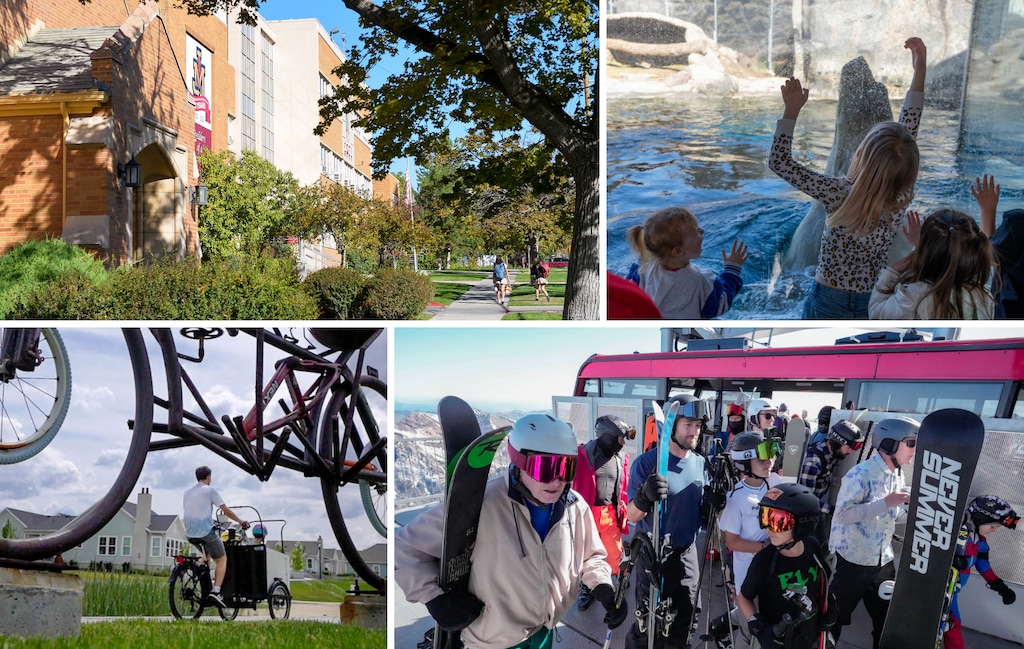
Some receipts stood out as what auditors called “wasteful and extravagant.” That included high-end computers, expensive bicycles and exercise equipment, trampolines and season tickets to entertainment venues or ski resorts.
The Legislature has already placed limits on what Utah Fits All cash can be used for going forward. No more furniture, clothing, theater or ski tickets or the purchase of musical instruments (though funds can still be used to rent).
Lawmakers also made some of the grants less generous. While every student used to qualify for up to $8,000 a year in scholarships, that amount now only goes to pupils paying private school tuition. Homeschooled students can now get $4,000 to $6,000 depending on their age.
These changes are welcome, but hardly go far enough.
Lawmakers should supply the state auditor, their own audit office and the Utah State Board of Education with the power and means to dig a lot deeper into not only what the vouchers are being spent on, but also measuring the outcomes.
Are the children in families receiving these millions in taxpayer dollars learning better than, as well as, or worse than public school students? Is they learning at all?
The Legislature, the state board, and the people should also question whether it is a good use of public funds to pay an outside company — now a Colorado-based outfit called Odyssey — $9.7 million a year to manage a program that apparently cannot be properly reviewed.
(ACE was fired after less than a year on the job, after being paid $9 million, for reasons the state board of education described only as a matter of “convenience.” What that organization did right, or wrong, remains unknown.)
All the money going to the program — $120 million has been allotted for the 2026-2027 school year — is money that would otherwise would, and should, go to the public schools, schools that continue to be responsible for the education of the vast majority of Utah children.
It rightly leaves one to wonder whether the whole Utah Fits All plan is just another one of those Utah efforts to scam public funds for private benefit.
One Utah court has ruled the entire effort illegal, in violation of the Utah Constitution’s requirement that public money go to public schools. While that case winds its way through the courts, the least our Legislature, board of education and state auditor can do is drill a lot harder to find out just where all this money is going.
And whether it’s really doing any of our children any good.
Editorials represent the opinions of The Salt Lake Tribune editorial board, which operates independently from the newsroom.