Even if your favored candidates didn’t prevail in Tuesday’s Utah primary elections, there can be no question that it was a good day for democracy.
The people had choices as to who to vote for. Incumbents did not all slide to victory on name recognition and funding advantages. There is every reason to think that voters were aware, considered the issues and, in some key contests, decided that it was time for a change.
It is to be hoped that the voters enjoyed the experience, because they will be called upon to do it again in November. And every election thereafter.
The furthest fall must be the outcome of the Republican primary in the state Senate’s 7th District. That’s where Senate President Stuart Adams, arguably the most powerful person in Utah government, was ousted by political newcomer Stephanie Hollist, 43% to 35%.
A third candidate in the race, Braden Hess, pulled 22%.
Hess had criticized Hollist, saying her campaign didn’t focus enough on issues and was based only on a promise to listen to the people. What Hess — and Adams — apparently failed to grasp is that hearing the electorate is an issue. Maybe the most important one.
Adams was apparently crippled by his support for the Stratos Project, the mega data center planned for Box Elder County. The plan was first approved, with virtually no public knowledge or input, by a little-known state agency Adams chairs, the Military Installation Development Authority, or MIDA.
Public outcry against the project also cost two Republican Box Elder County commissioners — Lee Perry and Boyd Bingham — their party’s nomination for reelection.
The results of those races could be read as a referendum on the data center. Or, more generally, an expression of a strong popular feeling that too many elected officials in Utah don’t listen to the people. Until the people have had enough and make their voices heard through the democratic process.
Also Tuesday, two of the Utah Legislature’s most vocal anti-LGBT, anti-abortion culture warriors — Sen. Dan McCay and Rep. Trevor Lee — were knocked out in the GOP primaries.
McCay was trounced, 69% to 31%, by state Rep. Doug Fiefia. Lee was likewise overwhelmed by Davis County Commissioner Bob Stevenson, 66% to 34%.
In both cases, the winners ran on meat-and-potatoes issues such as taxes and affordable housing (Stevenson) and regulating artificial intelligence and data centers (Fiefia). Clearly, the voters were more attracted to those serious platforms than in continuing to waste everyone’s time by fighting against, in Lee’s words, “woke garbage.”
Note, also, that Adams, McCay and Lee all graciously accepted the will of the voters, congratulated the winners and wished their constituents the best in the future.
Republican voters in Utah County also let it be known that they have had their fill of County Clerk Aaron Davidson, who had botched past elections and recently hired an anti-democracy internet activist. Davidson lost to challenger Corey Astill, 55% to 45%.
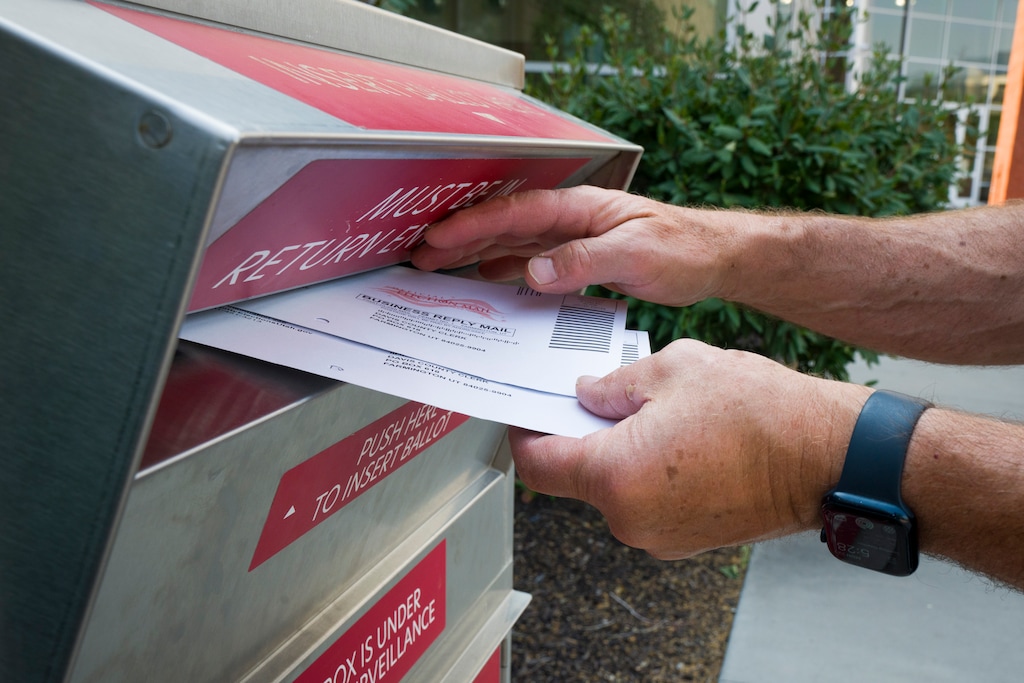
Thanks, meanwhile, to county clerks across the state, their professional and volunteer workers, who once again pulled off Utah’s efficient and trustworthy mail-in elections, giving us timely and trustworthy results. It is a system that President Donald Trump, Utah Sen. Mike Lee and others are trying to destroy with their misnamed SAVE America Act. Don’t let them.
The takeaways: Elections matter. Democracy needs viable candidates to step up and challenge even the most entrenched incumbents. It is up to the people to pay attention, sort through the blather, study the issues, defend their rights and vote.
Editorials represent the opinions of The Salt Lake Tribune editorial board, which operates independently from the newsroom.